Tooth loss can occur for many reasons such as caries, gum disease, trauma or unsuccessful treatments. Missing teeth have important consequences not only in terms of aesthetics, but also in terms of chewing, speech and the preservation of the jawbone. Today, one of the most frequently used methods for replacing missing teeth is implant treatment. Knowing the answers to the questions of what a dental implant is, how it works and who it is suitable for is the first step to making the right decision. As DijiDent Oral and Dental Health Polyclinic, we approach implant treatment together with digital planning for our patients in Türkiye.
What Is a Dental Implant?
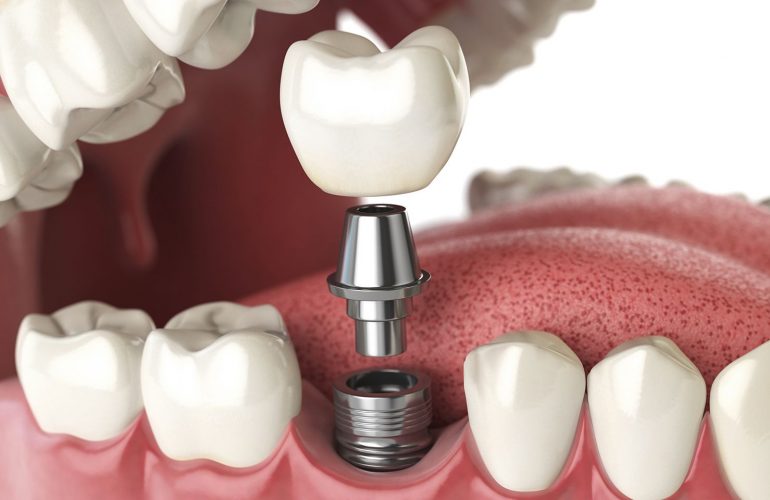
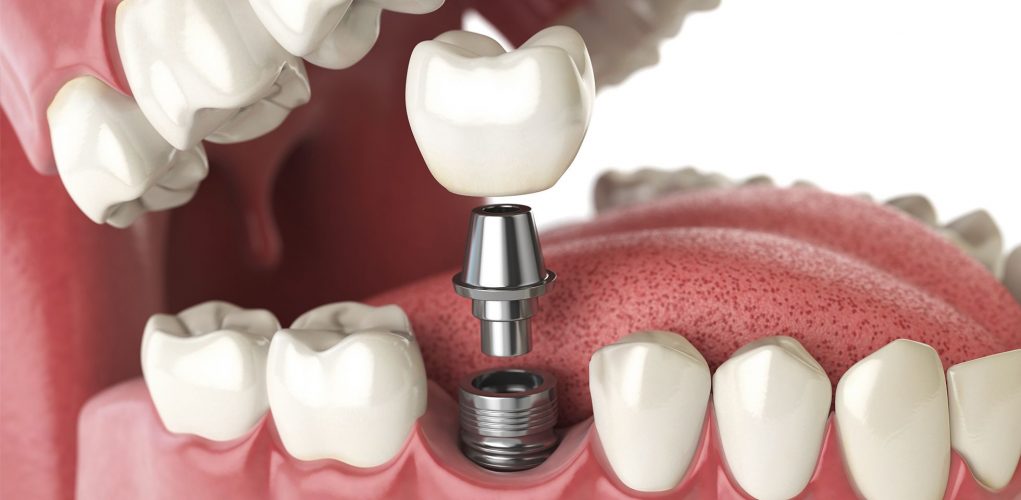
A dental implant is a screw-shaped artificial root, usually made of titanium or zirconia, that is placed in the jawbone to take the place of the root of the lost tooth. Over time, the bone fuses with the implant surface and fixes it in place. After this fusion is complete, the abutment, which is the connecting part, and the crown, which forms the visible part of the tooth, are placed on top of the implant. In this way, the implant transmits chewing forces to the bone in a way similar to a natural tooth.
The Three Components of an Implant
- Implant body: The screw placed in the bone that acts as the root.
- Abutment: The part that provides the connection between the implant and the upper prosthesis.
- Superstructure: The part of the tooth visible in the mouth, such as a crown, bridge or prosthesis.
In Which Situations Is an Implant Used?
- Single tooth loss: Replacing a single tooth without touching the healthy neighboring teeth.
- Loss of more than one tooth: Replacing the missing teeth by making a bridge on several implants.
- Complete edentulism: Rehabilitation of the entire jaw with fixed or removable prostheses on a small number of implants.
- Removable denture retention: Stabilizing dentures that move out of place with implants.
The Advantages of an Implant
- Neighboring teeth are preserved: Unlike a bridge, healthy teeth do not need to be cut.
- Bone is preserved: By transmitting force to the bone, it contributes to slowing the bone loss seen after tooth loss.
- Chewing and speech: Thanks to its fixed structure, it provides chewing and speaking comfort close to that of a natural tooth.
- Aesthetics: With appropriate planning, natural-looking results can be achieved.
- Long-life potential: With good care and regular check-ups, it can be used for many years.
Who Is It Suitable For?
People whose jaw development is complete, who have sufficient bone structure or whose bone can be made suitable with bone augmentation procedures, and whose general health condition does not prevent a surgical procedure can be evaluated for implant treatment. Advanced age alone is not an obstacle; what is decisive is the general health condition and bone structure.
Situations Requiring Special Evaluation
- Uncontrolled diabetes: It can negatively affect healing; if blood sugar is under control, treatment can be planned.
- Heavy smoking: It can negatively affect healing and the health around the implant.
- Untreated gum disease: Gum health must be established first.
- Medications affecting bone metabolism: Some osteoporosis and cancer treatment medications require special planning.
- Radiotherapy to the head and neck region: Detailed evaluation and collaboration with the relevant physicians are required.
- Teeth clenching: It may need to be supported with superstructure design and a night guard.
Implant, Bridge or Removable Denture?
Each option has its own advantages. A bridge does not require a surgical procedure and is generally completed in a shorter time; however, it requires the neighboring teeth to be cut. Removable dentures are less invasive; however, they may have limitations in terms of retention and comfort. An implant, on the other hand, preserves the neighboring teeth and offers a fixed solution; in return, it requires a surgical procedure and a healing process. The most suitable option is determined by evaluating bone condition, the health of the neighboring teeth, general health, expectations and budget together.
Implant Materials
Today, the majority of implants are made of titanium or titanium alloys. Titanium has been used safely for many years because of its compatibility with body tissues and its ability to fuse with bone. Zirconia implants are also available for patients looking for a metal-free option; however, they may not be suitable for every case. The choice of material is made by evaluating clinical conditions and the patient’s preferences together.
The Role of Digital Planning
At DijiDent, we plan implant treatment with three-dimensional dental tomography and intraoral scanner data. Anatomical structures such as bone volume, the nerve canal and the sinus are evaluated together with the position of the planned tooth in a virtual environment. This approach aims to place the implant not only according to the bone, but according to the ideal position of the tooth that will go on top of it. In suitable cases, applying the plan in the mouth is supported by using a surgical guide.
For a Long-Lasting Implant
An implant does not decay; however, the gum and bone around it can be affected by bacterial plaque. Daily brushing, appropriate interdental cleaning around the implant, staying away from smoking and regular check-ups contribute to the implant remaining healthy for a long time.
Frequently Asked Questions
It is an artificial root that takes the place of the root of the lost tooth, is placed in the jawbone, and on which a tooth is made.
The procedure is done under local anesthesia. Afterwards, mild pain and swelling may be seen for a few days.
Jaw development must be complete. Advanced age alone is not an obstacle; general health and bone condition are decisive.
With good care and regular check-ups, it can be used for many years; however, the duration varies from person to person and no definite guarantee can be given.
In many situations, an implant may be possible with bone augmentation procedures or different planning options. The evaluation is made with an examination.
Let us plan the right solution for your missing teeth together.
Contact us to book an appointment to learn whether implant treatment is suitable for you and to have your digital planning done. Let us evaluate your options in detail at DijiDent Oral and Dental Health Polyclinic.
This content is for general information purposes and does not replace an examination by a dentist. Treatment suitability, duration and results vary from person to person; the decision is made after clinical evaluation.