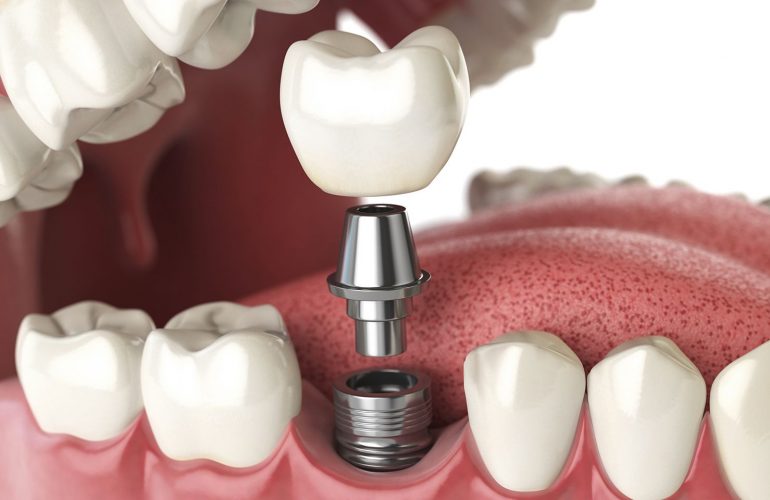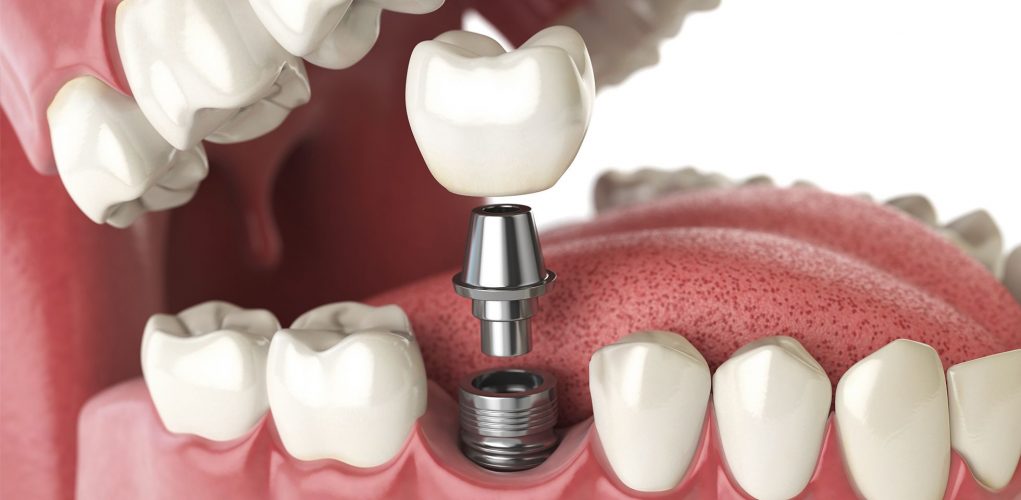
Implant treatment is a method widely used today to replace missing teeth; however, much of the misinformation circulating about it can still affect patients’ decisions. These false beliefs sometimes lead to unnecessary fears and sometimes to unrealistic expectations. Comparing misconceptions about implants with up-to-date information allows you to approach treatment with informed and realistic expectations. As DijiDent Oral and Dental Health Polyclinic, we have brought together the false beliefs we hear most often from our patients in Türkiye and the facts.
Myth 1: “Implant treatment is very painful.”
Fact: Implant surgery is done under local anesthesia and patients generally do not feel pain during the procedure; pressure and vibration may be felt. Afterwards, mild to moderate pain and swelling may be seen for a few days and are usually brought under control with painkillers. Many patients state that a single implant went much more comfortably than they expected.
Myth 2: “An implant lasts a lifetime and requires no care.”
Fact: Implants can function for many years under suitable conditions; however, no lifetime guarantee can be given for any treatment. Although an implant does not decay, the gum and bone around it can become inflamed. Daily care and regular check-ups are indispensable for the implant to remain healthy for a long time.
Myth 3: “Implants are not done for the elderly.”
Fact: Advanced age alone is not an obstacle to implant treatment. What is decisive is general health condition and bone structure. Especially in completely edentulous elderly patients, implant-supported prostheses can markedly improve quality of life.
Myth 4: “My bone has resorbed, so an implant cannot be done.”
Fact: With methods such as bone grafting, sinus lifting, short implants and angled placement, implant treatment can be planned for many patients with bone loss. The evaluation is made with three-dimensional tomography.
Myth 5: “The body rejects the implant.”
Fact: Implants do not fail through rejection by the immune system as in organ transplants. Implant failure is generally related to causes such as failure to achieve sufficient fusion with the bone, infection, smoking, uncontrolled systemic diseases or excessive loads. True allergy to titanium is very rare.
Myth 6: “An MRI cannot be done when you have an implant.”
Fact: Titanium is a non-magnetic metal and dental implants generally do not constitute an obstacle to MRI scans. Nevertheless, implants and some prosthetic components may cause local image distortions in images of the head and neck region. It is recommended that you inform the relevant healthcare staff that you have an implant before an MRI scan.
Myth 7: “An implant is always better than a bridge.”
Fact: An implant offers important advantages such as preserving the neighboring teeth; however, it is not the best option for every patient. When the condition of the neighboring teeth, bone structure, general health and personal preferences are evaluated together, a bridge or other options may be more suitable for some patients.
Myth 8: “Implants are not done for smokers.”
Fact: Smoking is not an absolute obstacle; however, it increases the risk of the implant not fusing with the bone and of inflammation around the implant. Quitting smoking or at least taking a break during the surgical period helps reduce the risks.
Myth 9: “After getting an implant, you are left without teeth for months.”
Fact: Temporary solutions are planned, especially in the front region. In suitable cases, a temporary tooth can be attached with immediate loading on the day the implant is placed.
Myth 10: “All implants are the same; the brand does not matter.”
Fact: Implant systems can differ in terms of material, surface technology, connection design, scientific data and parts continuity. Nevertheless, the success of the treatment depends not only on the brand, but on many factors such as planning, surgical technique, the superstructure and care.
Myth 11: “After an implant is placed, there is no longer a risk of gum disease.”
Fact: In patients with a history of periodontitis, the risk of inflammation around the implant may be higher. Regular periodontal follow-up of the remaining teeth and the implants is important.
Myth 12: “Caring for an implant tooth is more difficult than caring for a natural tooth.”
Fact: Single implants are brushed and their interdental spaces cleaned in a way similar to natural teeth. Bridges and full-arch prostheses may require additional tools; however, with the right tools and brief training, care can easily be added to the daily routine.
Myth 13: “Implant treatment is finished in a single day.”
Fact: In suitable cases, temporary teeth can be attached on the same day; however, the permanent teeth are made after the implant’s fusion with the bone is complete. Fusion with the bone is a biological process and generally takes a few months.
Correct Information, Realistic Expectations
If you are not sure whether a piece of information you have heard about implant treatment is correct, do not hesitate to ask your dentist your questions. At DijiDent, we offer implant treatment together with digital planning, transparent information and long-term follow-up, and we aim to help our patients base their decisions on correct information rather than on fear or unrealistic expectations.
Frequently Asked Questions
There is no process similar to organ rejection; failure is generally related to fusion problems, infection or risk factors.
Generally yes. Titanium is not magnetic; however, it is recommended that you report your implant before an MRI.
It can be used for many years under suitable conditions; however, no definite period or guarantee can be given.
It is done under local anesthesia; afterwards, mild to moderate pain may be seen for a few days.
In many situations, it may be possible with bone augmentation or alternative planning methods.
Make your implant decision with the right information.
Contact us to book an appointment to have all your questions about implant treatment answered and to create a personalized plan. Let us plan your treatment together in a transparent and understandable way at DijiDent Oral and Dental Health Polyclinic.
This content is for general information purposes and does not replace an examination by a dentist. Treatment suitability and results vary from person to person; the decision is made after clinical evaluation.