Although the loss of a single tooth often seems like a small problem at first, over time it can lead to consequences such as the shifting of neighboring teeth, the over-eruption of the opposing tooth and bone loss. For this reason, replacing the missing tooth is recommended. Among fixed solutions, the two most frequently compared options are the implant and the bridge. There is no single answer to the question of implant or bridge that applies to everyone; the right choice varies according to the condition of your mouth and your priorities. As DijiDent Oral and Dental Health Polyclinic, we present both options to our patients in Türkiye together with their advantages and limits.
What Is a Bridge?
A bridge is a fixed prosthesis in which the teeth on both sides of the missing tooth are cut and prepared for crowns, and these teeth are used as supports. The missing tooth sits above the gap, connected to the two supporting crowns. It does not require a surgical procedure and is usually completed in a few appointments.
What Is a Single-Tooth Implant?
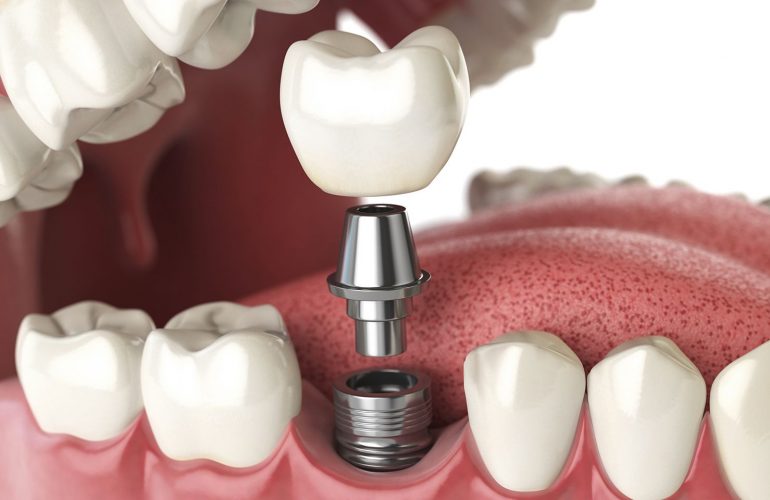
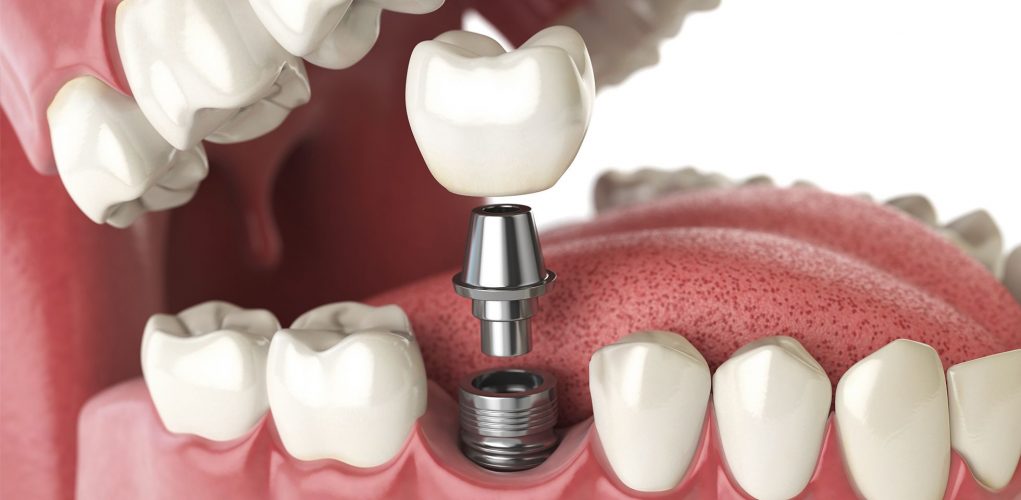
An implant is an artificial root that takes the place of the root of the missing tooth and is placed in the jawbone. After it fuses with the bone, a single crown is made on top of it. The gap is filled without touching the neighboring teeth; however, it requires a surgical procedure and a healing period.
Comparison
Neighboring Teeth
With a bridge, the supporting teeth need to be cut for crowns. If the neighboring teeth are healthy and have no fillings, this can be considered an important disadvantage. With an implant, the neighboring teeth are not touched. If the neighboring teeth already have large fillings or are in a condition requiring crowns, the bridge can be planned together with the restoration of these teeth and may be an advantageous option.
Bone Preservation
An implant contributes to slowing the bone resorption seen after tooth loss by transmitting chewing forces to the bone. With a bridge, since the bone under the missing tooth is not stimulated, resorption may continue over time; this can lead to the appearance of a gap under the bridge, especially in the front region.
Treatment Duration
A bridge can usually be completed within a few weeks. With an implant, a healing period of a few months is required for fusion with the bone. In cases requiring bone augmentation, the duration may be extended further. However, in suitable cases, by attaching a temporary tooth on the implant, it can be ensured that no gap remains aesthetically.
Cleaning and Maintenance
The underside of a bridge must be cleaned with special floss or interdental brushes. If caries or gum problems develop in the supporting teeth, the entire bridge can be affected. An implant, on the other hand, is brushed like a natural tooth and its interdental spaces are cleaned; regular care is required for the health of the tissues around the implant.
Suitability
A bridge is a good option for patients who do not want a surgical procedure or whose general health condition is not suitable for surgery. For an implant, sufficient bone volume and general health suitable for surgery are required.
Things to Consider When Deciding
- Condition of the neighboring teeth: Are they healthy, or do they need crowns?
- Bone structure: Is it sufficient for an implant, is an additional procedure needed?
- General health: Is there a condition that prevents a surgical procedure?
- Time: Within what period does the treatment need to be completed?
- Aesthetics: What will the gum and bone appearance be like, especially in the front region?
- Long-term maintenance: Which option’s maintenance better suits your daily life?
- Budget and personal preferences: The patient’s priorities are also an important part of the decision.
Aesthetic Evaluation in the Front Region
In the front teeth, the shape of the gum and the bone level directly affect the aesthetic result. With an implant, very natural results can be achieved if bone and gum thickness are sufficient; however, additional procedures may be required with a thin tissue structure. With a bridge, the gum under the pontic tooth can be shaped. At DijiDent, in front-region cases, we evaluate the expected result together in advance with digital smile design and three-dimensional planning.
What Can Be Expected in the Long Term?
Both options can serve for many years when planned correctly and well cared for. The most common problems with a bridge are the development of caries and gum disease in the supporting teeth; in this case, the bridge may need to be renewed. With an implant, problems such as inflammation of the tissues around the implant and screw loosening or porcelain fracture in the superstructure may be seen. In both cases, regular check-ups ensure that problems are noticed at an early stage.
Other Options
In some situations, options requiring less tooth cutting, such as bonded bridges (Maryland bridges), can also be considered. They may also be preferred as a temporary solution, especially in the front region and in young patients, until the suitable age for an implant is reached. Removable dentures are offered as an alternative in situations where fixed solutions are not suitable.
Not Leaving a Missing Tooth for Long
Whichever option is preferred, it is recommended that the missing tooth not be left empty for a long time. Over time, neighboring teeth may tilt, the opposing tooth may over-erupt, and bone loss may progress and narrow the options.
Frequently Asked Questions
There is no single right answer. The decision is made by evaluating the condition of the neighboring teeth, bone structure, general health and your preferences together.
Yes, in a classic bridge the supporting teeth are prepared for crowns. For this reason, if the neighboring teeth are healthy, an implant is often considered.
A bridge is usually completed in a shorter time. An implant requires a healing period.
The bone under the missing tooth may continue to resorb over time.
Yes. With more than one missing tooth, a bridge can be made on implants.
Let us find the most suitable solution for your missing tooth together.
Contact us to book an appointment to compare implant and bridge options specifically for your mouth. Let us see your options with digital planning at DijiDent Oral and Dental Health Polyclinic.
This content is for general information purposes and does not replace an examination by a dentist. The treatment choice is made together with the patient after an individual clinical evaluation.