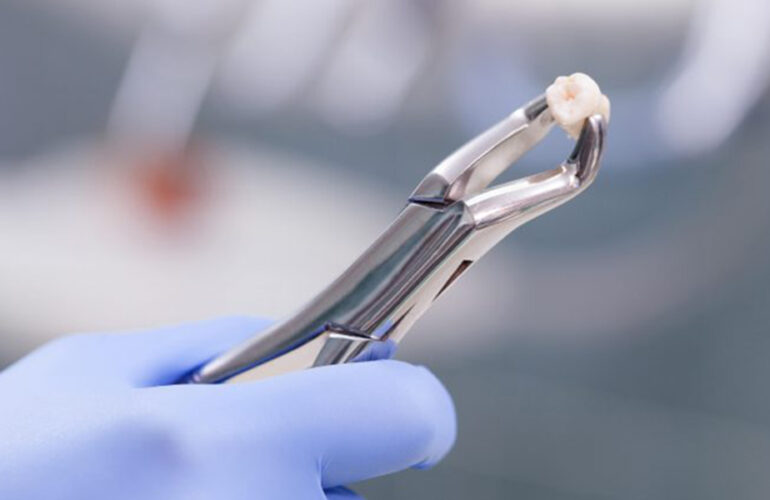
Wisdom teeth are the third molars, the last teeth to erupt in the mouth, generally appearing between the ages of 17 and 25. When there is enough space in the jaw, they can erupt without problems and function like other teeth. However, they often remain fully or partially impacted due to lack of space and cause various problems. Having accurate information about the wisdom tooth extraction decision and process reduces unnecessary anxiety and makes healing easier. As DijiDent Oral and Dental Health Polyclinic, we evaluate the wisdom teeth of our patients in Türkiye in detail with three-dimensional imaging.
Should Every Wisdom Tooth Be Extracted?
No. Wisdom teeth that have fully erupted, meet their opposing tooth in the bite, can be cleaned and do not cause problems may not need to be extracted. Teeth that are fully impacted in the bone and show no signs of problems can also, in some situations, be monitored with regular radiographic follow-up. The extraction decision is made by evaluating factors such as the position of the tooth, symptoms, its effect on neighboring teeth and the patient’s age together.
In Which Situations Is Extraction Recommended?
- Recurrent gum inflammation (pericoronitis): Frequent inflammation, pain and swelling of the gum over a partially erupted tooth.
- Caries: Caries developing in areas that cannot be cleaned on the wisdom tooth or on the second molar adjacent to it.
- Damage to the neighboring tooth: The impacted tooth pressing on the root of the neighboring tooth and causing resorption.
- Cyst or tumor formation: Cystic lesions that can develop around the impacted tooth.
- Prosthetic or orthodontic plan: Situations required by the treatment plan.
- Gum disease: Deep pockets and bone loss around the wisdom tooth.
Evaluation Before Extraction
A panoramic X-ray provides general information about the position and root structure of the tooth. The roots of lower wisdom teeth in particular can be very close to the canal through which the nerve supplying sensation to the lower lip and chin passes. In such situations, three-dimensional dental tomography helps surgical planning and risk assessment by showing the relationship between the root and the nerve canal in detail. For upper wisdom teeth, the relationship with the sinus is evaluated.
How Is the Extraction Done?
Anesthesia
The procedure is usually done under local anesthesia. For patients with high levels of anxiety or in situations where more than one tooth will be extracted at the same time, sedation options can be considered.
Accessing the Tooth
Fully erupted teeth can be removed with the simple extraction method. For impacted or partially erupted teeth, the gum is opened and, if necessary, the bone over the tooth is removed in a controlled manner.
Removing the Tooth
The tooth is removed in a way that causes the least damage to the surrounding tissues, if necessary by dividing it into pieces. This approach helps limit bone loss and surgical trauma.
Cleaning and Stitches
The extraction socket is cleaned and the gum is closed with stitches. Some stitches dissolve on their own; others are removed at the check-up appointment.
Extracting All Four Teeth
In suitable cases, the lower and upper wisdom teeth on the same side can be extracted in a single session; this way, you can chew comfortably on the other side. It is also possible to extract all four teeth in the same session; however, in this case the healing period may be more challenging. The decision is made taking into account the position of the teeth, the patient’s preference and general health condition.
The Healing Process
In the first days, swelling, pain and limited mouth opening may be seen. Swelling usually reaches its most pronounced level on the second and third days and then decreases. Following the medications your dentist recommends, cold application, a soft diet and oral hygiene instructions makes healing easier. If you are planning an extraction before a busy period, it is recommended that you set aside a few days of rest after the procedure.
Possible Risks
- Dry socket: A painful condition caused by the early loss of the blood clot; it usually begins a few days later.
- Numbness: A temporary, rarely longer-lasting change in sensation with lower teeth close to the nerve.
- Sinus involvement: In the upper jaw, if the roots are close to the sinus, an oral-sinus communication may occur.
- Infection and bleeding: The risk is reduced with appropriate precautions.
These risks are discussed with you in detail before treatment based on your imaging findings.
The Most Suitable Age for Extraction
Extracting wisdom teeth that are likely to cause problems at a young age is generally associated with faster healing and a lower risk of complications. During this period, the roots may not yet be fully developed and the bone is more flexible. However, the extraction decision is made not only according to age, but by evaluating the position of the tooth and the problems it causes.
Wisdom Teeth and Crowding
Whether wisdom teeth cause crowding in the front teeth has long been debated, and current information suggests that they are not the main cause on their own. Regular use of retention appliances is more decisive for maintaining the teeth after orthodontic treatment.
Frequently Asked Questions
No. Teeth that do not cause problems, have erupted and can be cleaned may not need to be extracted; the decision is made through examination.
It varies according to the position of the tooth; it may be short for erupted teeth and longer for impacted teeth.
It is usually most pronounced on the second and third days and decreases afterwards.
It is possible; however, the healing period may be more challenging. The decision is made together.
The risk is generally low and mostly temporary. The risk is evaluated in advance with tomography.
Let us evaluate your wisdom teeth in detail.
Contact us to book an appointment to learn whether your wisdom teeth need to be extracted and to plan the process. Let us carry out your three-dimensional evaluation at DijiDent Oral and Dental Health Polyclinic.
This content is for general information purposes and does not replace an examination by a dentist. The extraction decision and possible risks are determined after clinical and radiographic evaluation.