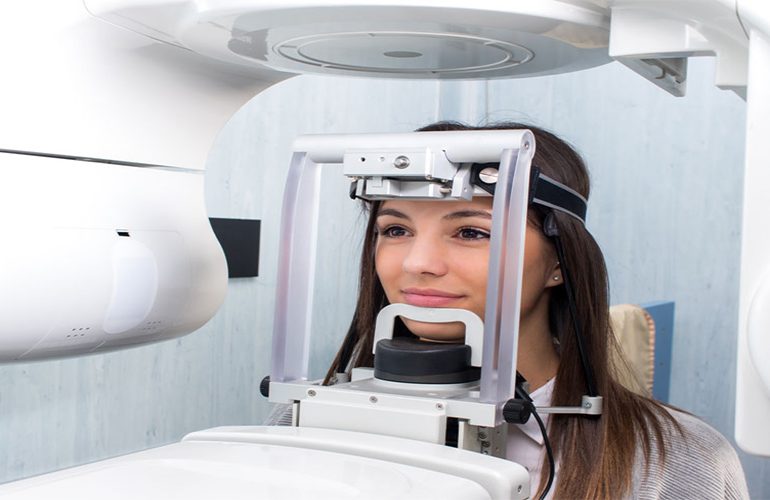
Oral health problems rarely come alone. A patient may simultaneously have a gum problem, a missing tooth, worn front teeth and a molar requiring root canal treatment. In this case, the real question is not “which treatment should be done?” but “which treatment should be done in which order?” Digital treatment planning makes it possible to establish this sequence with data. As DijiDent Oral and Dental Health Polyclinic, in comprehensive cases in Türkiye we make the entire plan visible before starting procedures.
What Does Digital Planning Bring Together?
- Clinical examination findings: Your complaints, habits and general health condition.
- Three-dimensional imaging: Bone volume, root structures and anatomical relationships.
- Intraoral scanning: A current surface model of the teeth and gums.
- Photo and video records: Smile line, lip movement and facial proportions.
- Bite analysis: How chewing forces are distributed.
When these data are superimposed in the software environment, a single digital twin of your mouth is created. Your dentist no longer has to look at separate films and plaster models and combine them mentally; they see the whole on the same screen.
How Is the Planning Sequence Established?
Stage 1: Pain and Infection Control
The priority is always acute complaints and active infections. A painful tooth is treated first, even if it is part of the aesthetic plan.
Stage 2: Preparing the Foundation
Permanent restorations are not started before gum health and caries control are achieved. An aesthetic solution built on an unsound foundation will be short-lived.
Stage 3: Structural Arrangement
If necessary, orthodontics, surgical procedures or implant placement are planned at this stage. Bringing the teeth into the correct position can allow subsequent restorations to be done with less intervention.
Stage 4: Restoration and Aesthetics
Prosthesis, crown and smile design applications take place at the last stage.
Stage 5: Protection and Follow-Up
A night guard, periodic check-ups and a personalized care program support the permanence of the plan.
What Happens When the Sequence Is Disrupted?
Although skipping stages may seem to save time in the short term, it often has the opposite result. Problems can quickly develop at the margins of crowns placed before gum disease is brought under control. In cases where restoration is started directly when orthodontics is needed, more tooth structure than necessary may need to be removed. The value of the plan lies exactly here: it makes visible which procedure is a prerequisite for which, and leaves irreversible decisions until last.
What Is the Concrete Benefit for the Patient?
The greatest contribution of digital planning is that it reduces surprise decisions. Being faced in the middle of treatment with the sentence “we also need to do this” is wearing in terms of both budget and trust. When the plan is established from the start, you know to a large extent in advance how many sessions will be needed, which procedure will be done in which month and the total duration. For our patients coming from abroad, this forms the basis of travel planning.
The second benefit is your participation in the decision process. When you discuss the plan while seeing it on screen, you understand the recommended procedures not as an abstract list but as interconnected steps. When you want to postpone a stage, you can also see how this will affect the next steps.
A Single Dentist or a Team?
In comprehensive cases, different specialties work on the same plan: surgery, prosthodontics, orthodontics and periodontology. The digital plan functions as a common language here; everyone looks at the same data and decisions are not made independently of one another. The patient no longer being the carrier of information between different dentists both speeds up the process and makes it safer.
Keeping the Plan Flexible
A digital plan is not an unchangeable contract. It can be updated according to the healing process, clinical findings or your preferences. What matters is that every change is shared with you along with its rationale.
Frequently Asked Questions
No. It is not needed for a single filling or a simple treatment. It becomes meaningful in comprehensive cases where more than one treatment is carried out together.
Taking the records is usually completed in a single session. Preparing the plan varies according to the scope of the case.
At our clinic, in comprehensive cases, application does not begin without the plan being shared. Emergency interventions are an exception.
It can. As clinical findings progress, updates may be needed; every change is explained along with its rationale.
Yes. You can request a summary containing the treatment steps and the estimated timeline.
See your treatment not step by step, but as a whole.
If you have more than one complaint, let us plan together which treatment will be done in which order. Contact us to book an appointment; let us create a personalized roadmap with your digital records at DijiDent Oral and Dental Health Polyclinic.
This content is for general information purposes. The treatment plan and duration vary from person to person; the decision is made after an examination by a dentist.