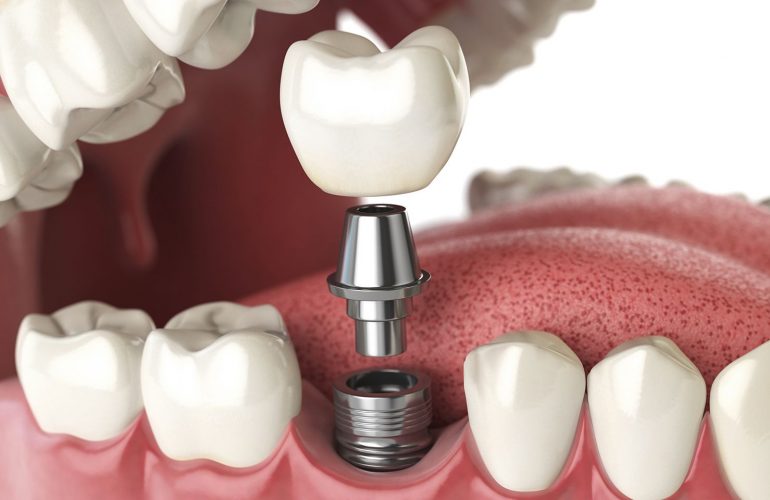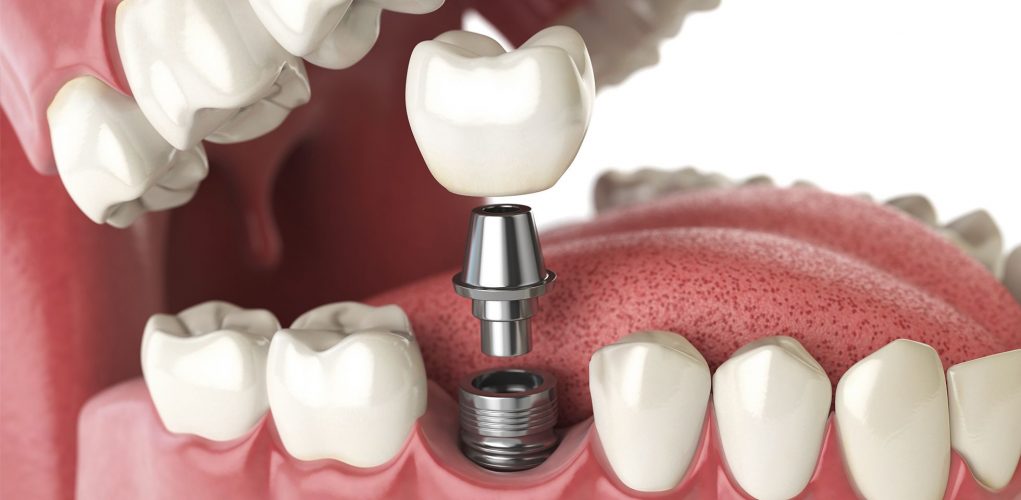
One of the most frequently asked questions about implant treatment is whether there is a specific age limit. On one side there are patients who have lost teeth at a young age, and on the other there are people who wonder whether it is possible to get an implant at an advanced age. In fact, what is decisive in implant suitability is not chronological age; it is the completion of jaw development in young people and general health condition and bone structure at an advanced age. Correctly understanding the topic of the implant age limit helps you free yourself from unnecessary worries and take the right step at the right time. As DijiDent Oral and Dental Health Polyclinic, we offer individual evaluation to our patients of all ages in Türkiye.
Implants in Young People: Why Is It Necessary to Wait?
An implant remains fixed by fusing with the bone and does not have the ability to erupt or move like natural teeth. The jawbone and the surrounding teeth, however, continue to develop and change position during the growth period. An implant placed before growth is complete may, over time, end up further in or higher than the neighboring teeth; this can lead to aesthetic and functional problems. For this reason, the completion of jaw development is awaited for an implant.
How Is It Understood That Growth Is Complete?
The time at which growth is completed varies from person to person; it is generally completed earlier in girls than in boys. Instead of a single age limit, a growth evaluation is made by the dentist. In this evaluation, whether height growth has stopped, growth indicators such as a hand-wrist X-ray if necessary, and records taken at certain intervals can be taken into account. In many patients, this process is completed in the post-adolescent period, generally by the early twenties.
What Can Be Done During This Time?
- Space maintainers and temporary prostheses: Removable or bonded temporary solutions to preserve the space and provide aesthetics.
- Bonded bridges: Bridges bonded to neighboring teeth with minimal intervention can be a temporary or medium-term solution.
- Orthodontic treatment: In patients with congenitally missing teeth, preserving or closing the space can be planned orthodontically.
- Bone preservation: For teeth lost after trauma, measures aimed at preserving bone volume can be considered.
Implants at an Advanced Age: Age Alone Is Not an Obstacle
Advanced age alone does not constitute an obstacle to implant treatment. Implant treatment can be planned for elderly patients whose general health condition is suitable and who have sufficient bone structure or whose bone can be made suitable with bone augmentation procedures. In fact, in completely edentulous elderly patients, prostheses supported by a small number of implants can markedly increase chewing efficiency and the quality of nutrition.
What Is Considered in the Evaluation at an Advanced Age
- General health condition: Cardiovascular diseases, diabetes and other chronic diseases being under control.
- Medications used: Blood thinners, osteoporosis medications affecting bone metabolism and other medications.
- Bone quality: Bone density and volume are evaluated with tomography.
- Healing capacity: Tissue healing may be slower at an advanced age; planning is done accordingly.
- Manual dexterity and care: The prosthesis design is chosen according to the patient’s ability to clean.
- Cognitive status and support: When necessary, the involvement of the patient’s relatives in the care process is planned.
This information is necessary for the treatment to be planned safely.
Adapting the Treatment Plan to Age
In elderly patients, treatment can be planned so that it requires less surgical intervention and is easy to care for. For example, in completely edentulous patients, instead of a fixed prosthesis, implant-supported removable dentures that can easily be removed and cleaned may be preferred. With methods such as short implants or angled placement, the need for extensive bone grafting can be reduced. Sessions can be kept short, and the patient’s comfort is prioritized.
The Contribution of Implants to Quality of Life at an Advanced Age
In completely edentulous elderly patients, the classic denture moving out of place can lead to being selective about food, restricted nutrition and withdrawal in social settings. Implant-supported prostheses, by increasing the retention of the denture, can help a wider variety of foods be eaten and increase confidence while speaking. For this reason, implant treatment at an advanced age should be evaluated not only in terms of aesthetics, but also in terms of quality of life.
Collaboration with Other Physicians
In patients with chronic illnesses or who use many medications, a joint plan is created before implant treatment by contacting the relevant physicians. Decisions such as stopping blood thinners or changing their dose should never be made by the patient on their own; these decisions are made by the relevant physician.
The Right Decision at the Right Time
Waiting in young patients and proceeding with correct planning in elderly patients is often the most appropriate approach. At DijiDent, instead of age, we make a personal evaluation based on the individual’s health condition, bone structure and living conditions.
Frequently Asked Questions
Jaw development must be complete. This time varies from person to person and is evaluated by the dentist.
Generally, the completion of growth is awaited. Temporary solutions can be applied during this time.
If the general health condition and bone structure are suitable, age alone is not an obstacle.
The risks depend not on age but on the general health condition. It is planned with a detailed evaluation.
It is possible in many situations; medication adjustment should only be done by the relevant physician.
There may be a suitable solution for you at any age.
Contact us to book an appointment to learn the implant options suitable for your age and health condition. Let us carry out your personal evaluation at DijiDent Oral and Dental Health Polyclinic.
This content is for general information purposes and does not replace an examination by a dentist. Be sure to consult the relevant physician before making any changes to your medication use.