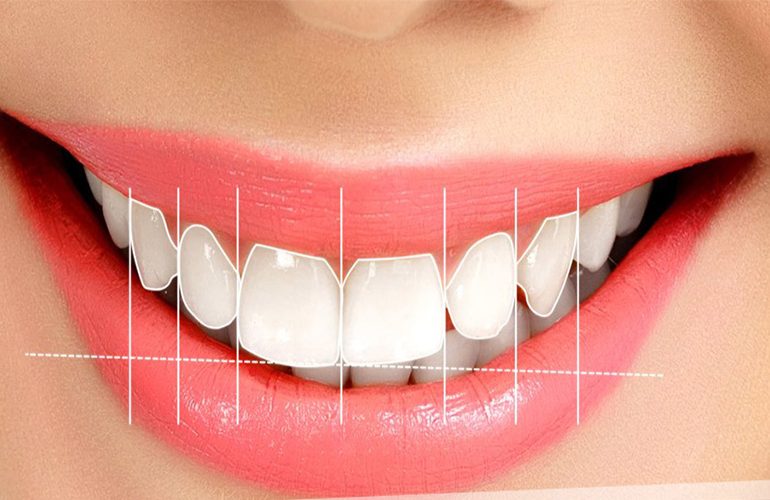
The gap between the front teeth is called a diastema in dentistry. Some people embrace it as a characteristic feature of their smile, while others want it closed. Both are legitimate choices. When the decision to close a diastema is made, more than one method comes into consideration, and the right choice depends on the cause of the gap. As DijiDent Oral and Dental Health Polyclinic, in Türkiye we start this evaluation by identifying the cause.
Why Does a Gap Form?
- Tooth-jaw size mismatch: When the teeth are small relative to the jaw, spaces remain open.
- Thick lip frenulum: The tissue attaching the upper lip extending between the teeth.
- Small lateral incisors: The lateral teeth being narrower than normal.
- Missing teeth: Spaces opening due to the absence of a tooth.
- Gum disease: Teeth shifting due to loss of support.
- Habits: Long-term pressures such as tongue thrusting.
Closing procedures done without knowing the cause can result in reopening in a short time. For example, a gap closed without bringing gum disease under control will form again as the process progresses.
The Situation Is Different in Children
During the period when baby teeth and permanent teeth are mixed, it is often normal to see gaps between the front teeth. As the canines erupt, these spaces close on their own in most children. For this reason, orthodontic follow-up is recommended rather than early intervention.
Closing Methods
Orthodontic Treatment
It is the most conservative method; the spaces are closed without touching the teeth at all. Clear aligners or fixed orthodontics can be used. It takes time and retention is mandatory afterwards. If retention is not done, the gap may reopen; this is the most critical condition of this method.
Composite Bonding
The gap is closed by adding composite to the side surfaces of the teeth. It is usually completed in a single session and in suitable cases does not require preparation. If the gap is wide, the teeth may look disproportionately wide; for this reason, it is more suitable for limited spaces.
Porcelain Laminate
It offers more permanent surface quality. It requires a laboratory stage and, depending on the case, some preparation may be needed. It is usually preferred in plans covering more than one tooth.
Combined Approach
It is the most frequently applied path for wide gaps: the space is reduced with orthodontics and the remaining limited gap is closed restoratively. In this way, tooth proportions are preserved and the need for preparation is minimized.
Proportion Calculation in the Closing Decision
When closing a gap, the width-to-length ratio of the teeth must not be disrupted. Closing a wide space by widening only the two front teeth can make the teeth look square and disproportionate. For this reason, in some plans the gap is distributed over more than one tooth or first reduced orthodontically. At the design stage, this calculation is done on the digital model and verified with a trial.
Black Triangles
The triangular spaces that form between teeth as a result of gum recession are called black triangles. These are different from a diastema, because the problem is not in the position of the teeth but in the retreat of the gum tissue in between. The approach is also different: first gum health is established, then moving the contact point of the teeth downward restoratively or orthodontic approaches are considered. It should be noted that lost gum tissue does not grow back on its own.
Evaluation in Terms of Cleaning
When the gap is closed, the area that was previously easily cleaned becomes a contact point. For this reason, using dental floss becomes important after the application. The way the restoration ends toward the gum is also decisive; an overhanging margin can lead to plaque accumulation and gum inflammation. At our clinic, this area is checked separately after the application.
Do You Have to Close It?
No. A diastema is not a disease, and if it does not cause a functional problem, no treatment is needed. Many people carry this feature as part of their smile. The decision is entirely yours; our duty is to explain the options and their limits.
Frequently Asked Questions
It will not open as long as the restoration stays in place; however, if the cause has not been eliminated, changes may occur in neighboring areas.
It can if retention is not used. Retention is mandatory in this treatment.
In wide gaps, a restoration alone can disrupt proportions; for this reason, a combined approach is recommended.
It may be necessary in some cases. The timing and necessity are determined by the dentist’s evaluation.
In many children, it closes as the permanent teeth erupt. Follow-up is recommended.
Learn the cause of your gap before closing it.
Let us evaluate together the method that suits you and whether it is really necessary. Contact us to book an appointment; let us compare your options at DijiDent Oral and Dental Health Polyclinic.
This content is for general information purposes; the method and results vary from person to person. The decision is made with a dentist’s examination.