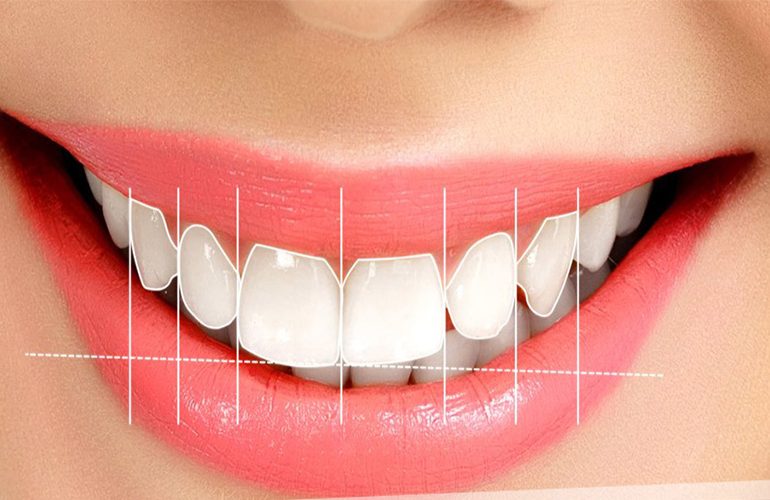
One of the most common causes of failure in aesthetic dental treatments is not the restoration itself but the foundation beneath it. A crown made while the gums are not healthy will cause problems in a short time, however carefully it is made technically. The relationship between aesthetic treatment and gum health is therefore the first item of planning. As DijiDent Oral and Dental Health Polyclinic, in Türkiye we do not start aesthetic applications before the foundation is ready.
Why Is It a Prerequisite?
Impression Accuracy
The crown margin is often finished close to the gum edge. Inflamed gums bleed when touched; in an impression taken while there is bleeding, this margin cannot be read. As a result, incomplete information goes to the laboratory and the marginal fit is disrupted. The same limit applies to digital impressions: the scanner records whatever it sees.
Variability of Tissue Position
Inflamed gums are swollen and sit higher than they should. After treatment, as the inflammation subsides, the tissue recedes. In this case, the margin of a restoration prepared while the gums were inflamed becomes exposed over time and a gray line or color difference appears.
Long-Term Success
When gum disease progresses, loss of supporting tissue and bone develops. This can lead to changes in the position of the teeth and the restorations becoming ill-fitting. Protecting the aesthetic investment depends first of all on protecting the tissue.
Gum Level in Aesthetic Planning
The gum is not only a health issue; it also forms the frame of the smile. When the teeth do not look the same length, the problem is sometimes not in the teeth but in the irregularity of the gum margins. In this case, the proportion can be improved by adjusting only the level, without touching the tooth at all.
When the adjustment is made, the underlying bone level and the tissue relationship called the biological width are taken into account. In applications done without considering this criterion, the tendency of the tissue to return to its former position increases and chronic inflammation may develop.
Gum Biotype
The thickness of gum tissue varies from person to person. In patients with thin tissue, restoration margins and the underlying material can show through more easily; in addition, these tissues are more prone to recession. In thick tissue, the situation is more tolerant. This distinction affects where the margin will be finished and which material will be chosen. In the thin biotype, metal-free options come to the fore in the aesthetic zone.
How Is the Process Planned?
- Evaluation: Pocket depths are measured, the bleeding index and bone level are examined.
- Treatment: Professional cleaning, root planing if necessary and home care training.
- Healing: Time is allowed for the tissue to become stable.
- Re-evaluation: If bleeding has stopped and the tissue has become stable, the aesthetic stage is started.
- Maintenance: A regular check-up program is planned after treatment.
These stages lengthen the duration; however, if they are skipped, the time lost is much greater. Renewing a restoration that causes problems in a short time is both longer and more costly than a treatment planned correctly from the start.
Smoking and the Gums
Smoking negatively affects the healing response of gum tissue and can mask warning signs such as bleeding. We discuss this issue openly with our patients for whom aesthetic treatment is planned, because it is a factor that directly affects the permanence of the result.
The Patient’s Role
Maintaining gum health depends more on what is done at home than on what is done at the clinic. In a mouth where interdental cleaning is not done, even the best restoration will have problems at the margin area. We care about care habits being established before starting aesthetic treatment.
Frequently Asked Questions
Non-urgent aesthetic applications are usually planned for after delivery; gum health, however, is monitored during this period.
It is recommended that they be treated first. An impression taken and a restoration made while there is bleeding will not be reliable.
If bleeding, pocket depth and bone level are found suitable on examination, the aesthetic stage can be moved to directly.
It varies according to the level of the disease; additional time is needed for healing.
With the appropriate indication and correct technique, it usually remains stable; however, care is decisive.
It may be marginal misfit, plaque accumulation or insufficient cleaning. Evaluation is needed.
Well-planned and well-fitting restorations do no harm; ill-fitting margins can cause problems.
There is no permanent aesthetics without a solid foundation.
Let us evaluate your gum health and build your aesthetic plan in the correct order. Contact us to book an appointment; let us start the process on a solid footing at DijiDent Oral and Dental Health Polyclinic.
This content is for general information purposes. The diagnosis and treatment plan are determined by your dentist after the clinical examination.