Implant treatment is not a single procedure, but a planned process consisting of several successive stages. The topics patients are most curious about are how long the treatment will take, how many appointments it will require and what they will encounter during this time. Knowing the implant treatment process step by step helps you form your expectations realistically and plan your schedule. As DijiDent Oral and Dental Health Polyclinic, we offer our patients in Türkiye a personalized treatment schedule after the examination.
Examination and Comprehensive Evaluation
The process begins with a detailed oral examination and taking a health history. The medications you use, your chronic illnesses, your smoking and your previous treatments are evaluated. The health of the gums and the condition of the remaining teeth are examined. If there is gum disease or caries that need to be treated, eliminating these problems before the implant is planned.
Imaging and Digital Planning
With three-dimensional dental tomography, the height, width and density of the bone and the distance to structures such as the nerve canal and the sinus are evaluated. Digital impressions taken with an intraoral scanner are combined with this data, and the position, angle and size of the implant are planned in a virtual environment. Planning is done taking into account the ideal position of the tooth that will go on top. When necessary, a surgical guide is produced from this plan.
Preparatory Procedures (If Necessary)
If bone volume is insufficient, additional procedures such as bone grafting or sinus lifting may be planned. These procedures can be done in the same session as the implant, or in some situations they may be done beforehand and their healing awaited. If there are teeth that need to be extracted, the timing of the extraction and the implant is also determined at this stage.
Implant Surgery
The procedure is done under local anesthesia. The bone is reached by opening the gum or, in suitable cases, through a small entry; the implant socket is prepared in the planned position and the implant is placed. For a single implant, the procedure usually takes a short time; the duration varies according to the number of implants and additional procedures. Pain is not expected to be felt during the procedure; pressure and vibration may be felt.
Same-Day Implant with Extraction
In suitable cases, an implant can be placed in the same session immediately after the tooth is extracted. The suitability of this approach depends on the infection status, bone structure and the initial stability of the implant.
Healing and Osseointegration
After the implant is placed, a healing period is waited for the bone to fuse with the implant surface. This period is generally shorter in the lower jaw than in the upper jaw and varies according to bone quality, additional procedures and the patient’s general health. In most cases, it is a process of a few months. Mild pain and swelling may be seen in the first days; following your dentist’s recommendations supports healing.
Will I Be Without Teeth During This Time?
Temporary solutions are planned so that you are not left without teeth, especially in the front region for aesthetic reasons. In suitable cases, a temporary tooth can be placed on the implant immediately; in other situations, temporary removable or bonded solutions can be used.
Healing Abutment and Gum Shaping
In cases where closed healing is applied, after osseointegration is complete, the top of the implant is opened with a small procedure and a healing abutment is attached. This abutment ensures that the gum is shaped in a way that suits the superstructure. In some cases, the abutment is attached directly during surgery and there is no need for this stage.
Impression and Preparation of the Superstructure
After the gum has healed, an impression is taken with a digital scanner. The abutment and crown are designed and produced in line with color, form and bite information. A try-in is done if necessary.
Placement of the New Teeth
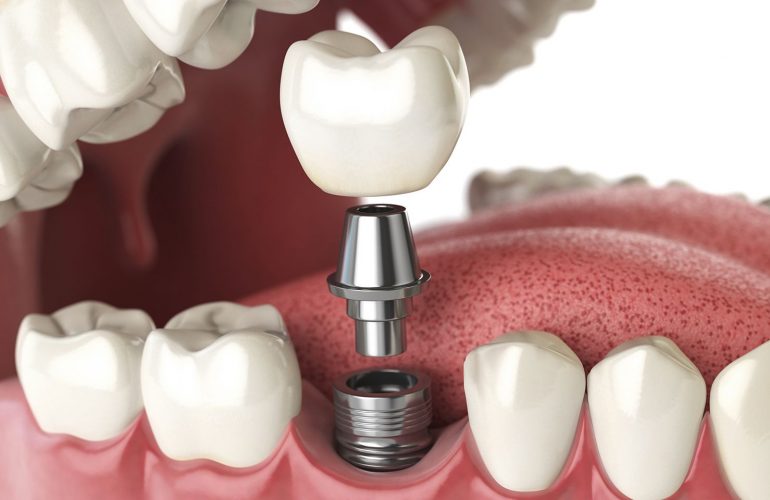
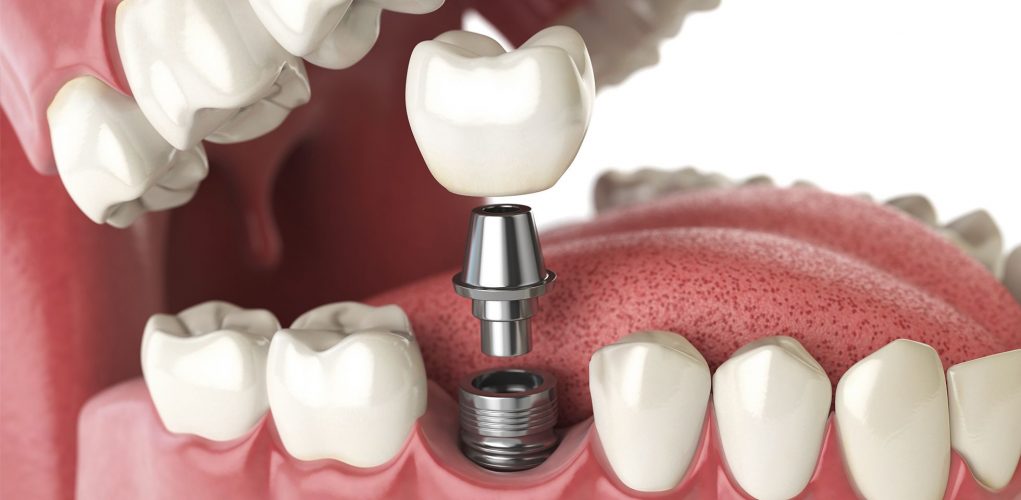
The superstructure is placed on the implant by screwing or cementing. The bite is checked and the necessary adjustments are made. At this stage, how to clean around the implant is demonstrated in the mouth.
Check-Ups and Long-Term Care
After the treatment is completed, the tissues around the implant, the bone level and the condition of the superstructure are evaluated at regular check-ups. Good oral care and regular follow-up contribute to the implant remaining healthy for a long time.
The First Days After Surgery
On the first day after the procedure, applying cold to the cheek intermittently, eating lukewarm and soft foods, not straining the area and staying away from smoking are recommended. It is important to use the painkillers recommended by your dentist and, if deemed necessary, other medications as indicated. Stitches are usually removed between a few days and two weeks.
Factors Affecting the Treatment Duration
- Bone condition: The need for bone augmentation can extend the duration.
- Jaw region: The healing period is generally longer in the upper jaw.
- Extraction timing: A same-day implant with extraction can shorten the duration.
- General health: Diabetes, smoking and some medications can affect healing.
- Number of implants and type of prosthesis: Full-jaw solutions require more comprehensive planning.
Frequently Asked Questions
In most cases, it takes a few months. The need for bone augmentation, the jaw region and general health affect the duration. The personal schedule is determined after the examination.
A single implant is usually placed in a short time; the duration varies according to the number of implants and additional procedures.
Temporary solutions are planned, especially in the front region. In suitable cases, a temporary tooth can be attached on the same day.
It is possible in suitable cases. Infection, bone structure and the initial stability of the implant are evaluated.
Generally, at least two visits are required for surgery and the superstructure. When preliminary imaging is shared, the schedule can be planned in advance.
Let us clarify your treatment schedule from the start.
Contact us to book an appointment to learn your personalized implant treatment process and schedule. Let us do your digital planning together at DijiDent Oral and Dental Health Polyclinic.
This content is for general information purposes and does not replace an examination by a dentist. Treatment duration and stages vary from person to person; the plan is determined after clinical evaluation.