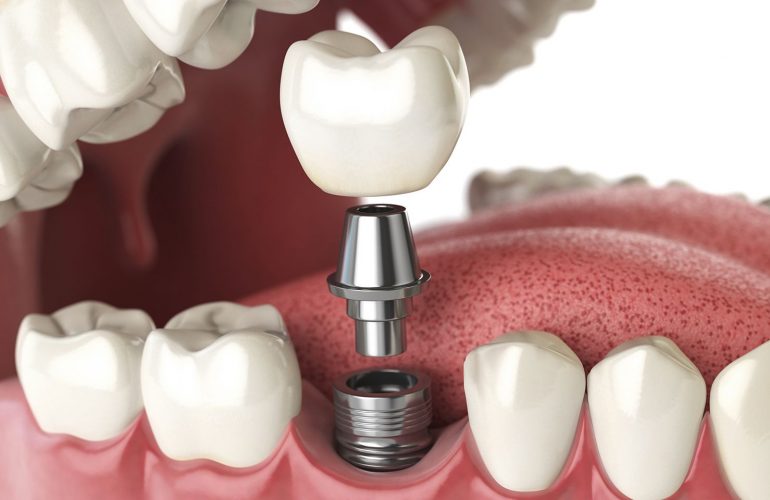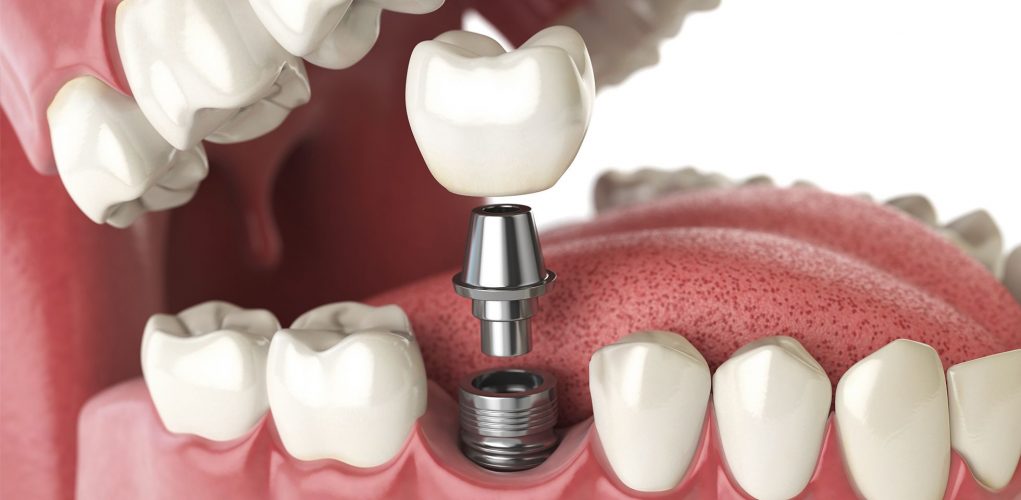
At the foundation of the success of implant treatment lies a strong and lasting connection established between the artificial root and the jawbone. This biological process enables the implant to carry chewing forces for years. The way to understand why a certain period is waited before the superstructure is attached after the implant is placed is to get to know this process. The answers to the questions of what osseointegration is and which factors affect this process help you manage your treatment process more consciously. As DijiDent Oral and Dental Health Polyclinic, we explain this process to our patients in Türkiye in plain language.
What Is Osseointegration?
Osseointegration is the establishment of a direct structural and functional connection between living bone tissue and a load-bearing implant surface. The concept emerged in the 1950s and 60s when Swedish researcher Per-Ingvar Brånemark observed that titanium could fuse with bone, and it formed the basis of modern implant treatment. In this process, bone cells grow toward the implant surface and fix the implant as if it were a part of the bone.
How Does the Process Work?
Primary Stability
The initial stability provided by the implant seating mechanically and tightly in the bone at the moment it is placed is called primary stability. This is similar to a screw holding in wood. Bone quality, the design of the implant and the surgical technique affect this stability.
Bone Remodeling
In the weeks following surgery, a natural remodeling process begins in the bone around the implant. During this period, while mechanical stability decreases somewhat, biological stability begins to increase with new bone formation. This transition period is a phase in which it is important to protect the implant from excessive loads.
Secondary (Biological) Stability
The newly formed bone attaches to the implant surface and forms a lasting connection. When this stage is reached, the implant becomes able to carry chewing forces and the superstructure can be attached.
How Long Does Osseointegration Take?
The duration varies from person to person; however, it is generally shorter in the lower jaw than in the upper jaw. Since the lower jawbone is generally denser, fusion may occur faster. In the upper jaw, especially in the back regions, the duration may be extended because the bone has a more spongy structure. If additional procedures such as bone grafting or sinus lifting have been done, the healing period is planned to be longer. In most cases, it is a process of a few months.
Factors Affecting Fusion
Patient-Related Factors
- Smoking: It negatively affects bone healing by reducing blood flow and increases the risk of failure.
- Uncontrolled diabetes: It can weaken tissue healing and resistance to infections.
- Bone quality: Low-density bone may require more careful planning.
- Some medications: Medications affecting bone metabolism can affect the process; your dentist must be informed.
- History of radiotherapy: Radiation therapy applied to the head and neck region requires special evaluation.
- Oral hygiene: Keeping the area clean during the healing period reduces the risk of infection.
Implant- and Surgery-Related Factors
- Implant surface: The roughened surfaces used today make it easier for bone cells to attach.
- Surgical technique: Preparing the bone carefully without overheating it is important for preserving bone cells.
- Correct position: Digital planning helps position the implant within sufficient bone.
- Early loading: Uncontrolled loading of the implant during the healing period can prevent fusion.
What Should Be Considered During the Healing Period?
- Quit or take a break from smoking: Staying away from smoking is recommended, especially in the period before and after surgery.
- Do not strain the area: Do not chew hard foods with the implant area for the period your dentist recommends.
- Oral hygiene: Keep the area clean as your dentist recommends.
- Come to your check-ups: Do not miss the appointments planned to monitor healing.
- Care with temporary dentures: Care is taken that removable temporary dentures do not put pressure on the implant area.
Immediate Loading and Osseointegration
In suitable cases, a temporary tooth can be attached on top of the implant shortly after it is placed. This approach is considered in situations where sufficient primary stability is achieved and load distribution can be controlled. The aim here is to protect the bone fusion process by designing the temporary tooth so that it keeps chewing forces limited. Not every case is suitable for immediate loading; the decision is made by measuring bone quality and the initial stability of the implant.
What Happens If the Implant Does Not Fuse?
Although success rates are high, in some situations the implant may not fuse sufficiently with the bone. This is usually noticed at check-ups done during the healing period or before the superstructure. In such a situation, the implant is removed, the healing of the area is awaited, and after the risk factors are re-evaluated, a new implant can be planned in suitable cases.
How Is Fusion Evaluated?
The status of fusion is evaluated with clinical examination, radiographic imaging and, when necessary, devices that measure implant stability. At DijiDent, we aim to make sure the implant is ready to bear load by carrying out these evaluations before moving on to the superstructure stage.
Frequently Asked Questions
It is the establishment of a direct and lasting connection between the implant surface and living bone.
It usually takes a few months. It may be shorter in the lower jaw, and longer in the upper jaw and in cases where additional procedures are done.
Yes. Smoking negatively affects bone healing and can increase the risk of failure.
It is possible in many situations; however, the medications used and bone quality must be evaluated in detail.
In suitable cases, a new implant can be planned after the area has healed and the risk factors have been evaluated.
A solid foundation is the beginning of a long-lasting implant.
Contact us to book an appointment to have your bone structure and risk factors evaluated for implant treatment. Let us plan your treatment digitally at DijiDent Oral and Dental Health Polyclinic.
This content is for general information purposes and does not replace an examination by a dentist. Healing time and results vary from person to person; the decision is made after clinical evaluation.