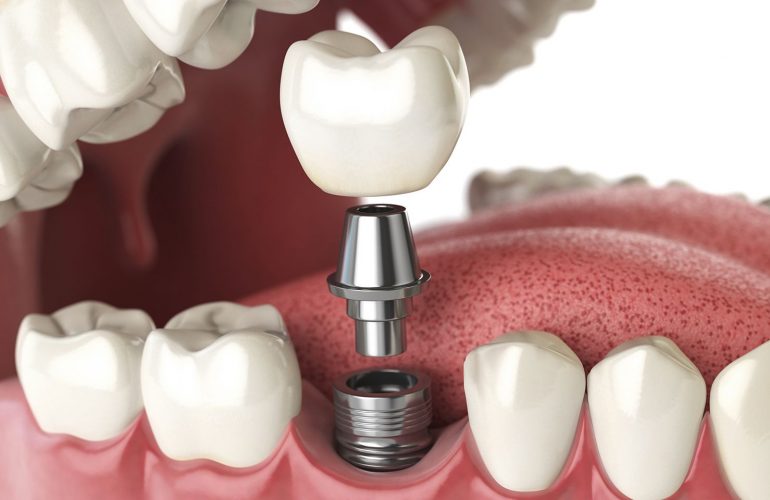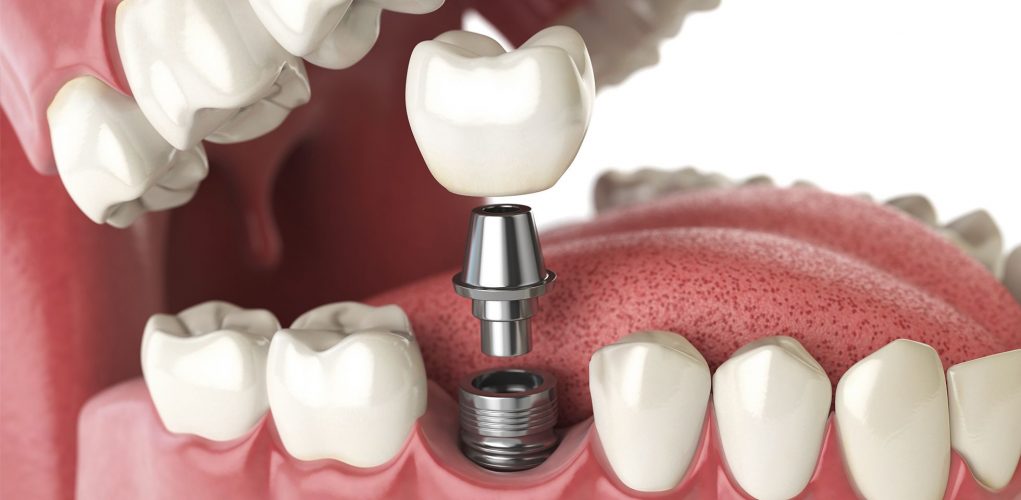
Implants do not decay; however, the gum and bone around them can be affected by bacterial plaque, just as with natural teeth. For this reason, one of the most important conditions for an implant to remain healthy for many years is correct daily cleaning. Moreover, the cleaning method and the tools to be used differ according to the type of implant-supported prosthesis. Cleaning around implants correctly is the most effective and least costly way to protect your implant. As DijiDent Oral and Dental Health Polyclinic, we offer our patients in Türkiye a practical care guide according to prosthesis types.
Why Does Implant Cleaning Require Special Attention?
In a natural tooth, there is a strong connective tissue attachment between the gum and the tooth. Around an implant, however, this attachment has a different structure and may be somewhat more vulnerable to bacteria. The shape of implant-supported prostheses can also make plaque accumulation easier in some areas. For this reason, the area around the implant, especially the area where it meets the gum, needs to be cleaned carefully every day.
Basic Tools
- Soft-bristled toothbrush: It can be manual or electric; it cleans without irritating the gum margin.
- Single-tuft brush: This brush, which has a single tuft of bristles, provides targeted cleaning of the area where the implant meets the gum.
- Interdental brushes: Models with plastic-coated wire can be preferred for use around implants.
- Implant and bridge floss: Special floss with a stiff end and a spongy section can be threaded under bridges and prostheses.
- Water flosser: It can be used as an auxiliary tool, especially with bridges and full-arch prostheses.
Cleaning by Prosthesis Type
Single Implant Crown
A single implant is brushed twice a day like a natural tooth. Holding the brush at an angle of about 45 degrees to the gum line, pay particular attention to the area where the implant meets the gum. Use floss or an interdental brush of the appropriate size for the contact areas with the neighboring teeth. A single-tuft brush provides additional cleaning at the gum margin of the crown.
Implant-Supported Bridge
In a bridge, there are surfaces under the pontic teeth that sit on the gum, and these areas cannot be cleaned with normal brushing. Thread the bridge floss under the bridge with the help of its stiff end, and clean the lower surface of the pontic tooth and the area around the implant with its spongy part. Use interdental brushes around the supporting implants. A water flosser can help remove debris under the bridge.
Full-Arch Fixed Prosthesis
In full-arch fixed prostheses, there is an area between the prosthesis and the gum that needs to be cleaned. A single-tuft brush, interdental brushes and special floss that can be threaded under the prosthesis are used together. A water flosser can be especially useful with these prostheses. Because of areas that cannot be reached at home, it may be necessary for the dentist to remove the prosthesis and perform professional cleaning at regular check-ups.
Implant-Supported Removable Denture
Remove the denture and clean its inner surface, the retention parts and the denture teeth with a denture brush and soapy water or a denture cleaner. Also clean the implant attachments or the bar in the mouth every day with a soft brush and a single-tuft brush; use an interdental brush or special floss under the bar. Follow your dentist’s recommendation on whether to remove the denture at night.
Things to Avoid
- Hard brushes and abrasive toothpastes: They can scratch prosthesis surfaces and increase plaque retention.
- Sharp metal-tipped instruments: Do not try to scrape around the implant with toothpicks or metal instruments.
- Forcing: Do not force the interdental brush into the gap; consult your dentist for the correct size.
- Skipping cleaning: The absence of pain does not mean that the area is healthy.
These mistakes are often made with good intentions; reviewing your technique at check-ups ensures that mistakes made unknowingly are corrected.
Professional Cleaning and Check-Ups
No matter how good your home care is, deposits may form in some areas. At regular check-ups, the tissues around the implant are evaluated, the bone level is compared with radiographic images when necessary, and professional cleaning is performed with special instruments that do not damage the implant surface. The check-up interval is determined according to your risk factors and your prosthesis type.
Warning Signs
If you notice bleeding while brushing around the implant, redness, swelling, a bad taste or odor, gum recession or loosening of the prosthesis, contact your clinic without waiting for the next check-up. These symptoms may be a sign of an inflammation that can easily be brought under control at an early stage.
A Personalized Care Plan
At DijiDent, when implant treatment is completed, we explain the cleaning tools and techniques suitable for your prosthesis type by demonstrating them in your mouth. At check-ups, we review your care together and update the tools and methods if necessary.
Frequently Asked Questions
Brushing is fundamental; however, using additional tools for the area around the implant and the interdental spaces is recommended.
When used in the correct size and without forcing, it is not expected to cause damage. Plastic-coated wires can be preferred.
It is an auxiliary tool; it does not replace a brush and interdental cleaning tools.
A single-tuft brush, interdental brushes, special floss and a water flosser are used together; professional cleaning is performed at check-ups.
The check-up interval is determined by your dentist according to your risk factors and prosthesis type.
The life of your implant is extended by your daily care.
Contact us to book an appointment to learn the care tools and techniques suitable for your prosthesis type and to have your check-up. Let us create your care plan together at DijiDent Oral and Dental Health Polyclinic.
This content is for general information purposes and does not replace an examination by a dentist. Care methods vary according to the prosthesis type and the person; follow your dentist’s recommendations.