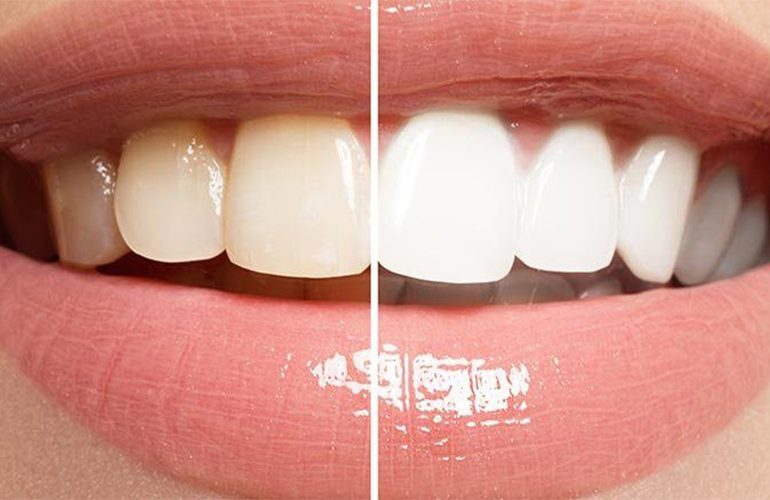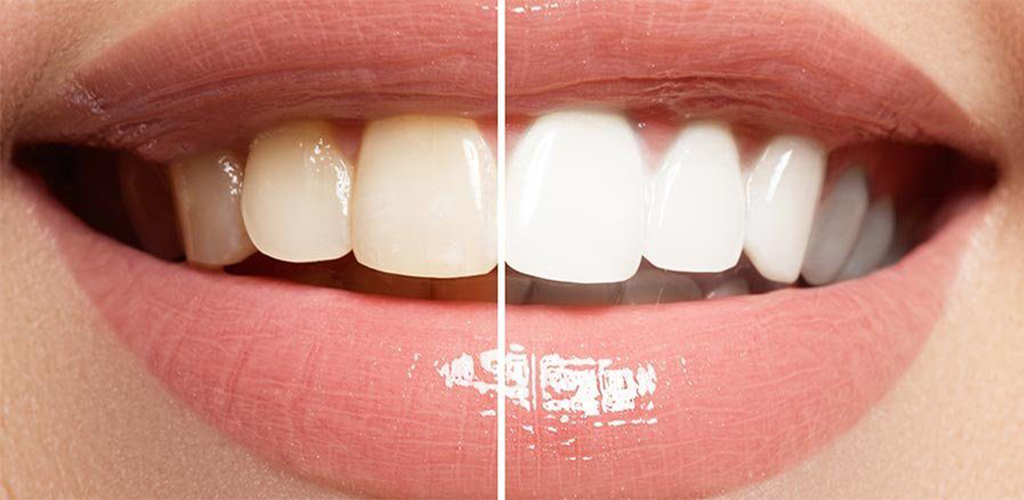
The most frequently voiced concern of patients considering teeth whitening is whether the procedure will damage their teeth. Beliefs that it will dissolve the enamel, make the teeth brittle or cause permanent sensitivity are quite common. Yet scientific studies show that whitening done under a dentist’s supervision and with appropriate protocols is generally considered safe. Knowing the correct answer to the question of whether teeth whitening is harmful allows you both to free yourself from unnecessary fears and to understand the real risks. As DijiDent Oral and Dental Health Polyclinic, we provide our patients in Türkiye with transparent and science-based information on this topic.
Does Whitening Erode the Enamel?
Professional whitening does not cut or scrape tooth tissue. The active substances in the whitening gel work by breaking down the color molecules inside the enamel and dentin. In applications done with appropriate concentrations and durations, it is accepted that it does not cause permanent damage to the enamel structure. It is thought that small changes that may be seen on the enamel surface during application are balanced over time by the natural repairing effect of saliva.
What is important here is that whitening is done under a dentist’s supervision, with correct patient selection and in accordance with the recommended protocols. Excessively frequent, long-term or uncontrolled applications, on the other hand, can increase the risks.
Does Whitening Weaken the Teeth?
There is no strong evidence that whitening done under a dentist’s supervision markedly reduces the strength of the tooth. Whitening is not a procedure that changes the structural integrity of the tooth. However, in teeth with cracks, caries or leaking fillings, the whitening agent reaching the inner part of the tooth more easily can increase sensitivity. For this reason, it is important that these problems are treated before whitening.
Sensitivity: The Most Common Side Effect
During or after whitening, sensitivity to cold or a short-lived twinge may be seen in the teeth. This is caused by the whitening agent temporarily stimulating the nerve endings through the dentinal tubules. Sensitivity is usually temporary and decreases within a few days after the procedure ends.
To Reduce Sensitivity
- Preliminary examination: Exposed root surfaces, cracks and caries are evaluated in advance.
- Desensitizing products: They can be used before and during whitening on the dentist’s recommendation.
- Suitable concentration and duration: In sensitive patients, a lower concentration or shorter application times can be preferred.
- Taking a break: In at-home whitening, if sensitivity becomes pronounced, the application can be paused for a few days.
- Avoiding hot and cold foods: In the first days after the procedure, very hot or very cold foods and drinks can be avoided.
If you have previously experienced marked sensitivity after whitening, informing your dentist allows the next application to be planned accordingly.
Gum Irritation
Contact of the whitening gel with the gum can lead to temporary whitening, burning or irritation at the gum margin. In in-office whitening, covering the gums with a protective barrier, and in at-home whitening, using custom-made trays and applying the correct amount of gel, reduce this risk. Any irritation that occurs usually goes away on its own in a short time.
Where Are the Real Risks?
- Uncontrolled high-concentration products: Products used without a dentist’s supervision can lead to serious irritation and sensitivity.
- Ill-fitting trays: Ready-made trays can cause the gel to overflow onto the gum.
- Overly frequent application: Whitening more often and for longer than recommended can increase the risk of sensitivity and changes to the enamel surface.
- Untreated problems: The risk of pain and sensitivity is high in teeth with caries and cracks.
- Abrasive home methods: Applications such as charcoal powder, baking soda and lemon can erode the enamel and cause permanent damage.
Most of these risks can be prevented with a dentist’s examination and supervision.
How Many Times Can Whitening Be Done?
After whitening, the color may darken somewhat over time, and in this case touch-up applications can be done. However, how often whitening can be repeated should be determined by your dentist’s evaluation. Uncontrolled applications repeated at short intervals are not recommended. Periodic and short touch-ups done with at-home trays can be a more controlled way of maintaining the result.
To support the natural recovery of the enamel surface after whitening, your dentist may recommend fluoride products or remineralization products.
Who Should It Not Be Applied To?
Whitening is not recommended or is postponed for women who are pregnant or breastfeeding, individuals under 18 years of age, those with untreated caries or gum disease, and those who are allergic to whitening products.
Our Approach to Safe Whitening
At DijiDent, before whitening, we carry out a comprehensive examination, treat any caries and gum problems first, evaluate the risk of sensitivity and determine the concentration and method suitable for you. Our aim is to achieve a realistic and natural result while protecting the health of your teeth.
Frequently Asked Questions
When done under a dentist’s supervision and with appropriate protocols, it is not expected to cause permanent damage to the enamel.
It is usually temporary and decreases within a few days.
There is no strong evidence that dentist-supervised whitening markedly reduces tooth strength.
No. Because of its abrasive nature, it can damage the enamel.
The frequency of repetition should be determined by the dentist; uncontrolled and frequent applications are not recommended.
Safe whitening begins with the right evaluation.
Contact us to book an appointment to have your teeth evaluated for whitening suitability and possible risks. Let us create a personalized and safe plan at DijiDent Oral and Dental Health Polyclinic.
This content is for general information purposes and does not replace an examination by a dentist. Whitening should only be done with a dentist’s examination and supervision.