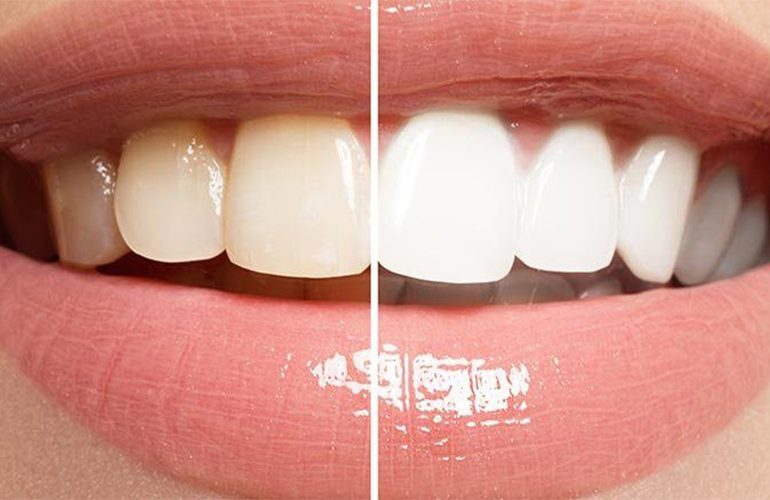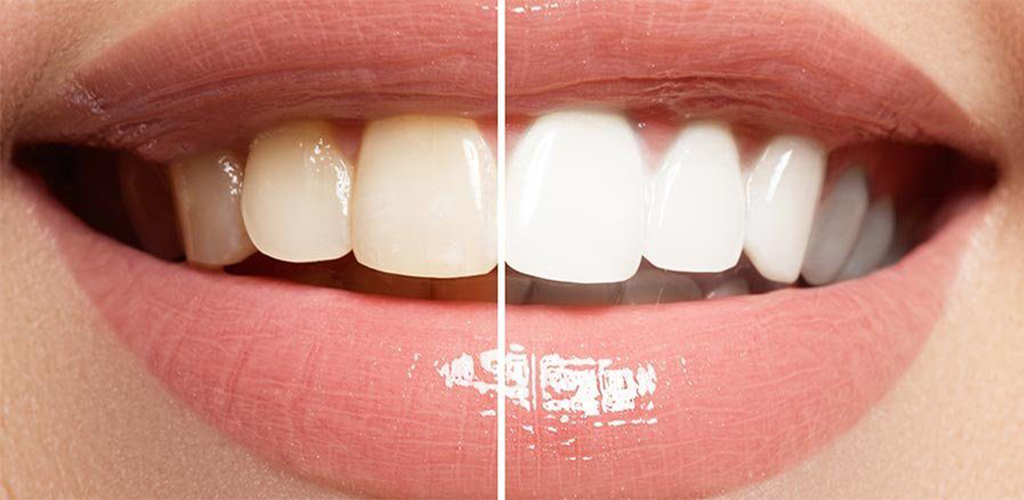
The color of the teeth is one of the most noticeable elements of a smile. Over time, teeth can yellow or darken due to aging, eating habits and some external factors. Teeth whitening is one of the most frequently used procedures in aesthetic dentistry, aiming to lighten the color of the teeth without cutting or abrading tooth tissue. Knowing the answers to the questions of what teeth whitening is, how it is done and who it is suitable for allows you to make a decision safely and with realistic expectations. As DijiDent Oral and Dental Health Polyclinic, we apply whitening for our patients in Türkiye under a dentist’s examination and supervision.
How Does Teeth Whitening Work?
In professional teeth whitening, gels containing hydrogen peroxide or carbamide peroxide are generally used. These substances convert the pigment molecules that create color in the enamel and dentin structure into smaller and lighter-colored molecules through oxidation. In this way, the overall color of the tooth is lightened without removing tooth tissue. Whitening does not form a coating on the surface of the tooth; it changes the tooth’s own color.
Whitening Methods
In-Office (Clinic) Whitening
This is the method applied in the clinic under the dentist’s supervision. After the gums are protected with a protective barrier, a higher-concentration whitening gel is applied to the teeth. Marked results can be achieved in a short time. More than one session may be planned when necessary.
At-Home (Dentist-Supervised) Whitening
A lower-concentration whitening gel is placed in clear trays prepared by the dentist specifically for the patient’s teeth, and these are used at home for set periods. The results appear more gradually. The process is planned and followed up by the dentist.
Combined Method
Starting with an in-office application and continuing with at-home whitening may be preferred in some patients to support the result.
Single-Tooth (Internal) Whitening
In teeth that have had root canal treatment and have discolored from within, the whitening agent is applied inside the tooth. This method requires a separate evaluation.
Why Is an Examination Before Whitening Important?
A comprehensive oral examination is necessary before starting the whitening procedure. If there are caries, leaking fillings, exposed root surfaces, cracks or gum diseases, they must be treated before whitening; otherwise, the risk of sensitivity and irritation may increase. In addition, the cause of the discoloration is determined, because the effectiveness of whitening varies according to the type of discoloration. If there is tartar or surface staining, professional cleaning is done first.
Who Is It Suitable For?
Adults who have healthy teeth and gums and whose teeth have yellowing due to age, diet or smoking are generally suitable candidates for whitening. Yellow-toned discolorations generally respond better to whitening than gray-toned discolorations.
Situations Requiring Careful Evaluation
- Pregnancy and breastfeeding: Whitening is not recommended during these periods and is postponed.
- Under 18 years of age: Whitening is generally not recommended for teeth that are still developing.
- Marked tooth sensitivity: The cause of the sensitivity is evaluated first.
- Untreated caries and gum disease: These must be treated first.
- Many fillings, crowns or veneers on the front teeth: These restorations do not whiten; this is taken into account when planning the result.
- Some types of discoloration: The result may be limited with tetracycline-related or markedly gray-toned discolorations.
Do Fillings and Crowns Whiten?
Composite fillings, porcelain or zirconia crowns and veneers do not respond to whitening gel; their color does not change. For this reason, in patients with restorations on their front teeth, a color mismatch may occur after whitening. Generally, whitening is done first, and after the color has stabilized, the restorations are renewed to match the new color if necessary.
Possible Side Effects
The most common side effect is temporary tooth sensitivity, which can appear during or after the procedure. Short-lived irritation at the gum margin may also be seen. These effects are usually temporary and decrease within a few days. Your dentist can offer products and application recommendations to reduce sensitivity.
The Importance of Dentist Supervision
The use of high-concentration whitening products is restricted by legal regulations, and these products may only be applied by dentists or under a dentist’s supervision. Dentist supervision is important in terms of correct patient selection, protecting the gums, managing sensitivity and planning a realistic result. Products obtained online or from uncontrolled sources can carry risks for tooth and gum health.
Realistic Expectations
The result of whitening varies from person to person. The initial color of the teeth, the cause of the discoloration, the enamel structure and the person’s habits affect the result. Whitening does not aim to bring the teeth to an unnatural whiteness, but to the most suitable lightness achievable within the person’s own teeth. At DijiDent, by measuring the color before the procedure, we set your expectations together in a realistic way.
Frequently Asked Questions
When applied under a dentist’s supervision and with appropriate protocols, it is not expected to cause permanent damage to the enamel structure; temporary sensitivity may be seen.
It varies according to the method and the initial color; one or a few sessions can be planned for in-office whitening, and a few weeks of use for at-home whitening.
No. The color of fillings and crowns does not change; they can be renewed afterwards if necessary.
No. It is not applied or is postponed in situations such as pregnancy, breastfeeding, being under 18 and untreated oral problems.
It can be maintained for a long time; however, some color may return over time depending on diet and habits.
A brighter smile begins with the right evaluation.
Contact us to book an appointment to learn whether your teeth are suitable for whitening and to determine the method that suits you. Let us carry out your color analysis together at DijiDent Oral and Dental Health Polyclinic.
This content is for general information purposes and does not replace an examination by a dentist. Whitening results vary from person to person; a specific color result cannot be guaranteed.