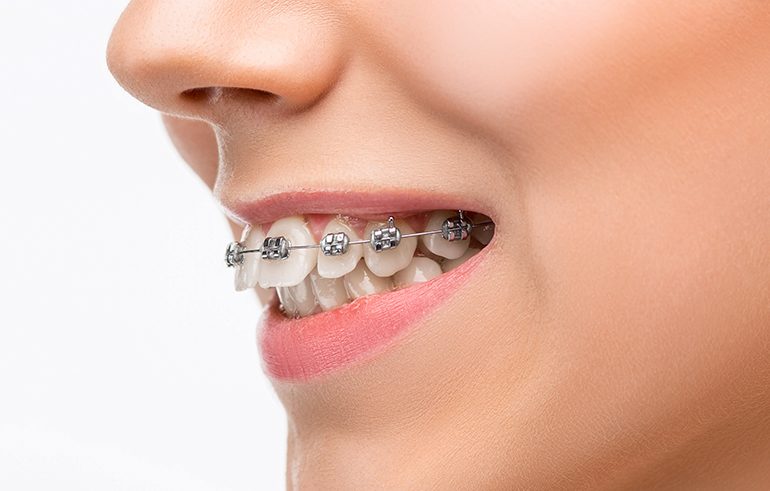
In orthodontic treatment, nutrition is not only a matter of comfort. A wrong choice leads to a bracket coming off, which causes the treatment to be prolonged. On the other hand, excessive restriction may reduce nutritional quality, especially in patients who are still growing. The right balance in eating with braces lies not in knowing what to give up completely, but in knowing how to eat it. As DijiDent Oral and Dental Health Polyclinic, in Türkiye we offer our patients practical recommendations.
The First Days
Sensitivity for a few days after the braces are fitted or after each tightening appointment is normal. In this period, soft foods are preferred: soup, yogurt, purée, eggs, well-cooked vegetables, pasta, minced meat and soft fruits such as bananas. Lukewarm foods are usually better tolerated; very hot and very cold options may increase sensitivity.
Sensitivity usually decreases within a few days. In this process, rather than avoiding chewing completely because of pain, it is important to continue eating soft foods; the chewing movement supports circulation and may speed up adaptation.
Foods to Avoid
Hard Foods
These are the most common cause of brackets coming off. Nuts, hard candies, ice, unpopped popcorn kernels, hard bread crusts and raw carrots are in this group.
Sticky Foods
Turkish delight, caramel, gum and sticky sweets can pull the bracket and detach it. They also stick between the wire and brackets and make cleaning difficult.
Foods Bitten with the Front Teeth
Foods such as apples, pears, corn and sandwiches are not forbidden; however, they should not be bitten with the front teeth. Cutting them into small pieces and chewing with the side teeth eliminates the problem.
Sugary and Acidic Drinks
They increase the risk of caries around the brackets. Fizzy drinks should be limited in particular, since they contain both acid and sugar. When they are consumed, rinsing the mouth with water afterwards is beneficial.
Maintaining Nutritional Quality
The narrowing of the menu due to restrictions may cause problems, especially in patients who are still growing. The solution is not to remove the food but to change the way it is prepared:
- Eat meat as mince, meatballs or slow-cooked dishes.
- Steam or grate raw vegetables.
- Slice or grate hard fruits, or make smoothies.
- Choose alternatives such as hazelnut butter instead of nuts.
- Do not neglect dairy products and eggs.
In our athlete patients, maintaining protein intake is particularly important; in these cases, the menu can be planned together.
Snacking Frequency
How often you eat is as important as what you eat. Snacking frequently throughout the day causes the oral environment to remain acidic for a long time and increases the risk of caries around the brackets. Gathering meals at certain times and limiting snacks is an effective protective measure on its own. When a snack is eaten, rinsing the mouth with water afterwards is beneficial.
Eating Out
You do not need to struggle when choosing a restaurant. Practical tips: plated dishes instead of sandwiches, oven-baked or casserole-cooked meats instead of grilled, and warm vegetable side dishes instead of raw salad can be preferred. Carrying a small care kit makes cleaning after meals easier.
The Situation for Clear Aligner Users
Since aligners can be removed, there are far fewer dietary restrictions; this is one of the system’s most distinctive advantages. However, two rules do not change: you do not eat with the aligners in, and you do not put the aligners in after eating without brushing your teeth. It is also recommended to remove the aligner for drinks other than plain water.
Recommendations for Painful Days
On painful days after a tightening appointment, instead of stopping eating completely, turn to liquid and soft options. Lukewarm soups, yogurt, smoothies and purées are both nourishing and comfortable options in this period. If the pain lasts longer than a few days or is concentrated in a particular tooth, inform your clinic.
Frequently Asked Questions
The sugar content increases the risk of caries. If they are to be eaten, they should be chosen after a meal and followed by cleaning.
Yes, but you should eat them sliced, without biting them with your front teeth.
It is not recommended in fixed treatment; it may stick to the bracket and cause it to come off.
In fixed treatment it can be drunk; if you use clear aligners, it is recommended to remove the aligner.
Sensitivity is normal. Continue eating soft foods; it is expected to decrease within a few days.
If your diet has narrowed, inform your dentist; menu suggestions can be planned.
Correct nutrition shortens the duration of your treatment.
If you are having difficulty eating or frequently experiencing brackets coming off, have an evaluation. Contact us to book an appointment; let us find the cause together at DijiDent Oral and Dental Health Polyclinic.
This content is for general information purposes and does not replace the opinion of a nutrition specialist. Recommendations may vary according to the type of treatment.