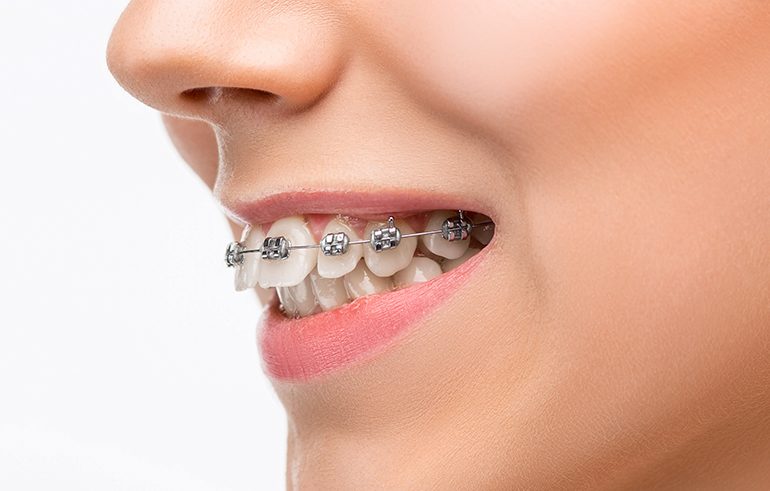
The most common reservation of people considering starting orthodontic treatment is pain. This reservation is understandable; however, it is a much more manageable issue than expected. Braces pain is usually seen for a limited period and can be significantly reduced with simple measures. As DijiDent Oral and Dental Health Polyclinic, in Türkiye we offer our patients recommendations to make this period easier.
Why Does Pain Occur?
When force is applied to a tooth, pressure forms in the periodontal fibers around the root and an inflammatory response begins in this area. This response is the natural process necessary for the bone to remodel. The sensitivity felt is a sign that the treatment is working.
For this reason, sensitivity is not a side effect but part of the process. However, severe and long-lasting pain is not normal; knowing this distinction is important.
When Does It Occur and How Long Does It Last?
Sensitivity usually begins a few hours after the braces are fitted or tightened, reaches its most noticeable level within the first day and then decreases gradually. In most patients it eases significantly within a few days. At subsequent tightening appointments, this feeling is usually less than the first time; the body adapts to the process.
In clear aligner treatment, a similar feeling of pressure is seen with each new aligner, and it usually decreases within a few days.
Soothing Recommendations
- Switch to soft foods: Soup, yogurt, purée and well-cooked dishes.
- Prefer lukewarm foods: Very hot and very cold can increase sensitivity.
- Rinse with cold water: It is soothing for some patients.
- Chew something soft: Light chewing movement supports circulation in the area.
- Use orthodontic wax: It covers the areas that come into contact with the cheek.
- Lukewarm salt water: It can provide relief in sore areas.
We recommend that you consult your dentist about the use of painkillers. Rather than using medication on your own decision, it is more correct to discuss at the start of treatment what is appropriate in which situation.
Cheek and Lip Sores
In the first weeks of treatment, irritation may form on the inner surface of the cheeks and lips due to the rubbing of the brackets. Canker-sore-like sores may be seen in these areas. The tissues adapt to this contact over time and the complaint decreases.
In this period, orthodontic wax is the most effective aid: it is enough to soften a small piece between your fingers and press it onto the bracket that is bothering you. It is harmless if the wax is swallowed. If the sores become persistent or there is pronounced swelling, a check-up is needed.
When Is It Not Normal?
You need to call your clinic in the following situations:
- If the pain continues and increases for more than a few days
- If the pain is concentrated in a single tooth and is throbbing
- If there is pronounced swelling or discharge in the gums
- If a tooth is noticeably loose
- If you have difficulty opening your mouth
These findings are outside the natural course of treatment and require evaluation.
In Child Patients
In children, the pain experience is closely related to expectations and what they hear from those around them. Explaining the process calmly and without exaggeration before treatment can reduce the discomfort experienced. Preparing soft foods they like in the first days and showing the child their progress support motivation. Avoiding expressions such as “it’s going to hurt a lot” is important so as not to shape the expectation negatively.
The Difference for Clear Aligner Users
The discomfort felt in clear aligner treatment is usually in the form of a softer pressure, and the risk of sores caused by sharp edges is lower. On the other hand, there may be a noticeable feeling of tightness on the first day with each new aligner. Switching to the new aligner at night before sleep allows you to spend part of this period asleep and may make adaptation easier.
The Feeling of Loose Teeth
It is normal to feel slight mobility in the teeth during treatment; this shows that the tooth is changing position within the bone. When the treatment is completed and the retention period progresses, this feeling disappears. Pronounced and increasing mobility, however, should be evaluated.
Frequently Asked Questions
Taking a break is usually not recommended. If you are struggling, talk to your clinic; the force level and the plan can be adjusted.
It usually decreases significantly within a few days; it varies from person to person.
It is usually felt less than the first time.
It is recommended that you use them after consulting your dentist.
No, orthodontic wax is produced for this purpose and is harmless.
Yes. The intensity of pain varies from person to person; progress is evaluated at check-ups.
Pain is not a reason to give up treatment.
Consult us at the points where you are struggling; let us find a solution together. Contact us to book an appointment; let us carry out the process comfortably at DijiDent Oral and Dental Health Polyclinic.
This content is for general information purposes and does not contain medication recommendations. Consult your dentist for medication use.