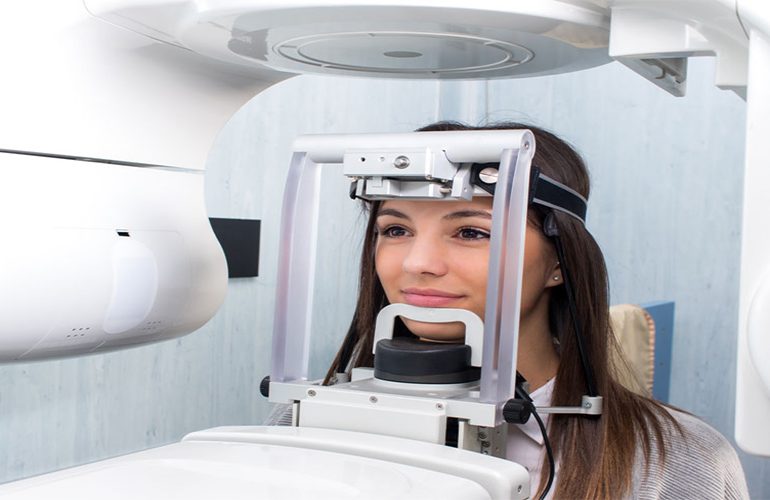
The jaw joint is one of the most frequently used joints in the body; it works constantly while speaking, swallowing and chewing. For this reason, a problem here is felt at every moment of daily life. The complaints most often voiced by our patients with a jaw joint disorder are sounds, pain, limited opening and morning stiffness. As DijiDent Oral and Dental Health Polyclinic, when approaching these complaints in Türkiye we first carry out a detailed clinical evaluation instead of going straight to imaging, because in a significant proportion of these cases the problem lies not in the bone but in the muscles and soft tissue.
Where Might the Complaints Be Coming From?
- Muscle-related strain: The habit of clenching and grinding the teeth tires the chewing muscles; the pain often spreads to the temple and cheek region.
- Changes in disc position: When the disc that acts as a cushion inside the joint shifts, sounds or limited opening may be seen.
- Bite (occlusion) discrepancies: A chewing pattern altered by a filling that is too high or by missing teeth can strain the joint.
- Degenerative changes: Structural changes that develop over time on the joint surfaces.
- History of trauma: A past blow or procedures in which the mouth was kept open for a long time.
- Stress: Although not a direct cause, it can make the condition more pronounced by increasing muscle tension.
Is Imaging Needed in Every Case?
No. Imaging every patient with a complaint is not a correct approach. During the examination, the amount of opening is measured, joint sounds and muscle tenderness are evaluated, the bite relationship is examined and your habits are asked about. In many cases, this evaluation provides sufficient information to start treatment.
Three-dimensional imaging contributes when the bone structures forming the joint need to be evaluated. Changes in the shape of the joint head, surface irregularities, erosions in the bone structure and fractures suspected after trauma can be examined in this way. However, it has an important limitation: soft tissues such as the disc are not clearly imaged with this method. When soft tissue evaluation is needed, a different imaging method comes into consideration, and this decision is made together with the relevant specialist physicians.
How Is Teeth Clenching Noticed?
Most people who clench their teeth at night are not aware of it. Feeling fatigue in the jaw muscles when you wake up, pressure in the temple region, increased sensitivity in the teeth, flattening of the tips of the incisors and a line-shaped mark on the inside of the cheek can be signs of this habit. During the examination, the wear pattern on the tooth surfaces gives your dentist important information in this regard. A habit noticed early can be managed before irreversible loss of tooth structure occurs.
The Path Followed in Treatment
Our approach is gradual and prioritizes avoiding irreversible procedures. In the first stage, the following are usually recommended: staying away from hard and heavily chewed foods for a while, avoiding opening the mouth very wide, heat application and simple jaw exercises when necessary, sleep routine and stress management. If signs of teeth clenching are evident, a custom-made night guard is considered; the guard can help protect the teeth from wear and reduce the load on the muscles.
If a significant bite discrepancy is detected, correcting it becomes part of the plan. When the complaints do not respond, further evaluation and, if necessary, collaboration with the relevant specialists come into consideration. At DijiDent, what we tell our patients from the start is this: jaw joint complaints are often managed not with a single procedure but through a patient process.
Frequently Asked Questions
If there is no pain or functional limitation, follow-up may be sufficient in many cases. Nevertheless, having it evaluated once is beneficial for noticing habits early.
It is not an expected outcome with custom-made guards that are checked regularly. For this reason, a guard produced according to an impression is recommended instead of ready-made products.
If you cannot open or close your mouth, contact your clinic without delay. Early intervention can make the process easier.
Tension in the chewing muscles can lead to pain radiating to the temple region. However, since headaches may have other causes, the evaluation is carried out holistically.
Surgery comes into consideration in selected and a limited number of cases. The priority is always on reversible approaches.
Do not postpone jaw pain thinking “it will pass.”
If you are experiencing sounds, pain, locking or suspected teeth clenching, let us carry out a detailed evaluation. Contact us to book an appointment; let us examine the source of your complaint together at DijiDent Oral and Dental Health Polyclinic.
This content is for general information purposes. The diagnosis and treatment of jaw joint complaints are planned by your dentist after the clinical examination.