During aesthetic treatment, you may have heard your dentist use expressions such as “let’s go with A2” or “let’s move up to B1.” These codes are not random; they are part of a system that standardizes color communication in dentistry. A tooth shade guide establishes a common language between the dentist, the patient and the laboratory. As DijiDent Oral and Dental Health Polyclinic, we explain this system simply to our patients in Türkiye, because the shade decision should be made together with you.
How Is the Guide Structured?
In the classic guide widely used in dentistry, colors are first divided into letter groups. Group A represents reddish-brown, group B reddish-yellow, group C grayish and group D reddish-gray tones. The number next to the letter indicates the level of darkness within that group; as the number increases, the shade darkens. For example, A1 is the lightest shade of group A.
In newer systems, colors are considered in three dimensions: lightness, saturation and hue. This approach accepts that color is not a single value and allows more detailed matching.
A Natural Tooth Is Not a Single Color
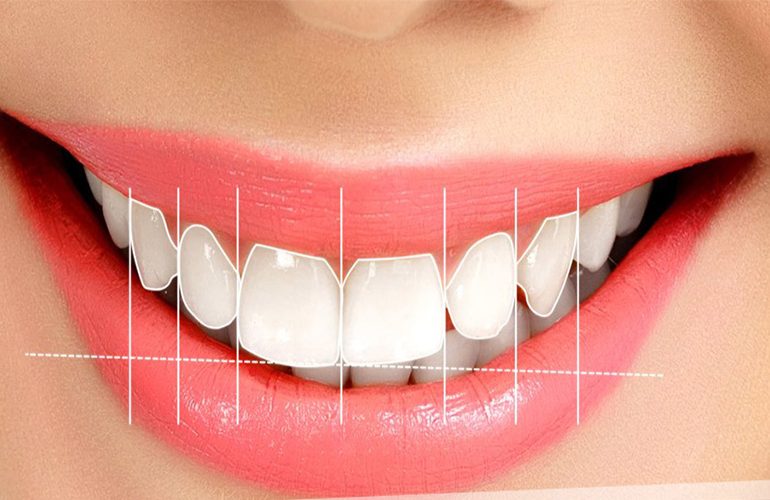
This is the point patients are most surprised by. When you examine a tooth closely, you see that the neck area is darker and more saturated, the middle section carries the main color, and the incisal edge is more translucent and grayish. In addition, there are fine white lines and slight textures on the surface. Producing the entire tooth in a single, flat color is one of the most common causes of an artificial appearance. For this reason, not only a code but also photographs and regional shade notes are sent to the laboratory.
How Is the Shade Chosen?
- Timing: Shade selection is done at the start of the session; the eye tires after looking for a long time and does not perceive correctly.
- Moisture: When the tooth dries, it temporarily looks lighter. For this reason, the evaluation is done while the tooth is moist.
- Light source: Neutral lighting close to daylight is preferred. The same two surfaces being perceived differently under different lights is called metamerism.
- Surrounding colors: Brightly colored clothing or makeup can affect perception.
- Reference: The guide sample is held right next to the tooth, at the same level.
Can a Shade Be Chosen from a Screen?
No. Phone and computer screens display colors differently; in addition, the camera automatically applies white balance. For this reason, it is not realistic to target the tooth shade in a photo you found online exactly. Photographs are valuable for describing your expectations, but the final decision should be made at the clinic in natural light.
Digital Shade Measurement
Alongside visual evaluation, digital shade measurement devices can also be used. These devices take measurements from different regions of the tooth, produce numerical values and reduce differences in personal perception. Nevertheless, the final decision is not made by the device alone; the measurement is data that supports the dentist’s visual evaluation and your preference.
How White Looks Natural?
There is no single answer to this question; however, there is one criterion: when the tooth shade is noticeably whiter than the whites of your eyes, perception shifts toward artificiality. Skin tone is also influential; on darker skin, the same shade is perceived as whiter. At our clinic, our recommendation is that you make the choice not only with the goal of “the lightest shade” but by evaluating it together with your face. The trial stage makes this decision concrete.
Why Might a Crown Shade Not Match?
Several reasons can be given: the selection may have been made on a dry tooth, the color transitions of neighboring teeth may not have been conveyed to the laboratory, different materials may show different light behavior, or the natural teeth may have become lighter because whitening was done after the restoration. The last point is particularly important: porcelain and composite are not affected by whitening, so whitening is always planned before restoration.
Frequently Asked Questions
Guides include additional bleach shades; however, it cannot be said that the lightest shade suits everyone.
It depends on your starting color and the type of discoloration. No commitment to a specific result can be given.
Natural teeth can darken with age. Restorations may experience surface staining.
Single-tooth shade matching is one of the most challenging tasks; the photo and trial stages are more important in these cases.
Of course. A second opinion can help support your decision.
Choosing the right shade is half the result.
Let us evaluate the shade that suits you in natural light and together with your face. Contact us to book an appointment; let us make your shade decision together at DijiDent Oral and Dental Health Polyclinic.
This content is for general information purposes; shade results vary from person to person. The selection is made with the dentist’s evaluation.