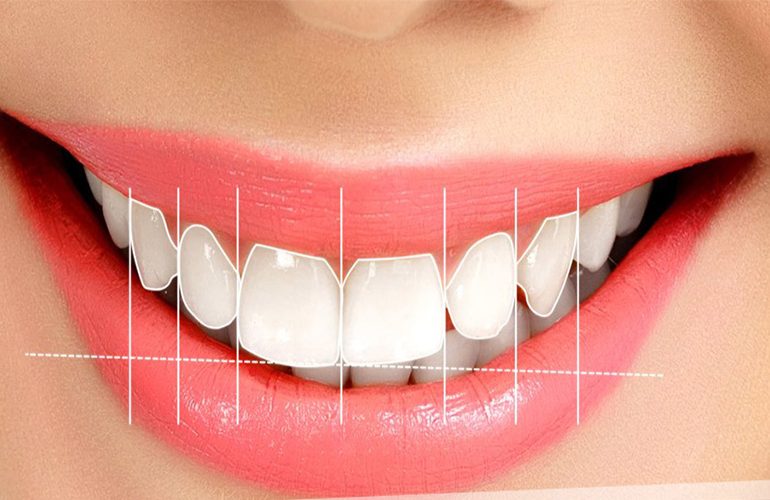
In aesthetic dentistry, the aim is to reach the goal with the least possible intervention. A laminate veneer is the porcelain counterpart of this approach: thin porcelain layers that cover only the front surface of the tooth. Unlike crowns that encircle the entire tooth, it requires more limited preparation. As DijiDent Oral and Dental Health Polyclinic, in Türkiye we recommend this option after a suitability evaluation.
What Is a Laminate Veneer?
These are restorations usually produced from glass-ceramic-based materials and prepared as thin sheets. They are applied by bonding them to the front surface of the tooth. Their thinness allows them to transmit light similarly to a natural tooth; this feature is one of the most important conditions of a natural appearance.
In Which Situations Is It Preferred?
- Permanent discolorations that do not lighten with whitening
- Gaps between teeth and form irregularities
- Worn or broken incisal edges
- Cases with mild crowding in which orthodontics is not desired
- Renewal of old composite restorations
Who May It Not Be Suitable For?
This section is at least as important as the advantages. In patients with a pronounced teeth clenching and grinding habit, the risk of fracture increases; in these cases, the habit must first be managed and a protective night guard planned. In teeth with a great deal of structure loss, there may not be enough enamel left for bonding; in this case, a full crown becomes a more suitable option. In addition, active gum disease, untreated caries and pronounced bite problems are addressed first.
Is Tooth Preparation Necessary?
The answer to this question varies by case, and no definitive promise should be given. In some cases, application may be possible with very limited surface preparation or without preparation. However, if the teeth are positioned forward or the form will change significantly, a certain amount of preparation is required. Laminates applied without preparation can make the teeth look thicker than they are; for this reason, the statement “no preparation at all” does not apply to every case.
The trial (mock-up) stage is decisive here. In preparation done while the targeted form is in the mouth, the aim is to remove only as much structure from the tooth as necessary.
The Importance of Enamel Tissue
The technical basis of laminate application is bonding the porcelain to the enamel. The bond established with enamel is stronger than the bond established with dentin. For this reason, the surface to be treated being largely enamel is decisive for the long-term retention of the restoration. Preserving enamel during preparation is necessary not only to spare tissue but also for the permanence of the result. In cases of excessive preparation, the bond may weaken.
How Does the Process Proceed?
After the examination and suitability evaluation, digital records are taken, the design is prepared and the trial is applied. After approval, tooth preparation is done, a digital impression is taken and temporary restorations are applied. When laboratory production is complete, color and fit are tried in, and then they are fixed with a special bonding procedure. The bonding stage requires technical precision; moisture control is the most critical element of this stage.
What to Pay Attention to in the Temporary Period
After preparation, temporary laminates are used until the permanent restorations are ready. Since these structures are thin, it is recommended that you stay away from hard foods and avoid biting with your front teeth. If a temporary restoration falls off, go to the clinic without forcing it; the exposed prepared tooth surface may become sensitive and the gum shape may be disrupted.
Durability and Care
Porcelain is more resistant to staining than composite and maintains its surface gloss for longer. On the other hand, it can break when biting hard objects. Habits such as nail biting, chewing ice and opening bottles should be avoided. Regular brushing, flossing and periodic check-ups support the long-term result. No restoration can be given an indefinite lifespan guarantee.
Frequently Asked Questions
Temporary sensitivity may be seen in the first days and usually decreases in a short time. If it continues, come in for a check-up.
No. The amount of enamel, the bite and teeth clenching are decisive. Evaluation is needed.
It is possible in some cases; however, this is not a promise that applies to every patient.
Usually the relevant restoration needs to be renewed. Protective measures help reduce this risk.
It varies by case; usually a few sessions are needed, for preparation and application.
Porcelain is not affected by whitening. For this reason, the color decision is finalized before application.
Do not decide without evaluating your suitability.
Contact us to book an appointment to find out whether a laminate veneer is suitable for your case and what the alternatives are. Let us create your plan together at DijiDent Oral and Dental Health Polyclinic.
This content is for general information purposes; suitability and results vary from person to person. The decision is made with a dentist’s examination.