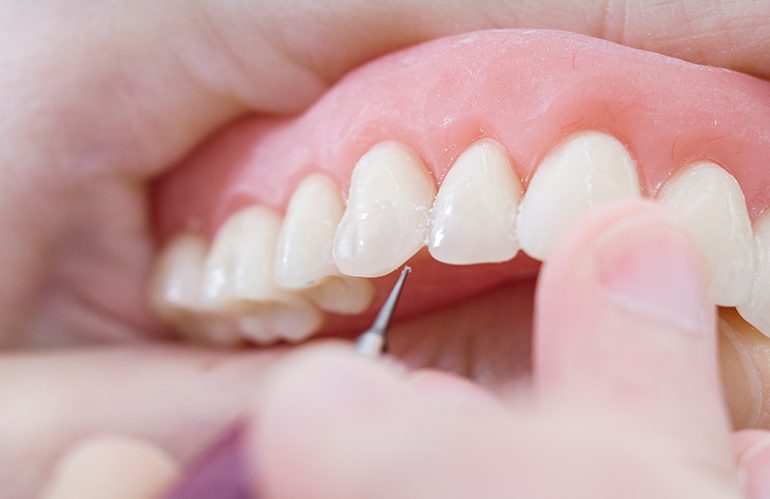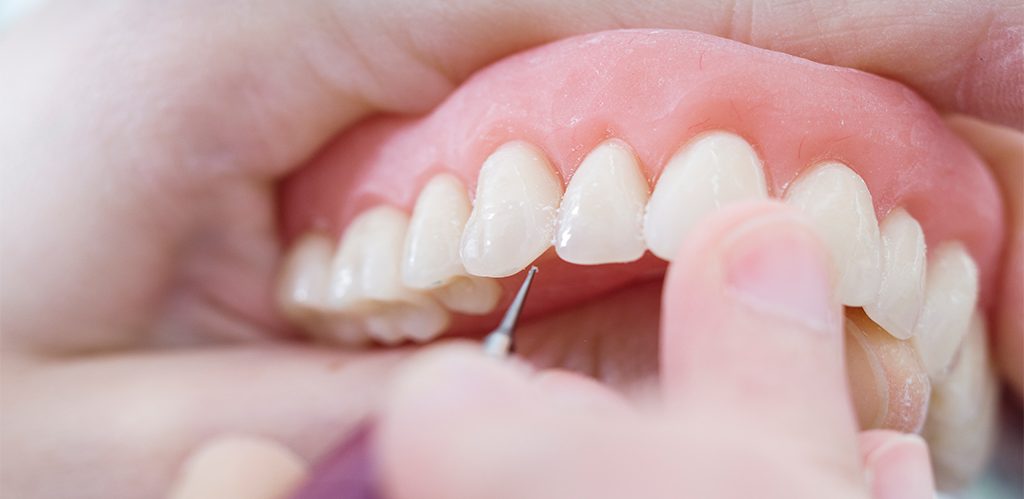
Speech depends on the delicate contacts the tongue makes with the palate and the teeth. When a new structure enters the mouth, these contact points change and pronunciation temporarily differs. Difficulty speaking with dentures is the adaptation problem that patients worry about most, but it is usually the one overcome most quickly. As DijiDent Oral and Dental Health Polyclinic, in Türkiye we offer practical and simple recommendations during this period.
Which Sounds Are Affected?
- S and Z sounds: They are formed by the narrow passage between the front part of the tongue and the front teeth. When the thickness of the denture or the position of the teeth changes this passage, a whistling or muffled sound may appear. This is the most frequently reported complaint.
- F and V sounds: They are formed by the contact of the lower lip with the upper front teeth. When the position or length of the upper teeth changes, these sounds may be affected.
- T and D sounds: They are formed by the tongue touching the front area of the palate. Palatal thickness may change these contacts.
- SH and CH sounds: They are related to the width of the tongue and the palatal space.
Exercises That Speed Up Adaptation
- Reading aloud: Two or three times a day, in sessions of fifteen minutes each. Reading a newspaper or a book is sufficient.
- Repeating difficult sounds: Slowly repeat S-heavy words such as “sarı, sessiz, süs, sıcak”.
- Speaking in front of a mirror: Seeing your lip and tongue movements supports adaptation.
- Recording your voice: Listening to your own speech allows you to notice your progress.
- Talking on the phone: Speaking while hearing your own voice is a natural exercise.
- Speaking slowly: Rushing increases pronunciation errors.
These exercises seem simple; however, it is precisely through repetition that the tongue muscles adapt to the new position. In patients who practice regularly, a difference is felt within a few days.
If the Denture Makes Noise
The clicking or tapping sound heard when speaking usually results from the denture moving slightly out of place. There may be several reasons for this: insufficient retention, premature contact of the teeth with each other or excessive bite height. This is not a situation expected to go away with adaptation; it requires a bite adjustment. If you have this complaint, you need to come for a check-up.
Why Is the Position of the Front Teeth Important?
The position of the front teeth in the denture is not only an aesthetic preference. These teeth support the lips and play a direct role in the formation of sounds such as S, F and V. An arrangement as close as possible to the position of the lost natural teeth helps preserve facial expression and keep pronunciation natural. This is why a speech evaluation is carried out at the try-in stage.
How Long Does It Take to Improve?
The duration varies from person to person. In general, speech adaptation happens faster than chewing adaptation. In patients who wear their denture regularly and practice, noticeable improvement is seen in a short time. Taking the denture out and putting it back in is the most common behavior that delays adaptation; the muscles constantly have to readapt.
What Is Done If It Does Not Improve?
If, after a certain period, pronunciation is still at a bothersome level, the problem may stem from the design rather than adaptation. The points evaluated are: the thickness of the palatal area, the position and inclination of the front teeth, the posterior border of the denture and the bite height. Adjustments made to these elements can significantly improve pronunciation. In some cases, the teeth may need to be rearranged.
For Relatives
If you want to support a relative who has just started using a denture, listening patiently is more helpful than constantly correcting them while they speak. Accompanying their reading-aloud exercises, not rushing them on phone calls and encouraging them to speak in social settings support the adaptation process. If the tendency to avoid speaking lasts a long time, it is important to share this at the check-up appointment.
Frequently Asked Questions
Yes. Avoiding speaking delays adaptation; short and frequent speaking exercises are recommended.
In most cases it decreases with adaptation; if it persists, the tooth position and palatal thickness are evaluated.
Yes. Regular reading aloud significantly shortens the adaptation period.
Constantly removing it delays adaptation; all-day use is recommended.
Once adaptation has been achieved, most patients have no difficulty; if there is a retention problem, it is evaluated.
If pronunciation remains at a bothersome level or if there is noise, come without waiting.
Speech adaptation comes with patience and the right adjustment.
If your pronunciation is not improving, let us evaluate the bite and design settings of your denture. Contact us to book an appointment; let us increase your comfort at DijiDent Oral and Dental Health Polyclinic.
This content is for general information purposes. The adaptation process and recommendations are personalized by your dentist.