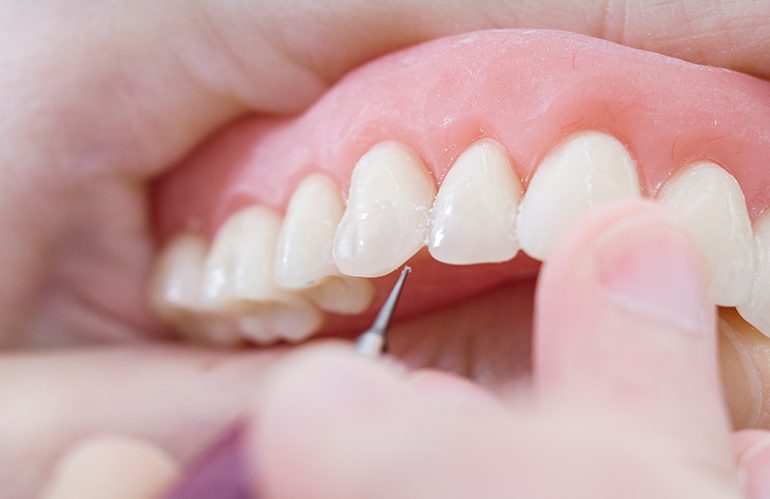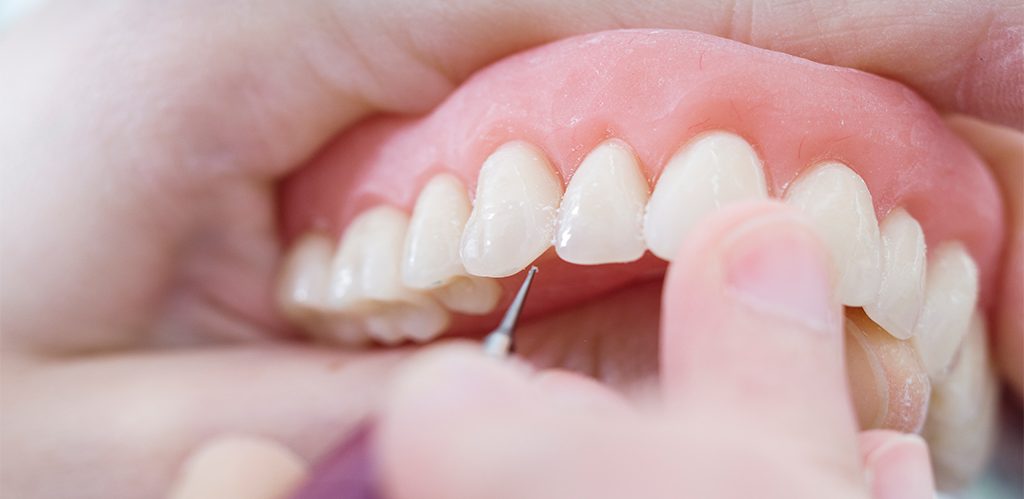
If some teeth remain in the mouth while others are missing and there is not enough support for a fixed solution, a partial denture comes into consideration. This option aims to restore chewing function by closing the gaps and to preserve the position of the existing teeth. When planned correctly, a partial denture is both an economical and a practical solution. As DijiDent Oral and Dental Health Polyclinic, in Türkiye we carry out this planning while taking into account the health of your abutment teeth.
How Does a Partial Denture Work?
The denture takes its support from two sources: the existing teeth, and the gums together with the bone beneath them. Retention on the existing teeth is provided by connection systems called clasps or precision attachments. This balance is important; if the denture loads only the teeth, the abutment teeth are strained, and if it loads only the gums, pressure and sores occur.
Types of Partial Dentures
Metal-Framework (Cast) Dentures
Their framework consists of a metal skeleton. They are thin and durable; since they cover less of the palatal surface, taste and speech are less affected. This is usually the preferred type.
Acrylic Dentures
They are produced entirely from acrylic. Since they are thicker, they take up more space in the mouth. They are often used as a temporary solution or as an economical option.
Precision Attachment Dentures
Instead of visible clasps, hidden attachment systems placed inside crowns made on the abutment teeth are used. They are aesthetically advantageous; however, they require the abutment teeth to be crowned and call for more comprehensive planning.
Flexible Dentures
These are options produced from more flexible materials and have gum-colored clasps. They can provide an aesthetic appearance; however, they are not suitable in every case and have limitations in terms of repair and adjustment.
Who Is It Suitable For?
- Patients with many missing teeth who do not have enough support for a fixed bridge
- Cases where there are teeth on only one side of the gap
- Patients who do not want a surgical procedure or who are not suitable for implants
- Those who need a temporary solution during implant treatment
- Those who want to advance a comprehensive plan in stages
Protecting the Abutment Teeth
This is the most critical issue of a partial denture. Teeth that carry clasps are under additional load, and plaque accumulation may increase in that area. For this reason, the gum health of the abutment teeth should be monitored regularly and cleaning should be done meticulously. After removing the denture, it is recommended to brush the clasp areas separately. The most common problems seen in patients who neglect check-ups are caries and gum recession developing on the abutment teeth.
The Consequences of Chewing on One Side
Patients with gaps often start using one side without realizing it. Over time, this habit may lead to wear on the teeth on that side, tartar build-up on the other side and strain on the jaw joint. One of the purposes of a partial denture is to distribute the chewing load evenly to both sides; this provides not only comfort but long-term protection.
Adaptation and Care
In the first days, a feeling of fullness and a slight change in speech are normal. It is important that you put it in and take it out in the direction your dentist has shown; removing it by force may damage the clasps. The denture should be rinsed after every meal and cleaned at least once a day. Removing it at night to allow the tissues to rest is generally recommended.
What Changes Over Time?
The gum and bone structure change over the years; a gap may form between the denture and the tissue. In this case, a relining procedure can restore the fit. Continuing to use an ill-fitting denture strains the abutment teeth and may accelerate bone loss.
Frequently Asked Questions
In the first days, a difference may be felt, especially with some sounds; reading aloud speeds up adaptation.
Visibility can be reduced through positioning; precision attachment options are more aesthetic.
The clasps can be adjusted or relining may be needed. Do not try to bend them yourself; go to the clinic.
If care and check-ups are regular, the risk decreases. When neglected, caries and gum problems may develop.
It is usually recommended to remove it; follow your dentist’s instructions.
Yes. In many cases, a partial denture can be used as part of a staged plan.
After adaptation, most foods can be eaten; care is needed with very hard and sticky foods.
Gaps affect not only your appearance but also your remaining teeth.
Let us evaluate the partial denture option that suits you and the condition of your abutment teeth. Contact us to book an appointment; let us create your plan at DijiDent Oral and Dental Health Polyclinic.
This content is for general information purposes. The type of prosthesis and suitability are determined by your dentist after the clinical examination.