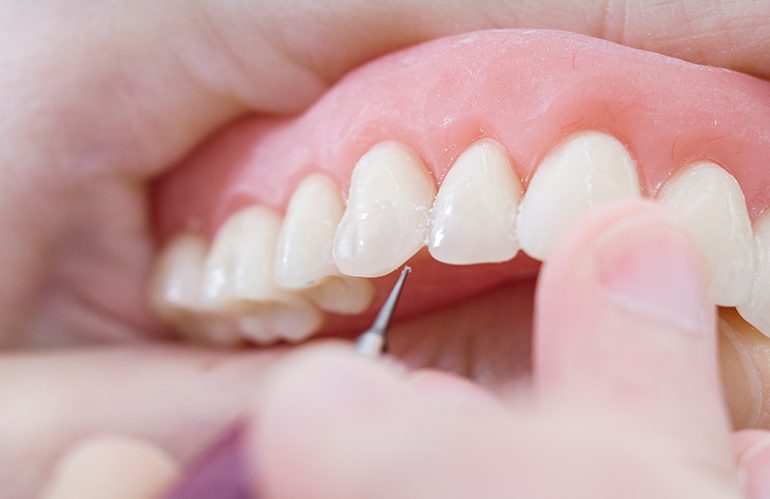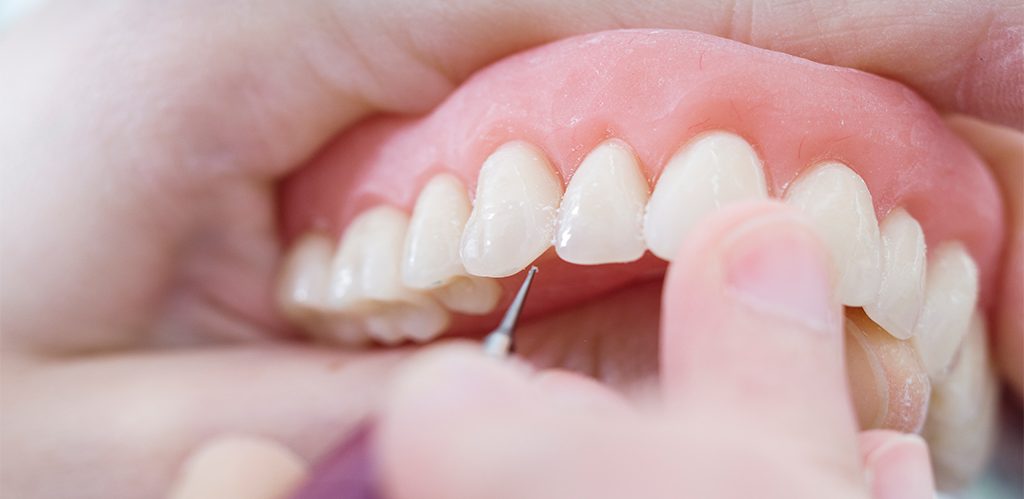
A complete denture, applied in fully edentulous jaws, is a treatment that affects every moment of daily life. Eating, speaking and being comfortable in social settings depend on the fit of this denture. The topics most frequently raised by our patients who use complete dentures are the adaptation process, looseness and the formation of sores. As DijiDent Oral and Dental Health Polyclinic, in Türkiye we apply a detailed follow-up program so that you are not left alone in this process.
How Does a Denture Hold?
A complete denture sits on the gums and the bone structure beneath them. In the upper jaw, the large palatal surface creates a suction effect thanks to a thin layer formed by saliva; for this reason, upper dentures usually hold better. In the lower jaw, because of tongue movements and a narrower support area, retention is naturally more difficult. This does not mean that the denture has been made poorly; it is an anatomical fact.
The Adaptation Period
In the first days, a feeling of fullness in your mouth, increased saliva secretion and a slight difference when speaking are normal. It takes time for the tongue and cheek muscles to adapt to the new situation. During this period, we recommend the following:
- Start with soft foods: Chew in small bites, using both sides.
- Do not bite with your front teeth: Especially in the first weeks, shift biting to the side teeth.
- Read aloud: Repeating sounds that are difficult speeds up speech adaptation.
- Use the denture during the day: A denture that is not used delays adaptation.
- Be patient: The adaptation period varies from person to person.
Sores and Pressure Points
In the initial period, a feeling of pressure or small sores may form in some areas. These usually result from a particular point of the denture compressing the tissue and are eliminated with a short adjustment. There is an important warning here: do not try to sand or cut the denture yourself while there is a sore. This may permanently ruin the fit of the denture. Wearing the denture for a few hours before coming to your check-up makes it easier for your dentist to identify the pressure point.
Cleaning
The denture should be removed and rinsed after every meal, and cleaned with a soft brush at least once a day. Since regular toothpaste may be abrasive, products suitable for denture cleaning are preferred. Filling the sink with water or laying down a towel is a practical precaution against the risk of the denture slipping from your hand during cleaning.
When you remove the denture, it is recommended that you also clean your gums by massaging them with a soft brush; this supports circulation and contributes to tissue health.
Should It Be Removed at Night?
The general recommendation is to remove the denture at night to allow the tissues to rest. In dentures that are left in constantly, inflammation and fungal growth may be seen in the gum tissue. A removed denture should not be left dry; it should be stored as your dentist recommends.
About Adhesive Creams
Adhesive creams can provide temporary support; however, they are not the solution for an ill-fitting denture. The need to use an ever-increasing amount of cream is a sign that the denture needs to be re-evaluated. Over time, as bone volume decreases, the denture loosens and relining or renewal may be needed.
Other Options for the Retention Problem
If the complaint of looseness persists, especially in the lower jaw, the option of a removable denture supported by a small number of implants may be considered. This approach aims to significantly increase retention while keeping the denture removable. Suitability is determined according to your bone structure.
Nutrition Recommendations
In patients who use dentures, chewing efficiency is lower than with natural teeth; for this reason, maintaining a varied diet is important. It is recommended to cut hard foods into small pieces, eat vegetables cooked and not neglect protein intake. Inadequate nutrition is an overlooked health problem in the older age group.
Check-Ups
Regular check-ups are necessary even if you have no complaints. The bone structure changes over the years; this change affects denture fit. In addition, the tissues in the mouth are also evaluated during check-up examinations.
Frequently Asked Questions
It varies from person to person. Regular use speeds up the process.
Some movement can be expected, especially in the lower jaw; however, noticeable looseness should be evaluated.
Using it in the recommended amount usually does not cause a problem; however, an increasing need is a sign of poor fit.
No. Household adhesives can be harmful and make the repair more difficult. Go to the clinic.
There is no fixed period; it is evaluated according to fit and tissue changes.
You do not have to put up with your denture; your denture has to fit you.
If you are experiencing looseness, sores or difficulty speaking, have an evaluation. Contact us to book an appointment; let us increase your comfort at DijiDent Oral and Dental Health Polyclinic.
This content is for general information purposes. Denture fit and the treatment plan are determined by your dentist after the clinical examination.