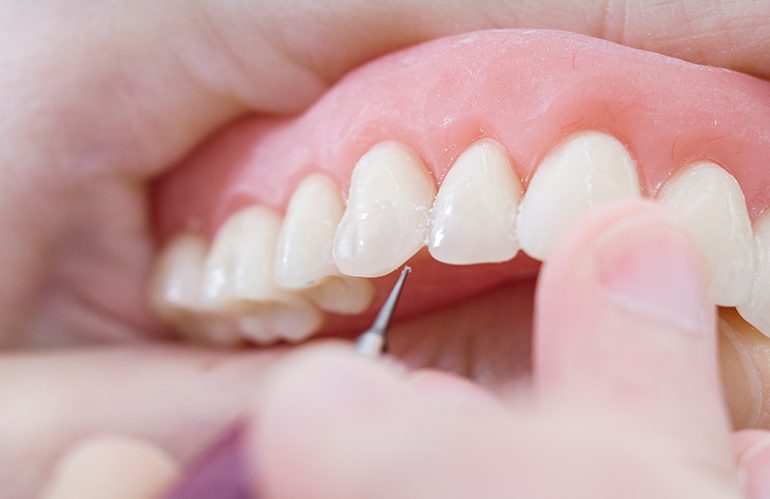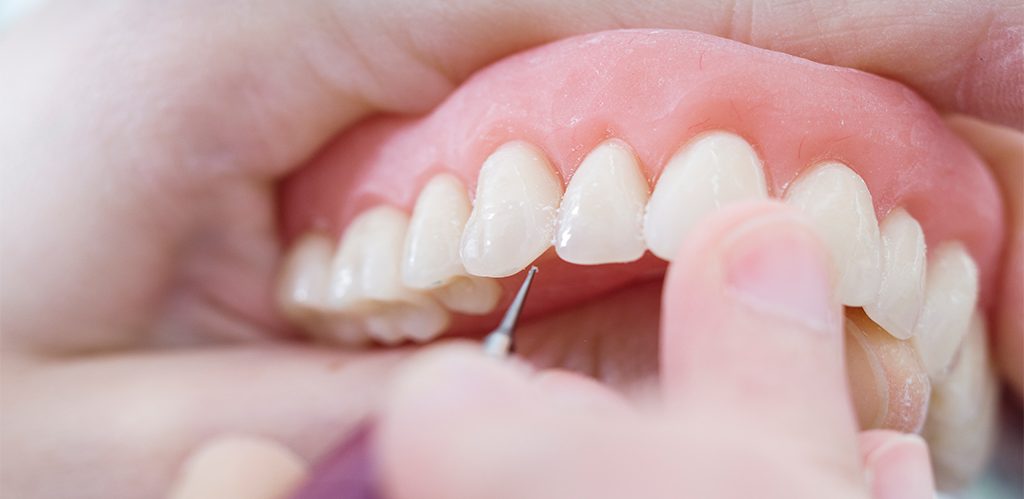
In prosthesis planning, what patients most want to know is whether the prosthesis will stay fixed in the mouth or be removable. This question is not only about comfort; bone structure, the number of remaining teeth and daily care habits also affect the decision. The answer to the question of fixed or removable prosthesis becomes clear when these criteria are evaluated together. As DijiDent Oral and Dental Health Polyclinic, in Türkiye we make this decision together with you after a detailed examination.
What Is the Basic Difference?
Fixed prostheses are cemented or screwed into the mouth; you cannot remove them. They take support from natural teeth or implants. Removable prostheses, on the other hand, can be put in and taken out; they take their support largely from the gums and bone structure, and in partial dentures also from the existing teeth.
Advantages and Limits of a Fixed Prosthesis
- Comfort: It does not move in the mouth; there is no feeling of looseness during chewing.
- Adaptation period: It is usually short, because it takes up less space in the mouth.
- Speech: Since it does not cover the palatal surface, it affects speech less.
- Limit: A sufficient number of healthy abutment teeth or implants is required.
- Limit: In a bridge application, the neighboring teeth need to be reduced.
- Limit: Use of interdental brushes and special floss is mandatory for cleaning.
Advantages and Limits of a Removable Prosthesis
- Applicability: It can also be made in cases with no abutment teeth or with insufficient bone.
- Does not require surgery: It is suitable for patients who do not want an implant.
- Cleaning: Since it can be removed, it is easily cleaned outside the mouth.
- Limit: Looseness and retention problems may be experienced, especially in the lower jaw.
- Limit: The adaptation period is longer; speech and chewing may be affected in the first weeks.
- Limit: As bone volume changes over time, readjustment may be needed.
Decision Criteria
Number and Position of Remaining Teeth
For a fixed solution, healthy support is needed on both sides of the gap. If support remains on only one side or if many teeth are missing, a fixed plan may not be applicable.
Bone Condition
Sufficient bone volume is required for implant-supported fixed solutions. If there is a deficiency, additional procedures come into consideration or the removable option is preferred.
Gum Health
Teeth with advanced gum disease cannot carry a bridge. In this case, periodontal treatment is needed first.
Manual Dexterity and Care
Cleaning fixed prostheses requires more care. For patients with limited manual dexterity, the removable option may be more practical in terms of cleaning.
General Health Condition
Uncontrolled systemic diseases or conditions that prevent surgery may affect the plan. It is important that you share this information.
The Difference in Terms of Bone Preservation
An important point that is overlooked is the long-term condition of the bone. Removable prostheses transmit force to the bone through the gums; this does not fully provide functional stimulation of the bone, and volume loss may continue over time. In implant-supported solutions, force is transmitted directly to the bone. This difference is taken into account in planning, especially for patients who will use a prosthesis for many years.
The Opportunity to Try at the Decision Stage
There are try-in stages in prosthesis planning. During the wax try-in, when the teeth are set up, the form, color and bite are tried in the mouth. It is important that you point out anything you do not like at this stage; corrections can be made before moving on to final production. Staying silent may lead to a result that is difficult to change later.
A Middle Way: Implant-Supported Removable Prosthesis
There is an intermediate solution frequently preferred for fully edentulous patients. Prostheses supported by a small number of implants but still removable aim to combine the cleaning ease of a removable prosthesis with the retention advantage of a fixed solution. They are considered especially for patients who complain of looseness in the lower jaw.
Frequently Asked Questions
The material used, the number of teeth, the laboratory workmanship and whether additional procedures are needed are decisive.
It depends on your bone and gum condition. The options are shared after the evaluation.
They have different advantages; durability also depends on care and the bite relationship.
Yes, but an adaptation period is needed and there may be difficulty with some hard foods.
The adaptation period is usually short; small differences may be felt in the first days.
Yes. A fixed plan can be applied in one jaw and a removable plan in the other.
Let us evaluate your oral structure before you decide.
Let us talk together about which option suits you and why it suits you. Contact us to book an appointment; let us create your plan at DijiDent Oral and Dental Health Polyclinic.
This content is for general information purposes. The type of prosthesis and suitability are determined by your dentist after the clinical examination.