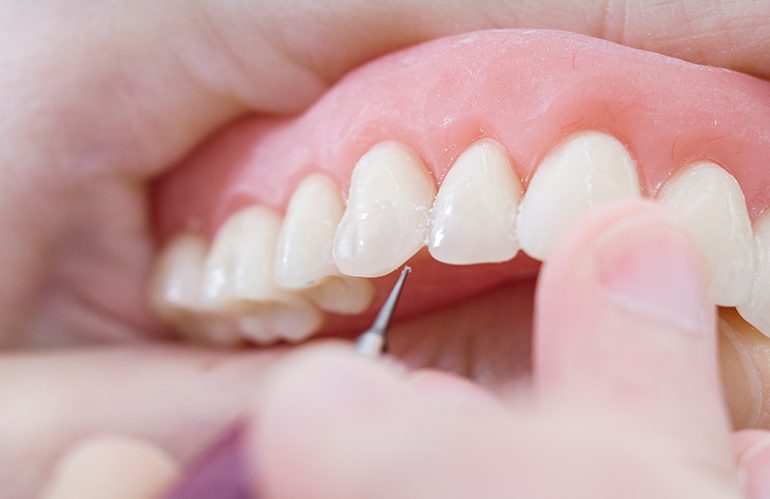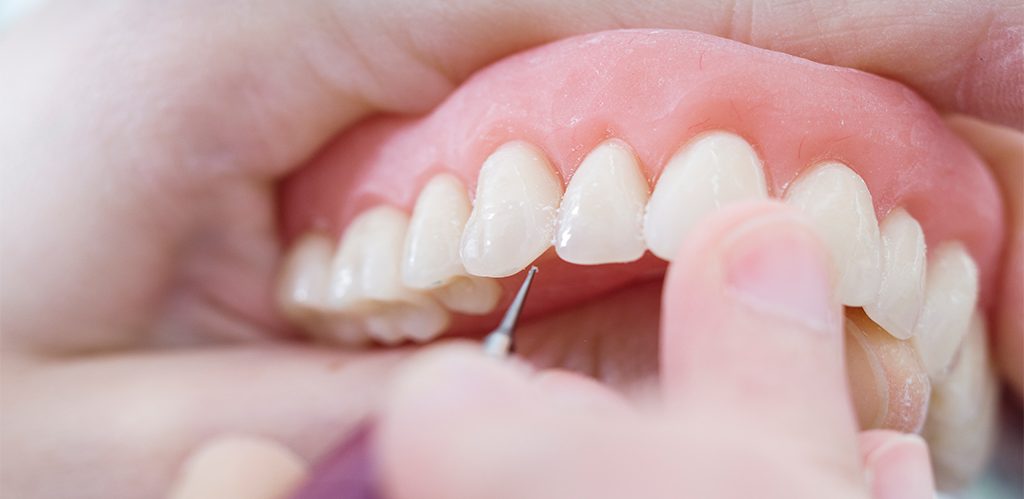
The common experience of patients who have been using removable dentures for a long time is this: the denture loosens a little more every year, relining is needed, and after a while that is not enough either. The reason for this is not that the denture deteriorates, but that the base underneath it changes. Bone resorption under a denture is a silent and continuously progressing process. As DijiDent Oral and Dental Health Polyclinic, in Türkiye we discuss this topic with our patients from the start; because there are measures that can be taken to slow the process.
Why Does It Happen?
The jawbone maintains its volume as long as it is stimulated by the force coming from the teeth on it. When the teeth are lost, this stimulation disappears. A removable denture, on the other hand, transmits force to the bone not directly but through the gum tissue in between. This superficial pressure does not fully provide the functional stimulation the bone needs; in areas where it is concentrated, it may even accelerate loss.
The process progresses fastest within the first year and then continues more slowly. In the lower jaw, loss is usually more pronounced than in the upper jaw; this is one of the reasons why lower dentures experience more retention problems over time.
What Are the Symptoms?
- The denture gradually loosening and moving
- An increased need for adhesive cream
- Recurring sores and pressure points
- The need for frequent relining
- A decrease in lower face height and the lips collapsing inwards
- A significant decrease in chewing efficiency
Since these symptoms develop slowly, most patients accept the situation as “a natural consequence of ageing.” Yet it is a process that needs to be evaluated and managed.
Factors Affecting the Process
The speed of bone loss varies significantly from person to person. The main factors affecting it are: how well the denture fits, how many hours a day it is worn, the intensity of the chewing force, the situation in the opposing jaw, general health condition and factors affecting bone metabolism. Continuing to use an ill-fitting denture for a long time is the most important modifiable factor that accelerates loss.
Another important point is the opposing jaw. In patients whose lower jaw is fully edentulous but who have natural teeth in the upper jaw, the force on the lower front region is concentrated and loss may accelerate in that area. This is a situation frequently encountered in the clinic, and planning should be done accordingly.
To Slow the Process
- Maintain the denture fit: Regular check-ups and timely relining prevent unbalanced pressure.
- Remove it at night: Allowing the tissues to rest reduces the duration of pressure.
- Balance the bite: Concentration of force in a certain area is prevented.
- Consider implant support: Transmitting force directly to the bone may contribute to maintaining stimulation.
- Monitor your general health: Share conditions affecting bone health with your dentist.
How Is the Loss Evaluated?
Changes in bone volume are evaluated with clinical examination and radiological imaging. Three-dimensional imaging makes it possible to measure the height and width of the remaining bone at the millimeter level. In addition, if a comparison can be made with images taken years ago, an idea of the rate of loss can also be obtained. For this reason, we recommend that you keep your old records.
The Role of Implant Support
Implants transfer chewing force directly to the bone. For this reason, stimulation of the bone around the implant is ensured. In fully edentulous patients, a removable denture supported by a small number of implants aims both to increase retention and to contribute to local bone preservation. This approach can make a noticeable difference in comfort, especially in the lower jaw.
Suitability depends on the existing bone volume. For this reason, we recommend that you do not postpone the evaluation; as loss progresses, the volume needed for an implant also decreases.
For Those Getting a New Denture
If tooth extractions are planned, socket preservation approaches that can be applied during the extraction and the type of denture afterwards should be discussed from the start. Setting up the long-term plan before extraction may reduce the retention problems that will be encountered years later.
Frequently Asked Questions
Usually not. The fact that it progresses silently is the main reason it is noticed late.
The main cause is tooth loss; however, an ill-fitting denture may accelerate the process.
It does not come back on its own; volume augmentation with grafting can be considered.
It does not stop it; however, it may help slow the process by reducing unbalanced pressure.
Constant pressure is unfavorable for the tissues; removing it at night is generally recommended.
No. Bone volume and general health condition are decisive.
The loosening of your denture is not an inevitable end.
Let us evaluate your bone condition and discuss options that will increase retention. Contact us to book an appointment; let us review your plan at DijiDent Oral and Dental Health Polyclinic.
This content is for general information purposes. Bone condition and treatment options are determined with clinical and radiological evaluation.