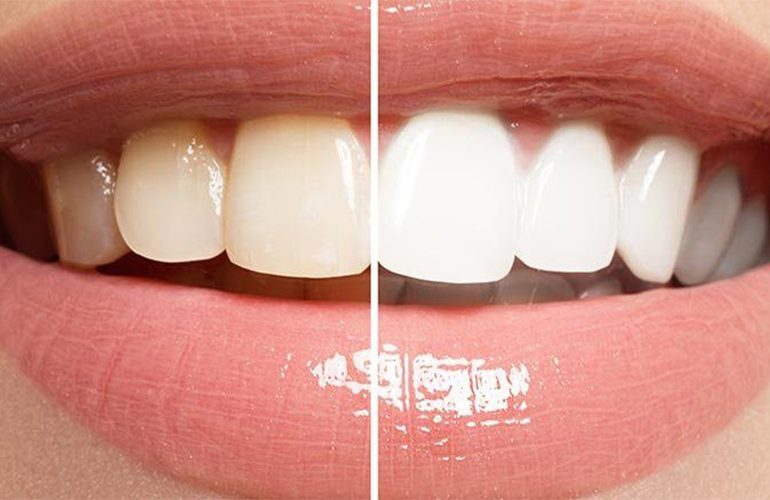
On social media and the internet, one frequently comes across natural teeth whitening methods that can be applied at home, such as charcoal powder, baking soda, lemon, vinegar and coconut oil. Being easily accessible, cheap and natural makes these methods attractive. However, being natural does not always mean being safe. Some methods can wear down the enamel, the protective layer of the teeth, and lead to permanent damage. Knowing the facts about teeth whitening with charcoal powder and baking soda allows you to make the right choices while protecting your teeth. As DijiDent Oral and Dental Health Polyclinic, we provide our patients in Türkiye with science-based information on this topic.
Enamel: The Protective Layer That Does Not Come Back
Enamel is the hardest tissue in the body; however, it cannot renew itself. When it wears down or dissolves with acid, it does not come back. When enamel thins, the yellowish dentin beneath becomes more visible. For this reason, methods that wear the enamel, even if they reduce stains in the short term, can cause the teeth to look more yellow and lead to sensitivity in the long term. This is the real paradox of many methods applied at home.
Charcoal Powder
How Is It Thought to Work?
It is claimed that activated charcoal absorbs the coloring substances on the surface and removes them mechanically.
The Facts
- Scientific evidence is limited: There is not enough scientific evidence that charcoal powder changes the internal color of the teeth.
- It can be abrasive: Due to its particle structure, it can wear the enamel surface.
- It can accumulate: Charcoal particles can accumulate at filling margins, the gum line and rough surfaces, causing a gray appearance.
- Lack of fluoride: Charcoal powder does not contain fluoride; when used instead of toothpaste, protection against caries decreases.
Baking Soda
How Is It Thought to Work?
Baking soda is a mildly abrasive substance and can mechanically remove surface stains.
The Facts
- Surface effect: It can only reduce surface stains; it does not change intrinsic discoloration.
- Risk of inappropriate use: When used in powder form, with a hard brush and frequently, it can lead to wear of the enamel and root surfaces.
- It does not contain fluoride: When used alone, it does not provide protection against caries.
- It can irritate the gums: It can cause irritation, especially in sensitive gums.
Some commercial toothpastes may contain baking soda in balanced formulations with low abrasiveness. These products are different from using powdered baking soda directly with a brush.
Lemon, Vinegar and Apple Cider Vinegar
These acidic substances can chemically dissolve the enamel and lead to erosion of the teeth. The teeth may look brighter at first; however, as the enamel thins and becomes rough, the teeth become more yellow, more sensitive and more prone to staining. A mixture of lemon and baking soda, on the other hand, can be especially harmful by combining both acidic and abrasive effects. It is strongly recommended to avoid such applications.
Since brushing immediately after consuming acidic foods and drinks can also increase enamel wear, it is recommended to first rinse the mouth with water and wait a while.
Rinsing with Coconut Oil
There is no strong scientific evidence that this traditional method, known as oil pulling, whitens the teeth. Although it does not damage the enamel, it does not replace brushing and interdental cleaning.
Fruit Peels and Other Methods
There is no scientific evidence for the whitening effect of methods such as banana peel, mashed strawberries or orange peel. Rubbing acidic fruits such as strawberries and citrus fruits on the teeth, on the other hand, can damage the enamel.
How Can the Harm of These Methods Be Recognized?
- Increasing sensitivity: Gradually increasing sensitivity to cold and heat.
- Dull and rough surface: The teeth losing their shine.
- Increased yellowing: The teeth looking more yellow as the enamel thins.
- Notches at the gum margin: Wear of the root surfaces.
- Gum irritation: Redness and sensitivity.
If you notice these symptoms, stop the method and consult a dentist. Although the enamel loss that has occurred cannot be reversed, sensitivity can be managed and worn surfaces can be protected with restorative methods when necessary.
Caution in Children
The teeth of children and teenagers are more sensitive, and their enamel structure may not have completed its development. The damage may be more pronounced in young people who try these methods under the influence of social media. In children, no whitening method other than an age-appropriate fluoride toothpaste should be used.
It can be beneficial for parents to communicate openly with their children so that they consult them before trying applications they see on social media.
Safe Alternatives
- Professional dental cleaning: Safe removal of surface stains.
- Dentist-supervised whitening: In-office or at-home, with a suitable method after examination.
- Regular oral care: Fluoride toothpaste, a soft brush and interdental cleaning.
- Limiting coloring habits: Reducing tea, coffee and cigarette consumption.
Frequently Asked Questions
Scientific evidence is limited; it can be abrasive and damage the enamel.
When used in powder form and frequently, it can lead to wear of the enamel and root surfaces.
Yes. Its acidic nature can dissolve the enamel and cause erosion.
Natural methods applied at home have no marked effect on the internal color, and some are harmful.
No. Enamel cannot renew itself; however, sensitivity can be managed and surfaces can be protected.
Brighten your smile while protecting your teeth.
Contact us to book an appointment for a safe and effective whitening method. Let us evaluate the condition of your teeth and create a plan that suits you at DijiDent Oral and Dental Health Polyclinic.
This content is for general information purposes and does not replace an examination by a dentist. It is recommended that you consult your dentist before trying whitening methods at home.