Dental traumas usually happen at an unexpected moment: a fall, a blow during sports or an accident. In these situations the first hours are decisive, because early and correct intervention can directly affect the chances of the tooth remaining in the mouth. After dental trauma, the visible fracture is only one part of the picture. The root, surrounding bone and supporting tissues may also have been affected. As DijiDent Oral and Dental Health Polyclinic, in Türkiye we prioritize carrying out the evaluation in these cases quickly but thoroughly.
What to Do First at the Moment of Trauma
- Stay calm and control the bleeding: Apply light pressure to the area with clean gauze or cloth.
- Keep the broken fragment: If you have found it, do not throw it away; in some cases reattaching it may be considered.
- If the tooth has come out completely: Hold the tooth by the crown, do not rub the root and do not try to clean it.
- Suitable storage medium: The tooth must not dry out. Milk or saline solution is preferred; otherwise it can be kept in the person’s own saliva. Water is not a preferred medium.
- Do not lose time: Go to a dental clinic as soon as possible. Time is one of the most important variables affecting the outcome.
In baby teeth, putting back a tooth that has come out completely is usually not recommended; this can damage the underlying permanent tooth germ. For this reason, in child patients the intervention decision must always be made by a dentist.
Why Is Imaging Needed?
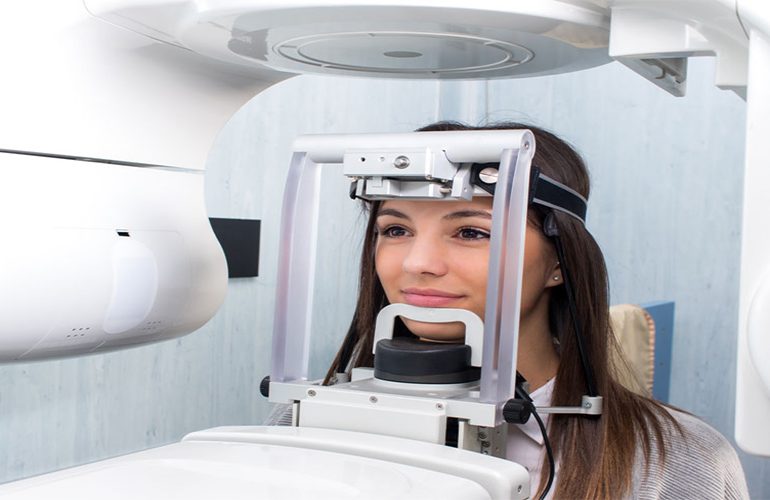
The effect of trauma is often broader than it appears. The clinical examination shows the condition of the crown; however, the following questions can only be answered with imaging: Is there a fracture in the root, and if so, at what level? Has the tooth shifted inside the bone? Has a fracture formed in the surrounding bone wall? Are neighboring teeth also affected? In children, has the underlying permanent tooth germ been damaged?
Root fractures, especially when they run obliquely, can be missed on two-dimensional films. Three-dimensional imaging can reveal the presence and level of the fracture more reliably. This information determines whether the tooth will be splinted and the treatment plan.
Neighboring Teeth Should Also Be Checked
The teeth next to the tooth that received the blow may have been affected due to the transmission of force, even without direct contact. For this reason, the evaluation is not limited to a single tooth; the vitality and position of all teeth in the area are examined. Focusing only on the tooth with visible damage can cause a silently progressing problem to be missed.
Is a Check-Up Unnecessary If the Pain Has Gone?
This is one of the most common mistakes. A decrease in pain after trauma may not mean healing; it may also be related to the tooth losing its vitality. In teeth whose nerve tissue has been affected, discoloration, abscess or a lesion at the root tip can develop months or even years later. For this reason, teeth that have received a blow should be checked at certain intervals even if there are no complaints.
Evaluation of the Surrounding Bone
In traumas, the tooth is not affected alone. The thin bone wall surrounding the tooth may fracture, or the tooth may have been pushed into the bone or partially displaced from its socket. Each of these conditions requires a different treatment: in some cases the position of the tooth is corrected and splinted, in others it is monitored while waiting for it to return to place on its own. The integrity of the bone wall needs to be seen in order to make the right decision.
The Follow-Up Process
A single examination is not sufficient for teeth that have undergone trauma. The vitality of the tooth is monitored with regular tests, and imaging may be repeated at certain intervals. In some cases root canal treatment becomes necessary over time; in others the tooth maintains its vitality. Records taken early are especially valuable in this process because they allow comparison in subsequent check-ups.
Frequently Asked Questions
In permanent teeth, it can be considered if it was stored in suitable conditions and care was sought quickly. Time and the storage medium are decisive.
Bring it with you, preventing it from drying out. In some cases it may be possible to reattach it to the tooth.
It may be discoloration due to the nerve tissue being affected. Evaluation is needed; in some cases root canal treatment followed by whitening options are discussed.
It is necessary to evaluate whether the underlying permanent tooth has been affected. Be sure to have an examination.
Especially in cases where the tooth has come out or shifted significantly, seek care without waiting. In other cases, same-day evaluation is also recommended.
After trauma, every passing hour matters.
If there is a broken, loose or knocked-out tooth, do not lose time. Contact us immediately; let us carry out your evaluation quickly at DijiDent Oral and Dental Health Polyclinic and plan the steps needed to protect your tooth.
This content is for general information purposes and does not replace an emergency medical evaluation. In case of loss of consciousness, heavy bleeding or a suspected jaw fracture, go to the nearest emergency department.