They wonder whether extracting healthy teeth will cause problems in the future.
- Burak (26), who wants treatment without extractions: He asks whether it is possible to straighten his teeth without extractions.
- Selin (17), who is afraid the gaps will not close after the extraction: She wants to learn how long it will take for the gaps to close.
- Kaan (19), who has been recommended the extraction of his wisdom teeth: He wants to understand the relationship between this extraction and orthodontic treatment.
- Murat (45), a father worried that his daughter’s facial profile will change: He wonders how the extraction will affect her facial appearance.
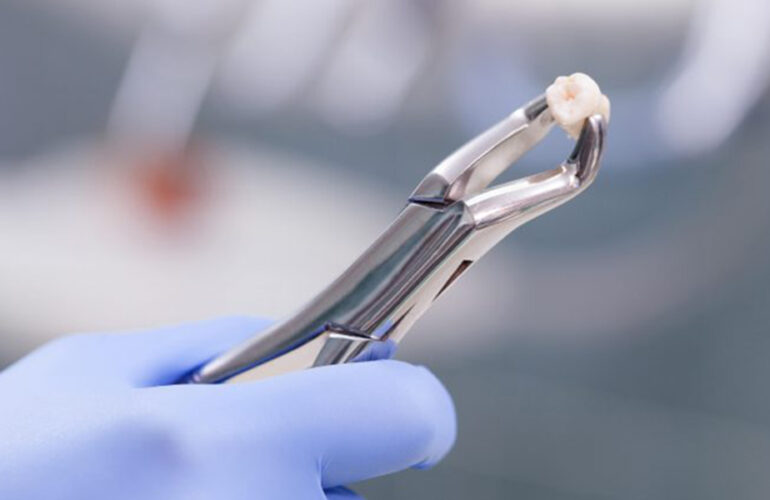
When orthodontic treatment is being planned, some patients may be recommended the extraction of healthy teeth. The idea of extracting a tooth that has no problems can be worrying, especially for parents. Yet this decision is made as a result of careful analysis so that the teeth can be positioned healthily in the jawbone, the bite can be corrected and the facial profile can be balanced. Knowing how the decision for tooth extraction for orthodontics is made and how the extraction process works allows you to start treatment with more confidence. As DijiDent Oral and Dental Health Polyclinic, we evaluate the orthodontic extraction decisions of our patients in Türkiye together with digital analysis.
Why Are Healthy Teeth Extracted?
In orthodontic treatment, the aim is not only for the teeth to look straight, but for them to be positioned healthily within the jawbone, for the bite to be functional and for a result in harmony with the facial profile to be achieved. In some situations, there is not enough space in the jaw for all the teeth to be aligned healthily. In this case, forcing the teeth outside the jawbone can lead to gum recession, bone loss and a risk of relapse after treatment. Extraction is one of the ways to solve this space problem.
In Which Situations Is Extraction Considered?
- Severe crowding: A marked difference between the space required to align the teeth and the available space.
- Marked lip protrusion: The front teeth and lips protruding markedly forward.
- Jaw discrepancies: Situations where the relationship between the lower and upper jaw needs to be balanced.
- Bite problems: Some open bite or deep bite cases.
- Asymmetries: One-sided extractions to correct midline shifts.
Which Teeth Are Extracted?
The teeth most frequently chosen in extractions for orthodontic purposes are the premolars. These teeth are located behind the canines, and when they are extracted, the resulting space can be used to resolve crowding or to retract the front teeth. In some situations, decayed teeth, teeth with large fillings or root-canal-treated teeth may be preferred instead of healthy teeth. Which tooth will be extracted is determined by the orthodontist according to the treatment goals and the condition of the teeth.
How Is the Decision Made?
The extraction decision is the result of a comprehensive evaluation made with an intraoral examination, digital impressions, cephalometric X-ray analysis, facial and profile photographs and, when necessary, three-dimensional imaging. The orthodontist calculates the sizes of the teeth and the space in the jaw, evaluates the lip and facial profile and takes into account the long-term stability of the treatment.
Non-Extraction Options
In some patients, instead of extraction, space can be gained with methods such as expanding the jaw, moving the molars backward, or removing a very small amount of enamel from the side surfaces of the teeth. Each method has its own limits. When appropriate, the orthodontist compares extraction and non-extraction options and shares them with the patient.
Is the Facial Profile Affected?
In correctly planned extraction treatments, the aim is to balance the facial profile. In patients whose lips are markedly forward, extraction treatment can provide a more balanced profile. However, extractions done with the wrong indication can affect the profile negatively. For this reason, it is of great importance that the decision is made with detailed analysis. Digital planning can help visualize possible outcomes in advance.
The Extraction Process
Orthodontic extractions are usually done before orthodontic treatment begins or in the first stage of treatment, with the timing determined by the orthodontist. Extractions are often performed with the simple extraction method under local anesthesia. For child and young patients, the process is explained in detail before the procedure to reduce anxiety. If four teeth are to be extracted, the procedures can be divided into one or more sessions.
After the Extraction
Care after the extraction is the same as general extraction recommendations: biting on the gauze for the recommended period, avoiding vigorous rinsing on the first day, a soft diet and good oral hygiene. Starting orthodontic treatment without delay after the extraction is important so that the gaps can be used for their intended purpose.
How Do the Gaps Close?
The gaps formed after extraction are closed by moving the teeth in a planned manner by means of orthodontic appliances. This process can take a few months and can affect the total duration of treatment. At the end of treatment, retention appliances need to be used regularly so that the gaps do not reopen.
Orthodontic Extraction in Adults
When making an orthodontic extraction decision in adult patients, gum and bone health, existing restorations and missing teeth are also taken into account. In some adults, extracting teeth with large fillings or root-canal-treated teeth may be preferred instead of healthy teeth. In adults with a history of gum disease, it is important that periodontal health is established before orthodontic treatment.
Wisdom Teeth and Orthodontics
In some situations, the orthodontist may recommend extracting the wisdom teeth depending on the treatment plan. For example, if moving the molars backward is planned, the wisdom teeth may restrict the space for this movement. Although wisdom teeth are thought not to be the main cause of post-treatment crowding on their own, the extraction decision is evaluated according to each patient’s situation.
Frequently Asked Questions
Not always. Extraction is only recommended when it is deemed necessary for a space problem or profile balance as a result of comprehensive analysis.
Premolars are most frequently extracted; in some situations, problematic teeth may be preferred.
When correctly planned, the profile can be balanced; the decision must be made with detailed analysis.
Yes, they are closed in a planned way with orthodontic treatment.
In some patients, it is possible with methods such as expansion or moving the molars backward.
The extraction decision must be made with the right analysis.
Contact us to book an appointment to learn whether extraction is necessary in your orthodontic treatment. Let us evaluate your digital orthodontic analysis together at DijiDent Oral and Dental Health Polyclinic.
This content is for general information purposes and does not replace an examination by a dentist. The orthodontic extraction decision is made by the orthodontist after comprehensive analysis.