In a normal bite, the upper teeth are positioned outside the lower teeth. The reversal of this relationship in one or several areas is called a crossbite. Crossbite is one of the situations in orthodontics where early intervention makes the most difference; because when it is not treated, it can affect not only the teeth but also jaw development and facial symmetry. As DijiDent Oral and Dental Health Polyclinic, in Türkiye we emphasize the importance of evaluating this finding early.
Types
Posterior Crossbite
It usually results from the upper jaw being narrow relative to the lower jaw. It can be one-sided or two-sided. In one-sided cases, the person shifts their jaw towards that side when closing; this creates an asymmetric working pattern in the jaw joint.
Anterior Crossbite
This is one or more upper front teeth closing behind the lower teeth. Sometimes a single tooth is affected; this does not mean that the problem is small. A tooth in reverse bite can lead to wear on the opposing tooth and recession of the gum.
Why Is Early Intervention Important?
In children, the bone structures forming the upper jaw have not yet fully fused. Expansion approaches applied in this period can affect the jaw structure more easily and more permanently. Reaching the same goal after growth is complete is much more difficult, and in some cases surgical support is needed.
Another important point is the functional shift that forms in a one-sided crossbite. When the jaw constantly closes by shifting to the same side, the muscles and joint adapt to this asymmetric pattern. When it continues for a long time, this shift may turn into a structural asymmetry. Early intervention stops this chain at the beginning.
Treatment Approaches
Upper Jaw Expansion
This is the most frequently applied approach in cases of a narrow upper jaw. Gradual widening is achieved with the help of an appliance placed on the palate. It can give effective results in growing children. It is normal for a temporary gap to form between the front teeth during application, and it usually closes over time.
Orthodontic Correction
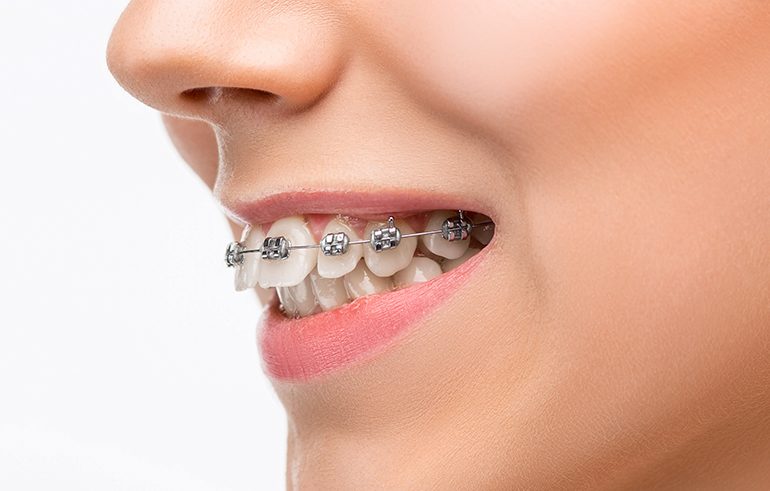
If a single tooth or a limited area is affected, correction may be possible with a fixed system or clear aligners.
The Approach in Adults
Once growth is complete, the effect of conventional expansion methods is limited. In these cases, surgically assisted expansion or different orthodontic approaches are evaluated. This does not mean that treatment is impossible; it shows that its scope is different.
The Role of Habits
Mouth breathing, thumb sucking and tongue posture disorders can affect upper jaw development. In children diagnosed with a crossbite, these factors are also evaluated; if necessary, a referral is made to an ear, nose and throat specialist. Treatment that does not address the cause increases the risk of relapse.
The Consequences of Chewing on One Side
People with a crossbite often use one side without realizing it. Over time, this habit increases wear on the teeth on that side, makes tartar build-up easier on the unused side and leads to asymmetric functioning of the chewing muscles. These effects are also evaluated when planning treatment; when the bite is corrected, the aim is for the chewing load to be distributed evenly to both sides.
Its Effect on the Gums
A tooth in reverse bite applies force to the opposing tooth from an unusual direction. This can lead to gum recession and tooth mobility in that area. Especially in single-tooth crossbites in the front region, recession at the gum line of the lower incisor is a commonly seen finding. For this reason, the approach “it’s just one tooth, it’s unimportant” is not correct.
How It Is Noticed
Parents usually notice a crossbite through these signs: the child’s jaw shifting to one side when closing, the lower teeth remaining outside in some areas, a habit of chewing on one side, or slight asymmetry in the face. If one of these findings is present, an orthodontic evaluation is recommended.
In adults, the complaint usually appears as jaw joint pain, one-sided wear or gum recession.
Follow-Up After Treatment
A retention stage is needed to preserve the result achieved after expansion. In addition, since growth continues in child patients, periodic follow-up is recommended; in some cases, a second phase may be planned.
Frequently Asked Questions
There may be a temporary difference in pronunciation in the first days; most patients adapt in a short time.
Yes. It can lead to wear on the opposing tooth and gum recession; an evaluation is recommended.
A feeling of pressure in the first days is normal; most children adapt in a short time.
It can be seen during expansion and usually closes over time.
Yes; however, the approach is different and surgical support may be needed in some cases.
Wear, gum problems and jaw joint complaints may develop; asymmetry may become permanent.
In a crossbite, timing determines the result.
If you have noticed a reverse bite in your child or yourself, have an evaluation. Contact us to book an appointment; let us create your plan at DijiDent Oral and Dental Health Polyclinic.
This content is for general information purposes. The treatment method and timing are determined with clinical and radiological evaluation.