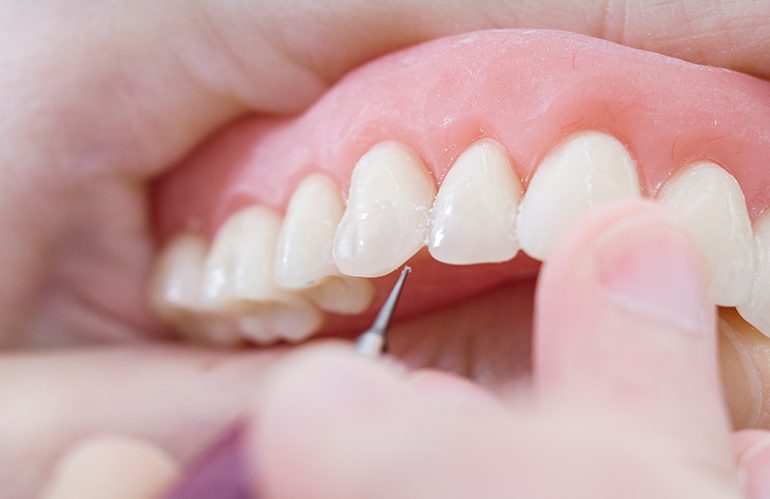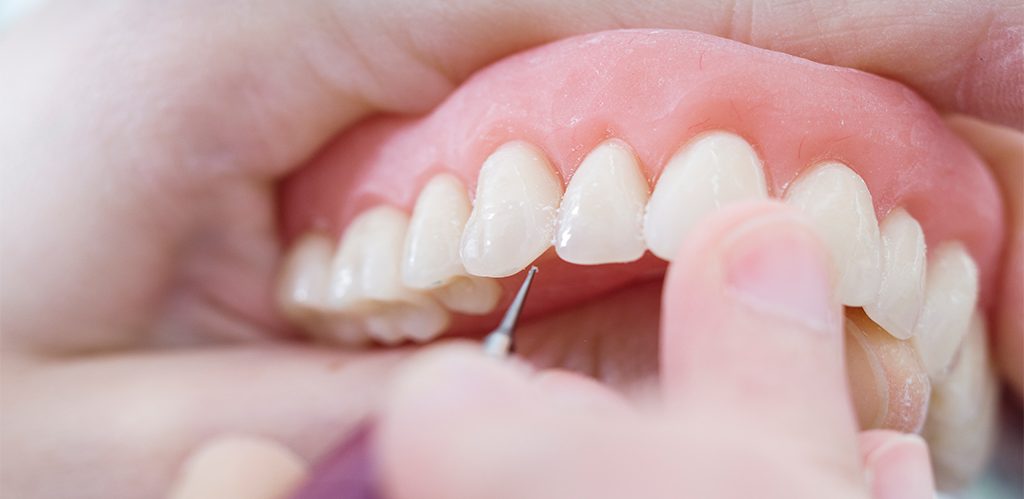
When a new denture is fitted, or in a denture that has been used for a long time, painful areas may form on the gums. This situation worries most patients and leads them to give up the denture completely. Yet in most cases, a denture sore is a fit problem that is solved in a short check-up session. As DijiDent Oral and Dental Health Polyclinic, in Türkiye we attach importance to addressing these complaints early; because every day of delay prolongs healing.
Why Do They Form?
- Pressure point: A certain area of the denture compresses the tissue more than other areas.
- Border length: If the edge of the denture is longer than it should be, it strains the movable tissue.
- Bone protrusions: Pressure may concentrate over sharp areas of the jawbone.
- Bone change: As bone volume decreases over the years, the denture loses its seat.
- Unbalanced bite: Concentration of chewing force in one area.
- Food debris: A hard particle getting under the denture may cause local irritation.
Small pressure points seen in the first days are normal; they appear as the tissues adapt to the new structure. However, these are not conditions expected to correct themselves; they require adjustment.
What Should You Do?
When you feel pain, you can remove the denture and rinse the area with lukewarm salt water. Switching to soft foods also provides relief. However, the real step is to book a check-up appointment.
There is a practical and important detail here: we recommend that you wear your denture for a few hours before coming to the check-up. When the denture is not worn, the pressure mark on the tissue disappears and your dentist cannot identify the problem area precisely. Wearing it for a short time despite the pain allows the right point to be found.
Things You Should Never Do
Do not scrape the denture yourself. Using sandpaper, a file, a knife or scissors is the most common mistake we encounter. Removed material does not come back and the fit of the denture may be permanently ruined. Often the real problem is a little way from the area where you feel the pain; for this reason, an intervention made on your own guess makes the problem bigger.
Do not try to put up with the pain. The “I’ll get used to it” approach causes a simple pressure point to turn into a deep sore. The healing time is prolonged and eating is negatively affected during this period.
Do not give up the denture completely. In a denture that is not worn for a long time, the tissues change and adaptation becomes even more difficult when it is put back in.
How Is It Treated?
Your dentist identifies the contact point with the help of special dyes or pressure-indicating materials. Then the relevant area of the denture is adjusted in very small amounts and the surface is polished. The procedure is usually short and painless. In some cases, several check-ups may be needed; this does not mean that the denture has been made poorly, it is a natural part of the tissue adaptation process.
If the sore is deep, it may be recommended to remove the denture for a few days for healing. During this period, we give recommendations so that your diet does not become restricted.
Eating During the Healing Period
It is important that your diet does not become restricted while the sore heals. We recommend continuing with soft but nourishing options such as soup, yogurt, well-cooked vegetables and minced meat. Spicy, acidic and very hot foods should be postponed during this period as they may be irritating. Rinsing with lukewarm salt water also helps the tissue feel relief.
Recurring Sores
If sores form again and again in the same area, the problem may not be solved by adjustment alone. Bone volume may have decreased and the denture may need to be relined. In advanced cases, renewing the denture or considering options that will increase retention comes into question.
When Must It Be Evaluated?
We want to emphasize this section in particular. A sore in the mouth, whether or not it is caused by a denture, must be evaluated by a dentist if it has not healed for more than two weeks. Likewise, areas that have hardened, bleed, are gradually growing or have discoloration around them should not be left waiting. A sore that does not heal even though the denture has been adjusted also falls within this scope.
This does not necessarily mean that there is a serious condition; most likely it has a simple cause. However, early evaluation of the tissues in the mouth is important in every age group and is one of the most valuable aspects of regular check-ups, especially for people who use dentures.
Frequently Asked Questions
After the pressure is eliminated, healing usually begins within a few days; the duration depends on the depth of the sore.
Medication should be used on a dentist’s recommendation. Suppressing the pain does not solve the problem.
It may provide temporary relief; however, a lasting result is not achieved unless the pressure is eliminated.
Several adjustments in the first weeks are normal. If it continues for a long time, the cause is investigated.
Sores lasting longer than two weeks must be evaluated; seek care without waiting.
You do not have to get used to pain.
Pressure points are usually eliminated in a short check-up session. Contact us to book an appointment; let us evaluate the fit of your denture at DijiDent Oral and Dental Health Polyclinic.
This content is for general information purposes and does not replace an examination by a dentist. Non-healing sores in the mouth must be evaluated.