They want to understand why healthy teeth are being extracted.
- Mrs. Sevim (63), who has loose teeth: She asks whether extracting her teeth due to gum disease is the only option.
- Barış (37), who has a broken tooth: He wonders what will be done when a tooth breaks at the root.
- Nilgün (55), who was referred before cancer treatment: She wants to learn why a dental check-up and possible extraction are needed before treatment.
The basic goal of modern dentistry is to keep natural teeth in the mouth for as long as possible. Many methods such as fillings, root canal treatment, gum treatment and crowns serve this purpose. However, in some situations it is not possible to preserve the tooth, or the tooth remaining in the mouth can lead to bigger problems for overall oral health. Knowing the answer to the question of when tooth extraction is necessary allows you to better understand your dentist’s recommendation and make the decision together. As DijiDent Oral and Dental Health Polyclinic, we always present the extraction decision to our patients in Türkiye together with its reasons and alternatives.
Extraction Is Always the Last Option
An extracted tooth cannot be brought back, and additional treatments may be needed to replace the missing tooth. For this reason, all options for preserving the tooth are evaluated before an extraction decision. Clinical examination and radiographic imaging provide information about the remaining sound tissue of the tooth, the condition of the root and the health of the supporting tissues.
The Main Reasons for Tooth Extraction
Teeth Too Damaged to Be Restored
If a large part of the tooth tissue has been lost due to caries or fracture and the remaining part cannot support a restoration, the tooth may not be preservable, especially if the loss extends below the gum and bone level.
Vertical Root Fractures
Fractures that affect the root along its length often make it impossible to preserve the tooth.
Advanced Gum Disease
If a large part of the bone supporting the tooth has been lost due to periodontitis and the tooth is markedly loose, the chance of preserving it with treatment may be low. These teeth can continue to be a source of infection in the surrounding tissues.
Infections That Do Not Respond to Treatment
Extraction may come onto the agenda in infections that cannot be brought under control despite options such as root canal treatment, retreatment and apical surgery.
Impacted and Partially Erupted Teeth
Wisdom teeth in particular may not erupt fully due to lack of space. Extraction may be recommended for impacted teeth that cause problems such as recurrent inflammation, caries or root resorption in the neighboring tooth, or cyst development.
Orthodontic Reasons
In severe crowding or jaw-tooth discrepancies, the extraction of some teeth to create space for the teeth to align properly can be part of the orthodontic treatment plan. This decision is made by the orthodontist with detailed analysis.
Baby Teeth
Baby teeth that do not fall out on time and prevent the permanent tooth beneath them from erupting may need to be extracted.
Before Medical Treatments
Before radiotherapy to the head and neck region, some chemotherapy treatments, organ transplants or certain medication treatments that affect bone metabolism, the evaluation and, if necessary, extraction of teeth that could cause problems in the future may be recommended. These decisions are made in collaboration with the relevant physicians.
Trauma
Teeth that have suffered a root fracture or serious damage in an accident and cannot be preserved may need to be extracted.
Evaluation Before Extraction
- Health history: Chronic illnesses, medications used (especially blood thinners and bone medications) and allergies.
- Imaging: The root shape and the relationship with neighboring structures are evaluated with X-rays and, if necessary, three-dimensional tomography.
- Discussing alternatives: Options for preserving the tooth and their expected outcomes.
- Post-extraction planning: What can be done to replace the missing tooth and its timing.
What Will Happen to the Gap After Extraction?
Leaving the site of the extracted tooth empty for a long time can lead to tilting of the neighboring teeth, over-eruption of the opposing tooth and bone loss. For this reason, together with the extraction decision, replacing the missing tooth with an implant, bridge or prosthesis is also planned. In areas where an implant is planned in the future, in suitable cases socket preservation can be done by placing bone graft in the extraction socket, or an implant can be placed in the same session as the extraction.
How Is Extraction Done?
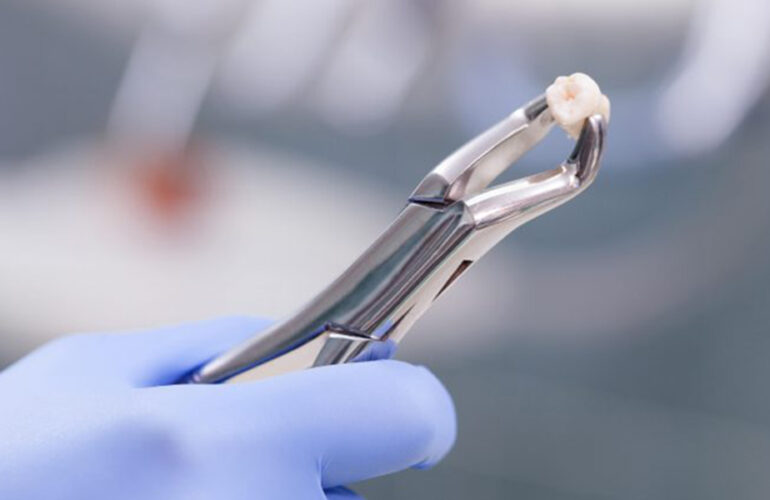
Simple extractions are done under local anesthesia by gently removing the tooth from its socket with special instruments. Impacted, broken or curved-root teeth may require surgical extraction. Pain is not expected to be felt during the procedure; pressure may be felt. Following your dentist’s recommendations in the post-extraction period helps healing go smoothly.
The First Days After Extraction
Biting on the gauze given after the extraction for the specified time, avoiding vigorous rinsing and spitting on the first day, not smoking and preferring lukewarm, soft foods help protect the blood clot and allow healing to progress smoothly. In the event of increasing pain, swelling, fever or bleeding that does not stop, it is recommended that you contact your clinic.
Getting a Second Opinion
Getting a second opinion is a reasonable approach, especially before irreversible decisions. Your images and examination findings can also be evaluated by a different dentist. At DijiDent, for our patients who are recommended an extraction, we clearly show the options for preserving the tooth and the reasons for the extraction using the images.
Frequently Asked Questions
When the tooth is too damaged to be preserved, in infections that do not respond to treatment, in situations where impacted teeth cause problems, or when orthodontic planning requires it.
In many situations, the tooth can be preserved with a filling, root canal treatment or gum treatment. The options are evaluated after the examination.
It is done under local anesthesia; pain is not expected to be felt during the procedure, but pressure may be felt.
There are options such as an implant, bridge or prosthesis; the decision is made according to your oral structure.
Generally yes; however, medication adjustment should only be made by decision of your relevant physician.
Let us first evaluate preservation and, if necessary, proceed with the right plan.
Contact us to book an appointment to have your tooth’s condition evaluated and to learn your options. Let us make your decision together using the images at DijiDent Oral and Dental Health Polyclinic.
This content is for general information purposes and does not replace an examination by a dentist. The extraction decision is made together with the patient after clinical and radiographic evaluation.