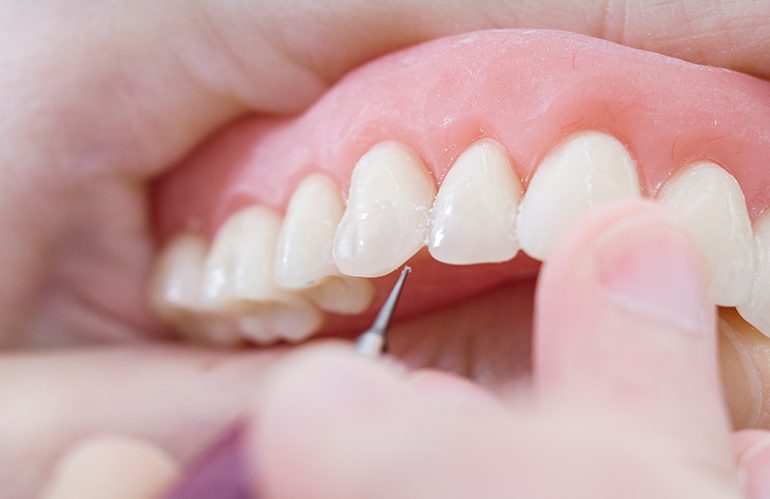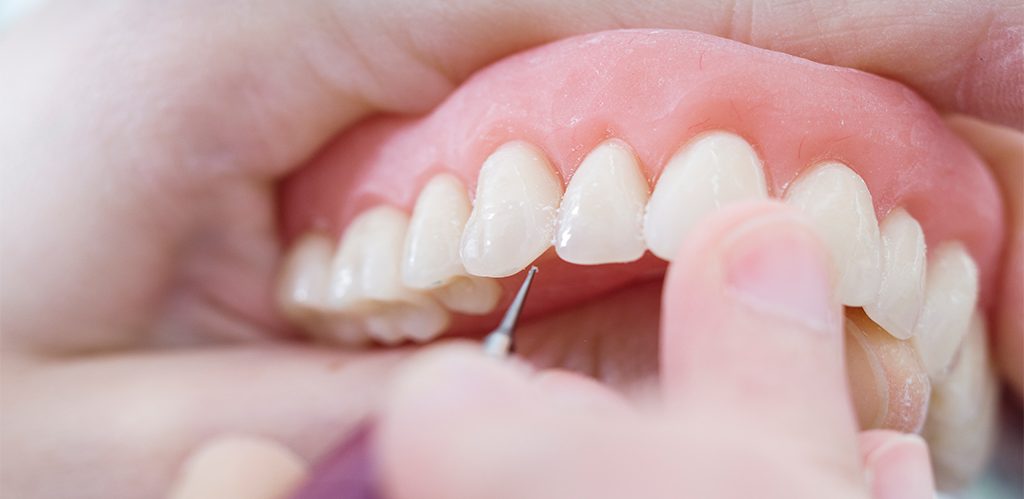
This is one of the questions most frequently asked by patients who use dentures, and the answers given often differ from one another. The general answer to the question of whether a denture should be removed at night is yes; however, knowing the reason makes it easier to keep up this habit. As DijiDent Oral and Dental Health Polyclinic, in Türkiye we explain this topic in detail at the denture delivery stage.
Why Should the Tissues Rest?
The gum tissue on which the denture sits is under constant pressure throughout the day. These tissues normally function while being open and in contact with saliva. When the denture is left in constantly, the area underneath turns into a moist, closed environment deprived of the cleansing effect of saliva. These conditions are favorable for the growth of microorganisms.
Removing it at night allows the tissues to be relieved of pressure and to be in contact with saliva for at least a few hours. This is the simplest precaution that reduces the risk of developing inflammation.
Denture-Related Palatal Inflammation
In dentures that are left in constantly, redness may develop in the palatal area. The most striking aspect of this condition is that it is often painless; the patient does not notice it. The signs usually take the form of a well-defined redness limited to the area where the denture sits. Sometimes cracks at the corners of the mouth also accompany it.
Its treatment is usually not difficult: adjusting the denture wearing routine, meticulous cleaning and, when necessary, applications your dentist will recommend. However, when it goes unnoticed, it becomes persistent. If you see persistent redness on your palate, we recommend that you have an evaluation even if you have no pain.
How Should It Be Stored?
- Do not leave it dry: When acrylic material dries out, it may become deformed and brittle.
- Store it in clean water: It is kept in lukewarm or cold water in a clean container with a lid.
- Do not use hot water: It distorts the shape of the denture.
- Change the water every day: Keeping it in the same water for a long time is not appropriate in terms of hygiene.
- Cleaning tablets: If they are used, the time should be followed and the denture should be rinsed thoroughly with water afterwards.
- Dentures with metal parts: Not every product may be suitable; consult your dentist.
After removing the denture, it is also recommended that you clean your gums, palate and tongue with a soft brush. This both supports circulation and removes the accumulated plaque layer.
Are There Exceptions?
Yes. In some situations, your dentist may recommend a different routine. With dentures fitted after a recent extraction, it may be requested that they stay in constantly for the first days; this is to protect the healing area. In addition, the wearing routine may be planned differently for some patients with certain jaw joint problems. For this reason, when the general recommendation conflicts with your dentist’s personal instruction for you, you should follow your dentist’s instruction.
Morning Routine
Before putting in the denture in the morning, it is recommended that you rinse your mouth and clean your gums with a soft brush. The denture itself should also be rinsed before it is put in; this removes residue from the water it was kept in overnight. This short routine supports tissue health throughout the day.
Social Concern
Some of our patients do not remove their denture at night because they do not want to be seen without it by their spouse or household. We understand this concern and do not ignore it. In such cases, we look for a practical middle way: removing the denture for a certain part of the day, for example during a few hours spent at home in the evening, also contributes to the tissues resting. What matters is eliminating the situation in which the tissue never rests.
Cleaning Your Denture Container
The container in which the denture is stored should also be cleaned regularly. Changing the water every day is not enough; biofilm may form on the inner surface of the container over time. Washing the container with hot water and detergent several times a week ensures that the denture is kept in a clean environment.
Night-Time Teeth Clenching
In patients who use partial dentures and clench their teeth at night, the situation is evaluated separately. In these patients, a different plan may be needed to protect both the denture and the remaining natural teeth. If you experience jaw fatigue in the morning, inform your dentist.
Frequently Asked Questions
This is normal. The habit of removing it at night does not permanently affect your speech adaptation.
A single night usually does not cause a problem; the problem is it staying in constantly.
It is recommended that it be stored in clean water; leaving it dry may lead to deformation.
It is not necessary. Brushing is essential; tablets are complementary.
In most cases it heals with proper care and wearing routine; an evaluation is recommended.
No. Fixed prostheses are not removed; however, they must be cleaned meticulously.
Letting your tissues rest also extends the life of your denture.
If you have redness or discomfort on your palate, have a check-up. Contact us to book an appointment; let us plan your care routine together at DijiDent Oral and Dental Health Polyclinic.
This content is for general information purposes. The wearing routine should be personalized according to your dentist’s instructions.