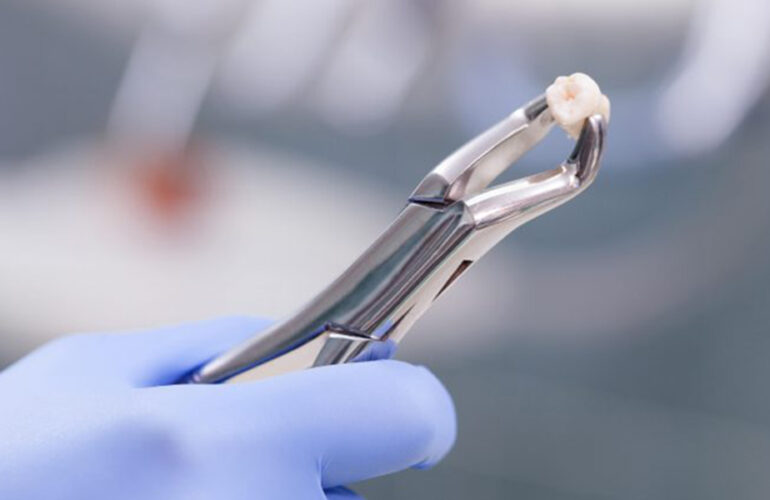
After a tooth is extracted, a natural healing process consisting of successive stages begins in the extraction cavity, that is, the socket. Some changes seen during this process may look worrying, especially for patients having an extraction for the first time; yet most are a normal and expected part of healing. Knowing the healing process of the extraction site day by day allows you to understand what is normal and to distinguish situations that really require attention. As DijiDent Oral and Dental Health Polyclinic, we have prepared a guide explaining this process for our patients in Türkiye.
The First 24 Hours: Clot Formation
Immediately after the extraction, the cavity fills with blood and a blood clot forms within a short time. This clot stops the bleeding, protects the underlying bone and nerve endings and acts as a scaffold for new tissue to form. It is normal for saliva to look pink on the first day. During this period, avoiding vigorous rinsing, spitting, straw use and smoking is important to protect the clot.
Days Two and Three: Swelling and Early Healing
Swelling usually reaches its most pronounced level on these days and then begins to decrease. A whitish or yellowish layer may form on the surface of the clot. This layer is often not an infection but a layer of new tissue and fibrin formed during the healing process. If it is not accompanied by a bad odor, increasing pain or purulent discharge, it is generally normal.
The First Week: Gum Healing Begins
The gum edges begin to heal and the opening of the cavity gradually narrows. Pain and sensitivity decrease markedly. If stitches were placed, they can be removed during this period or may dissolve on their own. Gentle cleaning of the extraction site should continue.
Weeks Two to Four: Closure of the Gap
The gum largely covers the top of the cavity. When probed with the tongue, a hollow may still be felt at the extraction site; this shows that bone healing is not yet complete and is normal. Especially after the extraction of large molars, it may take longer for this hollow to close.
A Few Months: Bone Healing
Over time, the inside of the socket fills with new bone. The maturation of the bone takes a few months. During this process, the bone remodels somewhat in terms of both height and width; this explains the bone loss naturally seen after extraction.
Feeling a Hard Fragment at the Extraction Site
A few days or weeks after the extraction, small, hard and sharp fragments coming out of the gum may be felt. These are usually small bone particles or tooth fragments that the body expels during the healing process. Most come out on their own. Do not try to force the fragment out; if it is causing discomfort or irritating your tongue, contact the clinic. Your dentist can remove the fragment with a simple procedure.
These fragments coming out is considered part of healing.
Factors Affecting Healing
Scope of the extraction: Healing may take longer after surgical extractions and impacted tooth extractions.
Smoking: It delays healing and increases the risk of dry socket.
General health: Diabetes, immune system problems and some medications can affect healing.
Age: Healing may be slower at an advanced age.
Oral hygiene: Keeping the area clean reduces the risk of infection.
Compliance with recommendations: Following nutrition and care recommendations supports healing.
Abnormal Symptoms
Severe pain increasing on days two to four: This may be a sign of dry socket.
Swelling and fever increasing after the third day: An evaluation for infection is necessary.
Purulent discharge and a bad odor: These may be signs of infection.
Bleeding that does not stop: Bleeding that continues despite proper pressure.
Prolonged numbness: A change in sensation in the lip, chin or tongue that does not go away.
Fluid coming from the nose in the upper jaw: This should be evaluated for an oral-sinus communication.
If you notice any of these symptoms, it is recommended that you contact your clinic without waiting for the check-up date.
When Should the Missing Tooth Be Replaced?
Implant
In suitable cases, the implant can be placed in the same session as the extraction. In situations such as infection or insufficient bone, however, a few weeks to a few months may be waited for the gum and bone to heal. Waiting for a long time, on the other hand, can increase bone loss, so the timing should be planned together with your dentist. If a socket preservation procedure has been done, the time required for the graft to mature is awaited.
Bridges and Dentures
If a bridge or removable denture is planned, it is awaited until the remodeling of the gum and bone is largely complete; temporary solutions can be applied during this time. With permanent restorations made early, a gap may form underneath due to tissue changes that occur later.
We Are by Your Side During the Healing Process
At DijiDent, we follow your healing with check-up appointments after the extraction and plan the most suitable timing for replacing the missing tooth together with you.
Frequently Asked Questions
The gum usually covers the gap within a few weeks; bone healing, however, takes a few months.
It is often a normal tissue formed during the healing process. If there is a bad odor, increasing pain or discharge, contact the clinic.
It is common for small bone particles to be expelled over time; if they cause discomfort, contact the clinic.
In suitable cases, it can be done on the same day; in other situations, a few weeks to a few months may be waited.
Yes. A hollow may be felt until bone healing is complete.
Let us follow your healing and plan the next step together.
Contact us to book an appointment with your questions about your healing after extraction or to replace your missing tooth. Let us determine the timing that suits you at DijiDent Oral and Dental Health Polyclinic.
This content is for general information purposes and does not replace an examination by a dentist. Healing time varies from person to person; consult your dentist in the event of unexpected symptoms.