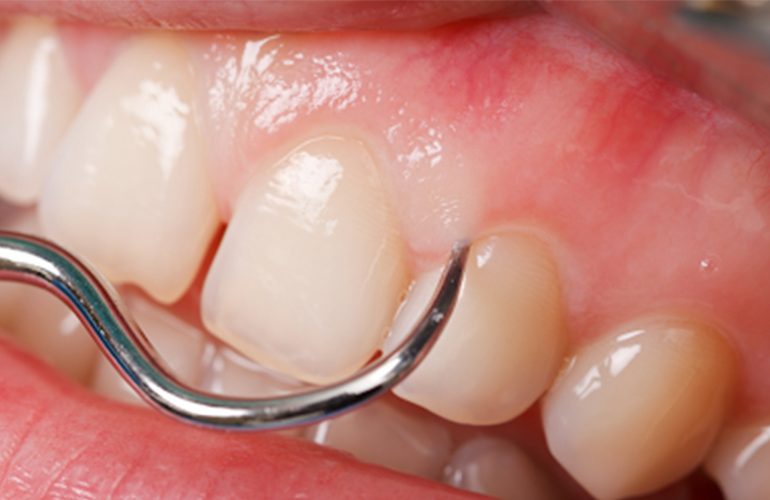
The cause of tooth loss is not caries as often as is thought; in adults, a significant proportion occurs through the loss of the supporting tissues. A tooth that looks healthy may start to become loose because the bone beneath it has resorbed. Gum disease is often noticed late because it usually progresses without pain, and this is its most dangerous feature. As DijiDent Oral and Dental Health Polyclinic, in Türkiye we count the early detection of this disease among our priorities.
What Holds a Tooth?
A tooth does not stand alone inside the bone. There is a support system that holds it in place: the gums, the fibers that attach the tooth to the bone, the cementum layer on the root surface and the alveolar bone around it. All of these structures together are called the periodontium, and the specialty that deals with them is periodontology.
The disease progresses in this support system. In other words, the problem is not in the tooth itself but in the foundation that keeps it standing.
How Does It Start?
The process begins with bacterial plaque. When this soft layer that constantly forms on the tooth surface is not cleaned regularly, an inflammatory response develops at the gum line. This first stage is gum inflammation and is reversible.
Over time, plaque mineralizes and turns into tartar. Tartar, which forms a hard and rough surface, cannot be cleaned with a brush and makes it easier for new plaque to accumulate on it. When the process continues, the inflammation progresses deeper; the fibers attaching the tooth to the bone and the bone tissue begin to be lost. At this stage, the disease can no longer be reversed; it can only be stopped.
Symptoms
- Bleeding when brushing or flossing
- Redness, swelling and tenderness of the gums
- Persistent bad breath or a bad taste in the mouth
- Gum recession and teeth looking longer
- New gaps forming between the teeth
- Pus coming from the gums under pressure
- Tooth mobility or a change in the bite
Bleeding is the most frequently ignored symptom. Healthy gums do not bleed with brushing; bleeding is a sign of inflammation and should not be considered normal.
Why Does It Progress Without Pain?
The loss in the supporting tissues usually does not directly stimulate nerve endings. For this reason, the patient may not feel any complaints for years and seeks care when the teeth start to become loose. At that stage, recovering the lost bone is limited. This is why the difference between a simple intervention in the early period and comprehensive treatment in the advanced period is so great.
Risk Factors
- Inadequate oral care: It is the basic factor.
- Smoking: It negatively affects the tissue response and can mask bleeding.
- Genetic predisposition: A family history of early tooth loss is important.
- Diabetes: Uncontrolled blood sugar and periodontal disease are associated with each other in both directions.
- Stress and immune status: They can affect the tissue response.
- Hormonal periods: Pregnancy and puberty can make the tissue more sensitive.
- Some medications: They can cause gum overgrowth or dry mouth.
- Crowded teeth and ill-fitting restorations: They make cleaning more difficult.
Its Relationship with General Health
A relationship has been reported between periodontal disease and some systemic conditions. A two-way interaction is mentioned, especially with diabetes: uncontrolled diabetes may negatively affect gum health, while advanced periodontal inflammation may make blood sugar control more difficult. Relationships with cardiovascular health and pregnancy outcomes are also being researched. These are findings at the level of association; they should not be presented as direct cause-and-effect claims.
Treatment
The basis of treatment is the removal of the build-up that causes inflammation. In the first stage, professional cleaning and, when necessary, root planing are applied. Then the tissue response is evaluated. In advanced cases, surgical approaches and applications aimed at tissue regeneration may come into consideration.
However, what is truly decisive is the maintenance period. If home care is not maintained regularly and check-ups are neglected, the disease progresses again. For this reason, periodontal treatment is not a one-time procedure but a long-term program.
Frequently Asked Questions
It can be seen at any age; its frequency increases with age. Gum inflammation can also develop in children and adolescents.
No. Healthy gums do not bleed with brushing; an evaluation is needed.
It does not come back on its own. In some cases, applications aimed at regeneration are considered.
Bacteria can be transmitted through close contact; however, the development of the disease is related to personal predisposition and care.
Local anesthesia is applied when necessary; short-term sensitivity after the procedure is normal.
Your dentist determines this according to your risk level; the interval is shorter for those who have had periodontal treatment.
Do not neglect the foundation that holds your teeth.
If you have noticed bleeding, tenderness or recession, have an early evaluation. Contact us to book an appointment; let us examine your periodontal condition at DijiDent Oral and Dental Health Polyclinic.
This content is for general information purposes and does not replace an examination by a dentist. Diagnosis and treatment are determined by clinical evaluation.