Gum diseases are not a single picture; they have different stages and the distinction between these stages is decisive in terms of treatment. While one stage is completely reversible, in the other the loss is permanent and can only be stopped. Knowing the distinction between gingivitis and periodontitis allows you to understand where you are and what you can protect. As DijiDent Oral and Dental Health Polyclinic, in Türkiye we explain this distinction clearly to our patients.
Gingivitis: The Reversible Stage
Gingivitis is the stage in which inflammation is limited only to the gum tissue. The fibers attaching the tooth to the bone and the bone tissue have not yet been affected.
Its symptoms: redness and swelling of the gums, bleeding when brushing and tenderness. There is usually no pain.
Its most important feature is that it is reversible. When plaque and tartar are removed and regular care is provided, the tissue can fully regain its health. It leaves no permanent loss. This is the most valuable window for intervention.
Periodontitis: The Stage of Permanent Loss
When the inflammation progresses deeper, the picture changes. The fibers attaching the tooth to the bone are destroyed and resorption begins in the alveolar bone. The space between the tooth and the gum, which is normally shallow, deepens; this is called a periodontal pocket.
As the pocket deepens, it becomes harder to clean and bacteria find a sheltered environment inside it. In this way, the process enters a self-sustaining cycle.
Its symptoms: gum recession, teeth looking longer, new gaps between the teeth, bad breath, pus coming from the gums and, at an advanced stage, loose teeth.
The critical difference is this: lost bone and connective tissue do not come back on their own. The aim of treatment is to stop progression and preserve the existing support.
What Does Pocket Measurement Mean?
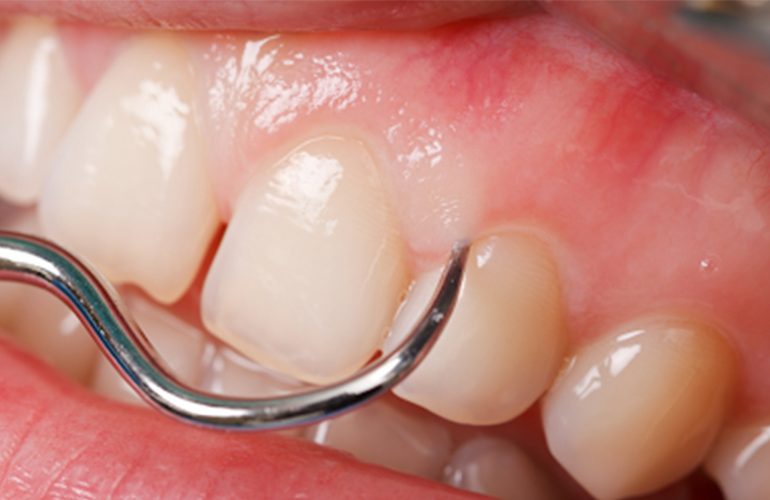
During the examination, a thin measuring instrument is placed around the gum, the depth is measured and the figures are recorded. In healthy tissue, this depth is shallow and no bleeding is seen. As the depth increases and bleeding accompanies it, the level of the disease rises.
These measurements are valuable not only for diagnosis but also for follow-up. Comparing records before and after treatment allows the response to be evaluated objectively. This is why it is important that your records are kept.
Does Every Gingivitis Turn into Periodontitis?
No. Gingivitis is very common; however, only a portion of it progresses and turns into periodontitis. Individual predisposition, immune response, smoking, systemic conditions and care habits play a role in this transformation. The risk may be higher in those with a family history of early tooth loss.
This uncertainty makes early intervention even more meaningful: since we cannot know for certain in advance who will progress, stopping it at the gingivitis stage is the safest way.
The Difference in Treatment
In gingivitis, professional cleaning and regular home care are sufficient in most cases. In periodontitis, however, treatment is comprehensive: planing of the root surfaces within the pocket and, when necessary, surgical approaches and applications aimed at tissue regeneration come into consideration.
The real difference is after treatment. In patients treated for periodontitis, the disease is considered to be under control; however, the tendency to recur continues. For this reason, regular maintenance sessions are planned, and these continue for life. This does not mean that the treatment has failed; it means that a chronic condition is being managed.
Why Are Maintenance Sessions Different?
A check-up session applied to a patient who has had periodontal treatment is different from routine tartar removal. In these sessions, pocket depths are re-measured, bleeding points are recorded, root surfaces are evaluated and deep cleaning is repeated if necessary. The aim is not only cleaning but monitoring whether the disease has become active again.
Can a Loose Tooth Be Saved?
It depends on the degree of mobility and the remaining bone support. In some cases, mobility may decrease when inflammation is brought under control. In teeth with advanced loss, extraction and subsequent prosthetic planning come into consideration. The decision is made with radiological and clinical evaluation.
Frequently Asked Questions
It is determined by pocket measurement and radiological evaluation; symptoms alone are not sufficient.
Yes. With appropriate cleaning and care, the tissue can heal completely.
It is brought under control; however, it may progress when maintenance sessions are neglected.
It does not come back on its own. In selected cases, applications aimed at regeneration are considered.
It is determined according to your risk level; the interval is shorter for patients who have been treated.
Do not miss the reversible stage.
Let us evaluate your gum condition with measurements and clarify which stage you are at. Contact us to book an appointment; let us create your plan at DijiDent Oral and Dental Health Polyclinic.
This content is for general information purposes. Diagnosis and treatment are determined after clinical and radiological evaluation.