The effect of smoking on oral health is often thought to be limited to tooth staining and bad breath. Yet the real effect takes place deep in the tissues and largely unseen. The relationship between smoking and gum diseases is one of the most strongly established risk factors in periodontology. As DijiDent Oral and Dental Health Polyclinic, in Türkiye we discuss this topic openly with our patients.
The Most Misleading Point: The Absence of Bleeding
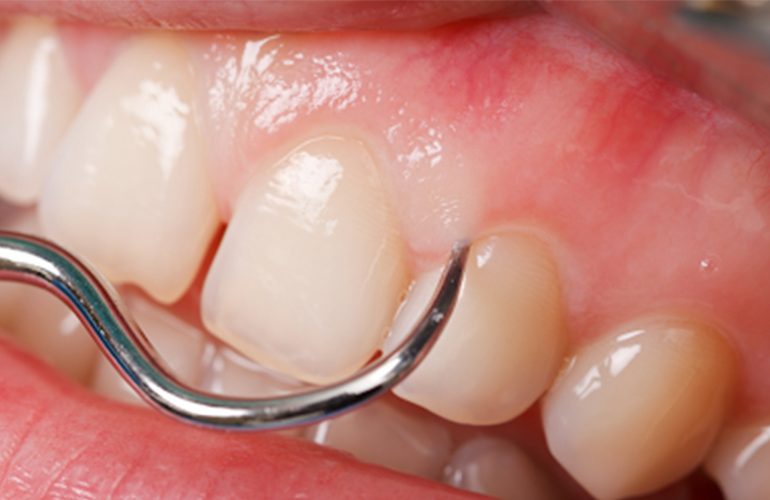
This section is particularly important. Smoking has a constricting effect on the small blood vessels in the gums and reduces local blood flow. As a result, bleeding may not be seen even if there is inflammation.
For the patient, this creates a misleading sense of security: “My gums never bleed, so they must be healthy.” Yet advanced periodontal disease may be present in the same mouth. For this reason, in smokers, the evaluation should be based not on bleeding but on pocket measurements, gum recession and radiological findings.
Other Effects
- Faster progression of the disease: Bone loss may be more pronounced.
- Reduced treatment response: The same treatment may give better results in non-smokers.
- Delayed healing: Tissue response after surgery and extraction is negatively affected.
- Gum recession: It may be seen more often and more prominently.
- Dry mouth: It increases the risk of odor and caries.
- Staining and tartar build-up: They form faster.
- Changes in taste and smell perception: These are among the frequently reported findings.
Implant and Surgical Success
It is reported that smoking may negatively affect the health of the tissue around implants and the healing response. This does not mean that an implant cannot be placed; however, it requires the increased risk to be discussed openly with the patient. Not smoking for a certain period before and after surgical procedures is especially recommended. This issue is even more critical in graft and tissue regeneration applications.
Monitoring the Oral Tissues
Smoking is associated with changes in the oral tissues. For this reason, regular dental examination is important not only for the gums but also for monitoring the oral tissues. Non-healing sores and color or tissue changes should be evaluated without waiting.
Its Effect on Gum Treatment
The response to periodontal treatment is generally more limited in smokers. In a pocket of the same depth, the improvement achieved in a non-smoker may not be achieved. This does not mean that treatment is unnecessary; it requires expectations to be set realistically and follow-up to be closer.
E-Cigarettes and Heated Tobacco
There is a common perception that these products are safer than conventional cigarettes. Their effects on oral health continue to be researched; current data do not show that they are harmless. Dry mouth, changes in the gum tissue and inflammatory findings have been reported. For this reason, the assumption “I switched, so there’s no problem anymore” should be treated with caution.
Tooth Staining and Cleaning
Smoking-related surface stains cannot be fully removed with regular brushing. They can be removed with professional cleaning and, when necessary, surface applications; however, as long as smoking continues, they form again in a short time. In addition, this build-up also accelerates tartar formation. For this reason, check-up intervals are usually planned closer together for smokers.
The Effect of Quitting
This is the most hopeful part of the content. When smoking is stopped, the tissue response tends to improve over time. As blood flow returns to normal, bleeding that was not seen before may appear; although this may be surprising, it is a positive sign and shows that the tissue has begun to respond normally.
It is reported that the response to periodontal treatment is better and the rate of disease progression decreases in those who quit. Lost bone does not come back; however, preserving the existing support becomes significantly easier.
If you want support in the quitting process, your family physician or smoking cessation clinics can help you. Do not hesitate to discuss this during the examination; our aim is not to judge but to reduce the risk together.
Frequently Asked Questions
The negative effects of tobacco products on oral health are reported; hookah is evaluated within this scope.
Smoking can suppress bleeding. The evaluation should be made with measurements.
Risk is associated with quantity; however, effects have also been reported with light use.
The tissue response tends to improve; lost bone does not come back.
An evaluation is needed. The increased risk is shared openly and quitting is recommended.
They have not been shown to be harmless; their effects on oral health are being researched.
An invisible risk becomes visible with measurement.
We recommend that you have a periodontal evaluation even if you have no bleeding. Contact us to book an appointment; let us examine your situation at DijiDent Oral and Dental Health Polyclinic.
This content is for general information purposes. For smoking cessation support, you can consult your family physician or the relevant clinics.