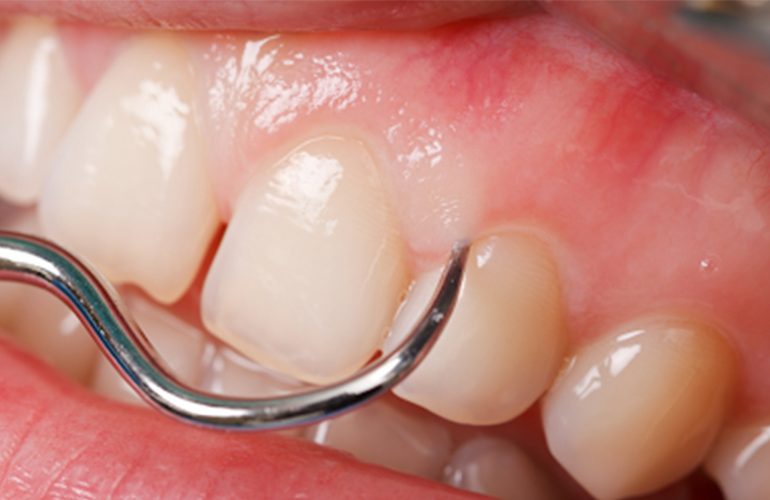
In periodontal treatment, the first stage is always the non-surgical approach. However, when pocket depth is excessive in some areas, the root surface cannot be fully reached with closed methods. In this case, the surgical approach comes into consideration. Gum surgery is a more limited procedure than most patients think. As DijiDent Oral and Dental Health Polyclinic, in Türkiye we make this decision after evaluating the results of the first treatment.
Why Might It Be Needed?
In non-surgical treatment, the instruments enter below the gum blindly; beyond a certain depth, it becomes difficult to reach the entire root surface. Cleaning may remain incomplete, especially in root furcation areas and teeth with complex root anatomy.
If pocket depth has not decreased and bleeding continues in some areas at the re-evaluation, it is understood that the deposit persists in these areas. The aim of the surgical approach is to clean these areas under direct vision.
How Is the Procedure Done?
The procedure is carried out under local anesthesia. The gum tissue is lifted and the root surface and bone are made directly visible. Deposits are cleaned, inflamed tissue is removed and, if necessary, bone irregularities are corrected.
In some cases, applications aimed at tissue regeneration are added at this stage. At the end of the procedure, the gum is repositioned with stitches. The stitches are usually removed after a while.
Is It Painful?
No pain is expected during the procedure due to the anesthesia. Afterwards, there may be tenderness and swelling for a few days; in most patients this is milder than expected. Following your dentist’s recommended medication and care instructions makes the process easier.
The Healing Period
- First 24 hours: Cold application to the area may be recommended; avoid hot foods.
- Eating: Soft and lukewarm foods are preferred for a few days.
- Cleaning: The surgical area is not brushed for the specified period; your dentist will recommend an alternative method.
- Stitches: They are removed at the scheduled appointment.
- Smoking: It negatively affects the healing response; not smoking during this period is especially recommended.
- Check-ups: Early check-ups should not be missed.
Return to daily life is usually quick; however, heavy physical activity should be postponed in the first days.
The Teeth May Look Longer
This is the result that surprises patients most and it needs to be discussed from the start. When the inflamed tissue is removed and the swelling recedes, the gum level drops somewhat. The teeth may look longer and gaps between the teeth may become more noticeable.
This is not a side effect of surgery; it is the already lost support becoming visible. If this result is important in the aesthetic region, the plan is designed accordingly and more conservative techniques may be preferred.
Different Techniques Applied
Gum surgery does not consist of a single method. In some techniques, the aim is only to gain access to the root surface and the tissue is repositioned while being preserved as much as possible. In others, bone irregularities are corrected. In the aesthetic region, approaches that work with smaller incisions and aim to minimize tissue loss after healing may be preferred. Which technique is applied is determined according to the area, the shape of the defect and the aesthetic expectation.
Is It Needed in Every Case?
No. In a significant proportion of patients receiving periodontal treatment, the non-surgical approach gives sufficient results. Surgery is planned only for areas that do not respond at the re-evaluation. For this reason, surgery is not recommended directly as the first option; when it is recommended, it is your right to ask for the rationale.
The Decision in the Aesthetic Region
When surgery is planned in the front region, the aesthetic result is evaluated separately. If tissue recession will be noticeable in the smile, more conservative techniques or a different treatment sequence may be preferred. In some cases, restorative adjustment after surgery is planned and the resulting appearance is discussed in advance. The aim is that the patient does not face an unexpected result.
What Happens Afterwards?
Surgery is not the end of the treatment of the disease. After the procedure, maintenance sessions become even more important; because if the cleaned areas collect deposits again, the process may start again. The operation does not replace home care; it prepares suitable conditions for it.
Frequently Asked Questions
It varies according to the number of areas; usually one area is treated in a single session.
Mild swelling and tenderness are normal; they are expected to decrease within a few days.
It is possible for most patients; heavy physical activity should be postponed.
There may be temporary mobility in the early period; it is expected to decrease as the tissue heals.
It is usually not needed if maintenance sessions are kept up regularly.
Surgery is not a last resort but a planned step.
Let us evaluate with measurements whether it is necessary and share it with its rationale. Contact us to book an appointment; let us examine your situation at DijiDent Oral and Dental Health Polyclinic.
This content is for general information purposes. The surgical decision and method are determined after clinical and radiological evaluation.