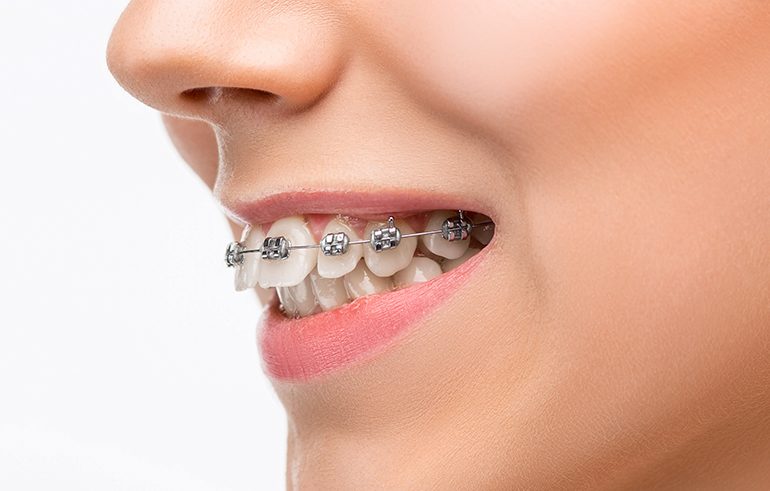
This is one of the questions parents ask most often, and it carries a two-way concern: “Are we too late?” and “Are we starting too early?” Both concerns are understandable. In the approach to orthodontics for children, the right answer is a timing that is not the same for every child. As DijiDent Oral and Dental Health Polyclinic, in Türkiye we recommend early evaluation; however, this does not mean that treatment will start immediately in every child.
Evaluation and Treatment Are Not the Same Thing
It is important to clarify this distinction. Early orthodontic evaluation means monitoring jaw development and the pattern of tooth eruption. As a result of the examination, in most children the decision “let’s monitor for now” is made. The aim is to notice situations requiring intervention in time.
In general, it is recommended that the first orthodontic evaluation be carried out in the period when the permanent teeth begin to erupt. In this period, jaw relationships, lack of space and eruption path problems become visible.
Situations Requiring Early Intervention
- Crossbite: The lower teeth closing on the outside due to a narrow upper jaw.
- Pronounced jaw relationship problems: The upper or lower jaw being noticeably forward or back.
- Impacted canines: Teeth in a position that may press on the roots of neighboring teeth.
- Early loss of baby teeth: A space maintainer may be needed to prevent loss of space.
- Presence of extra teeth: Additional teeth that prevent eruption.
- Harmful habits: Thumb sucking, tongue thrusting and mouth breathing.
- Pronounced asymmetry: The jaw shifting to one side when closing.
The Advantage of Early Intervention
Some applications done while jaw development continues may make more comprehensive treatments unnecessary in the future. For example, widening a narrow upper jaw can be done more easily and more permanently during the growth period. The same procedure becomes much more difficult in adulthood, sometimes surgically assisted.
Not Every Child Needs Early Treatment
This is an equally important fact. In children with simple crowding and a normal jaw relationship, early intervention usually does not provide an advantage; it may be more appropriate to wait for the permanent teeth to erupt and treat in a single phase. Unnecessary early treatment lengthens the total duration and exhausts the child’s motivation.
If early treatment is recommended to you, it is your right to ask for the rationale. The statement “if we don’t start now, we’ll be too late” is not a sufficient rationale without an explanation of which finding it is based on.
The Effect of Habits
Thumb sucking, long-term pacifier use, tongue thrusting and mouth breathing can affect tooth alignment and jaw development. If the thumb-sucking habit continues after the permanent front teeth have erupted, an open bite may develop. Mouth breathing is usually associated with nasal obstruction, and in this case an ear, nose and throat evaluation may be needed.
Coercive approaches to habits usually backfire. A supportive method suitable for the child’s age and, if necessary, collaboration with the relevant specialists are more effective.
Monitoring Jaw Development
One aim of early evaluation is also to follow the growth period. Jaw development accelerates in certain periods, and some applications give much more effective results in these periods. This timing can be caught with regular check-ups. This is why periodic follow-up is recommended instead of a one-off examination; the aim is not to start treatment immediately but not to miss the right moment.
What Is Two-Phase Treatment?
In some cases, treatment is divided into two periods: the first phase done during the growth period and the second phase after the permanent teeth are complete. This approach is not necessary for every child; it is applied only in certain indications. Which phases the plan covers and why it is needed should be explained to you from the start.
The Child’s Compliance
In orthodontic treatment, the child’s cooperation directly affects the result. Oral care must be maintained, check-up appointments must not be missed and removable appliances must be used regularly. The family’s support is decisive at this point; showing the child the progress increases motivation.
Frequently Asked Questions
A first evaluation is recommended in the period when the permanent teeth begin to erupt; if there is any doubt, you can come earlier.
It is done in certain indications; in most cases, monitoring is preferred.
Not always; however, it may simplify the second phase.
An evaluation is recommended. Age-appropriate, supportive methods are planned.
Loss of space may occur; whether a space maintainer is needed should be evaluated.
Early evaluation also prevents unnecessary treatment.
Let us examine your child’s jaw development and tooth alignment in good time. Contact us to book an appointment; let us create the follow-up plan together at DijiDent Oral and Dental Health Polyclinic.
This content is for general information purposes. The treatment decision and its timing are determined by your dentist after clinical and radiological evaluation.