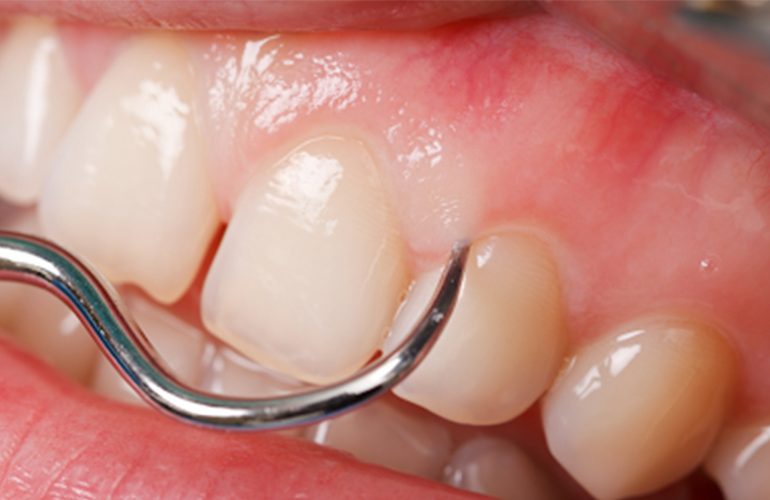
The gum pulling back from covering the root surface has both aesthetic and functional consequences. The teeth look long, the root surface becomes exposed and sensitivity begins. Gum recession cannot be attributed to a single cause; the right treatment is only possible by identifying the cause. As DijiDent Oral and Dental Health Polyclinic, in Türkiye we first carry out a cause analysis in these cases.
Causes
- Periodontal disease: Recession due to loss of supporting tissue.
- Overly hard brushing: Incorrect technique and the use of a hard brush.
- Thin gum biotype: A hereditarily thin and fragile tissue structure.
- Thin bone support: The tooth being positioned outside the bone envelope.
- Teeth clenching and grinding: They may contribute to notch formation at the neck of the tooth.
- Orthodontic movement: Movements that push the bone limits.
- Lip or tongue frenulum: Bands of tissue that pull the gum back.
- Piercings and habits: Constant mechanical irritation.
- Ill-fitting restorations: Overhanging margins accumulate plaque.
On Hard Brushing
Most of our patients brush hard with good intentions and apply too much pressure; the thought “it cleans better” is common. Yet what is decisive in cleaning is not pressure but technique and duration. Excessive pressure can cause recession in thin tissues and wear on the root surface. A soft brush and gentle circular movements are both more effective and safer.
Consequences
The exposed root surface is not covered with enamel; for this reason, it is more sensitive and more susceptible to caries. The common consequences are: sensitivity to cold and sweets, risk of root caries, aesthetic concern, formation of black triangles between the teeth and difficulty in cleaning.
In addition, as recession progresses, the tooth’s area of support decreases; this may contribute to tooth mobility in the long term.
Treatment Options
Eliminating the Cause
This is the first step of every treatment. The brushing technique is corrected, periodontal disease is treated if present, a protective guard is planned for the teeth clenching habit and ill-fitting restorations are corrected. No intervention made while the cause continues will be lasting.
Monitoring
If there is no sensitivity or aesthetic concern, monitoring may be preferred in limited recessions. Whether it is progressing is evaluated with photographs and measurements. Not every recession requires surgery.
Sensitivity Treatment
Desensitizing applications, the use of suitable toothpaste and protective coatings can help reduce sensitivity.
Restorative Approach
If structure loss has formed on the root surface, it can be covered with composite applications. This does not bring back the gum; it protects the surface and reduces sensitivity.
Gum Graft
To cover the exposed root surface, tissue taken from the palate or from suitable materials is applied to the relevant area. It can give successful results in the right indication; however, full coverage may not be achieved in every case. The condition of the bone support between the teeth directly affects the expected result.
Measurement and Follow-Up
To understand whether the recession is progressing, a measurement record is kept; the amount of recession is noted in millimeters and photographed. Digital records taken with an intraoral scanner can also show the change over time comparatively. This follow-up ensures that the question “is it progressing or has it stayed the same” is answered with data rather than guesswork.
Does Recession Reverse on Its Own?
No. Lost gum tissue does not come back on its own. For this reason, the real goal is to preserve the current situation and stop its progression. Early intervention may reduce the need for surgery in the future.
Expectations After Surgery
In graft applications, the result depends on the location of the area, bone support, tissue thickness and patient care. During the healing period, not brushing the area and following the instructions given by your dentist are critically important. Smoking can negatively affect the healing response; for this reason, quitting is especially recommended.
Frequently Asked Questions
It is not expected with movements planned with the bone limits in mind; the risk increases with movements that push the limits.
It does not come back on its own. In suitable cases, graft applications are considered.
No. If there is no complaint and it is not progressing, monitoring may be sufficient.
Suitable toothpaste, desensitizing applications and, if necessary, restorative covering are considered.
A soft brush is recommended; electric models with a pressure warning can also help.
It may progress if the cause is not eliminated; this is why follow-up is important.
Stopping recession is easier than regaining what is lost.
Let us determine the cause and plan the approach that suits you. Contact us to book an appointment; let us evaluate your gum health at DijiDent Oral and Dental Health Polyclinic.
This content is for general information purposes. The treatment option and the expected result are determined by your dentist after the clinical evaluation.