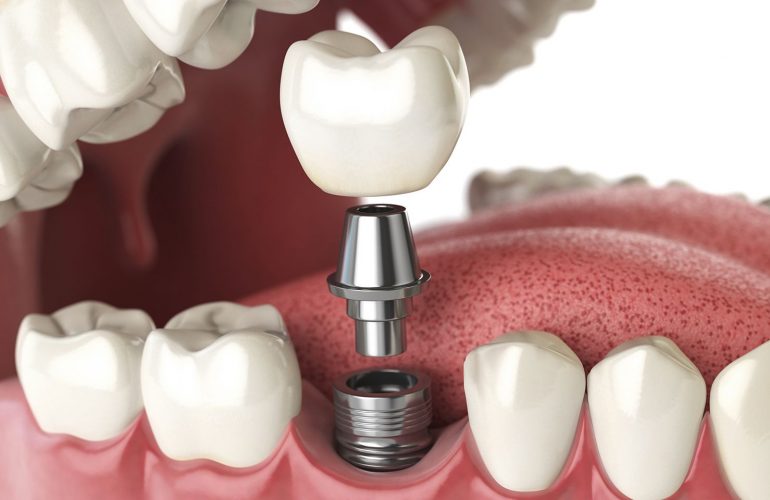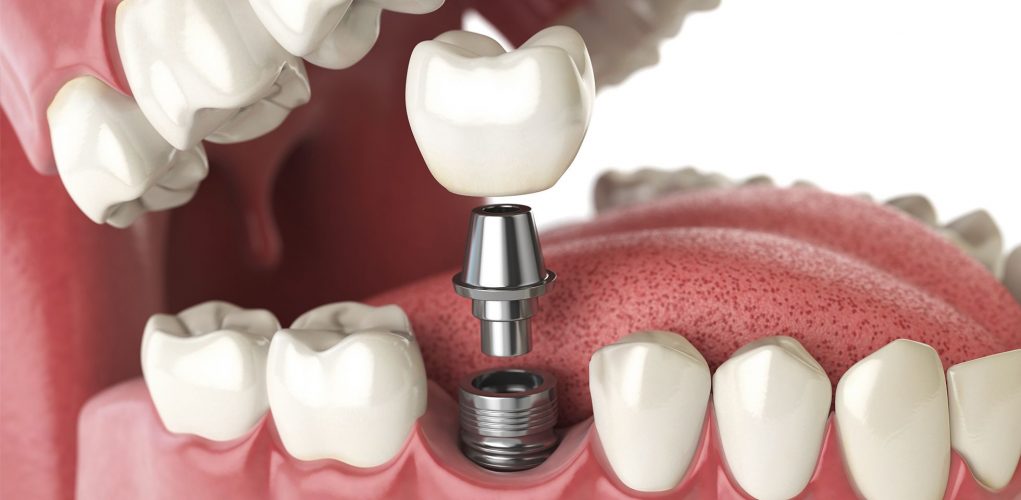
For implant treatment to be successful, the implant needs to be placed in bone of sufficient volume and quality. When bone is insufficient due to tooth loss, gum disease or trauma, this volume can be increased with bone grafting. Graft materials, also popularly known as bone powder, are obtained from different sources and applied with different techniques. Knowing the types of bone grafting helps you understand your dentist’s recommendations and ask your questions more clearly. As DijiDent Oral and Dental Health Polyclinic, we transparently explain the materials and methods used to our patients in Türkiye.
How Does a Bone Graft Work?
A bone graft acts as a scaffold that supports the body’s own bone formation process. After the graft is placed, blood vessels and bone cells gradually advance into this scaffold over time. Depending on the type of graft material, it is replaced over time by the patient’s own bone, or it helps preserve volume by breaking down slowly. This process enables the bone to become able to carry the implant.
Types of Grafts by Source
Autogenous Graft (The Patient’s Own Bone)
This is bone taken from the patient’s own body, mostly from regions inside the mouth such as the back of the jaw or the chin. Because it contains living bone cells, its bone-forming capacity is high, and it has long been accepted as the gold standard. Its disadvantage is that a second surgical site is created where the bone is taken, and the amount that can be taken is limited.
Allograft (Human-Derived Tissue Bank Grafts)
These are human-derived bone grafts made safe by undergoing strict inspection and special processes in tissue banks. They do not require a second surgical site. Their use is subject to the relevant legal regulations and tissue bank standards.
Xenograft (Animal-Derived Grafts)
These are grafts usually obtained from bovine or porcine bone, with the organic part removed and only the mineral structure left. Because they break down slowly, they help preserve volume for a long time. They are widely used in dentistry. Patients who do not prefer animal-derived material for religious or personal reasons can share this with their dentist and evaluate alternative options.
Alloplastic (Synthetic) Grafts
These are laboratory-produced materials such as hydroxyapatite, tricalcium phosphate and bioactive glass. They contain no biological source and can be obtained in unlimited quantities. Their properties vary according to the product.
In clinical practice, these grafts can often be used together; for example, by mixing the patient’s own bone with a xenograft, the advantages of both can be utilized.
Grafting by Application Technique
Socket Preservation
Immediately after tooth extraction, graft is placed in the extraction socket with the aim of limiting bone loss. It is considered in areas where an implant is planned in the future.
Guided Bone Regeneration (GBR)
The graft material is placed in the area with the bone deficiency and covered with a special barrier membrane. The membrane prevents fast-growing gum tissue from entering the graft area, providing space for bone formation. It can often be applied in the same session as the implant.
Block Grafts
In extensive horizontal or vertical bone losses, a piece of bone in block form is fixed to the deficient area with screws. The implant is placed after healing.
Sinus Grafting
This is the procedure of lifting the sinus membrane in the upper back region of the jaw and placing graft beneath it. It can be done in the same session as the implant or separately.
Who Is Grafting Not Suitable For?
Uncontrolled diabetes, heavy smoking, some medications affecting bone metabolism and a history of radiotherapy applied to the head and neck region can negatively affect graft healing. These conditions do not always prevent grafting; however, they require detailed evaluation and, if necessary, collaboration with the relevant physicians. It is important to share all your health information with your dentist before treatment.
Supports Obtained from Blood Products
In some cases, products such as platelet-rich fibrin (PRF) prepared from the patient’s own blood can be used together with the graft to support healing. Their use is evaluated according to the case.
The Healing Process
In the first days after grafting, swelling, mild pain and sometimes bruising may be seen. Cold application, the medications recommended by the dentist, not straining the area and staying away from smoking support healing. The time required for the graft to mature varies according to the graft type and the scope of the procedure; in extensive grafting done separately, a few months are usually waited for the implant. Healing is monitored with clinical and radiographic check-ups.
Adjusting removable dentures that put pressure on the graft area during the healing period and attending check-up appointments regularly are also important for preserving the result. In the event of markedly increasing swelling, fever, a bad odor or graft particles coming out into the mouth, it is recommended that you contact your clinic.
Choosing the Right Graft and Technique
The choice is made according to the type and amount of bone loss, the region, implant timing, and the patient’s general health and preferences. At DijiDent, we analyze the bone deficiency in detail using tomography data and openly share the source of the material to be used and the method with our patients.
Frequently Asked Questions
It is the popular name for the graft materials used to increase insufficient bone volume before an implant.
Grafts obtained from approved and inspected sources are used widely and safely in dentistry.
Yes. Your own bone, human-derived or synthetic grafts can be evaluated as alternatives.
In grafting done in the same session, a separate wait may not be required; in extensive grafting done separately, a few months are usually waited.
The procedure is done under local anesthesia. Afterwards, mild pain and swelling may be seen for a few days.
The right material and the right technique for a strong foundation.
Contact us to book an appointment to have your bone structure evaluated and to learn about your grafting needs. Let us plan your implant treatment digitally at DijiDent Oral and Dental Health Polyclinic.
This content is for general information purposes and does not replace an examination by a dentist. The material and method to be used are determined individually by the dentist.