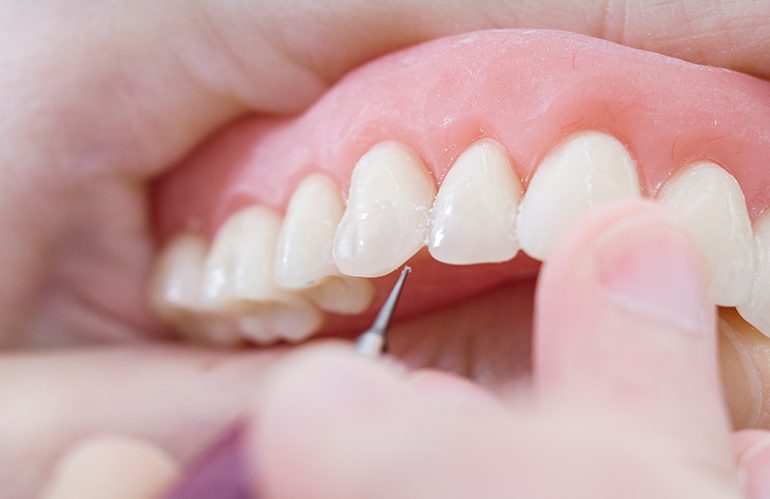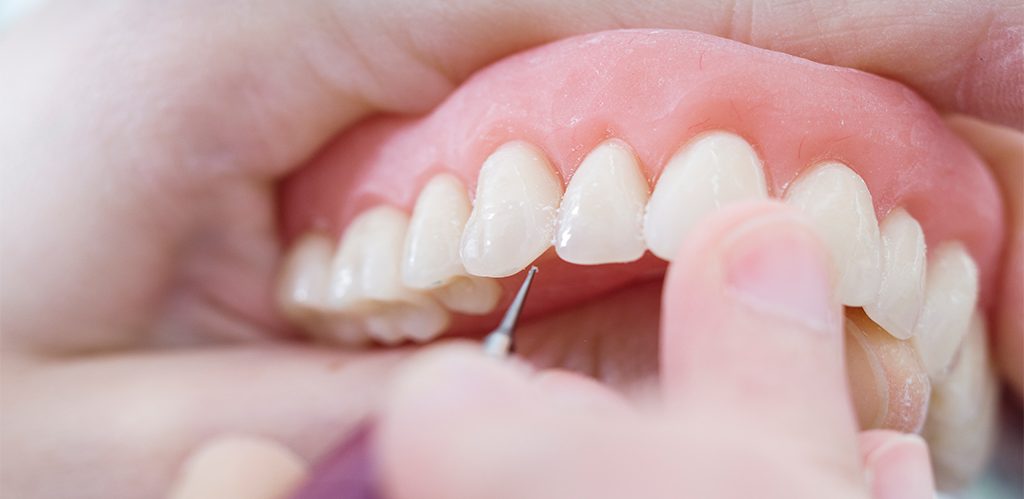
One of the best-known methods for replacing a missing tooth is the dental bridge. By taking support from the teeth on either side of the gap, the gap in between is closed with a fixed restoration. A dental bridge is a fast and predictable solution; however, it may not be the first choice in every case. As DijiDent Oral and Dental Health Polyclinic, in Türkiye we make this decision while taking into account the condition of your neighboring teeth.
How Does a Bridge Work?
The teeth on either side of the gap are prepared by being reduced, and crowns are made on them. The pontic that replaces the missing tooth in between is connected to these crowns; all of them are produced as a single piece. In this way, the chewing force is transferred to the abutment teeth.
There is a critical point here: there is no bone under the pontic. This part rests on the gum and creates a space underneath that needs to be cleaned. The most common problem in patients who use bridges is the neglect of this area.
In Which Situations Is It Preferred?
- If there are already crowns or large fillings on the neighboring teeth
- If an additional procedure is needed for an implant due to insufficient bone and the patient does not want it
- If there are health conditions that prevent a surgical procedure
- If a quick solution is needed; the healing period of an implant is not waited for
- If the patient does not prefer surgical treatment
In Which Situations Is It Not Suitable?
If the neighboring teeth are completely healthy and have no fillings at all, reducing these teeth just to be able to make a bridge is not a conservative approach. In these cases, an implant is evaluated as a priority. In addition, a bridge cannot be planned if there is advanced gum disease in the abutment teeth or if there are teeth on only one side of the gap. If the gap is very long, the expectation of success decreases because the load on the abutment teeth will increase.
Bridge and Implant Comparison
We can summarize the difference between the two options as follows. A bridge is faster and does not require surgery; however, it requires the neighboring teeth to be reduced, and since the bone underneath is not stimulated, volume loss may continue in that area. An implant does not touch the neighboring teeth and stimulates the bone; however, it requires a surgical procedure and a healing period, and sufficient bone volume is expected.
At our clinic, we explain these two options together with their advantages and limits. Which one is preferred is determined by the condition of the neighboring teeth, bone volume, your general health condition, your time plan and your personal preference.
Odor and Bleeding Under the Bridge
This is the complaint most frequently raised by patients who use bridges. The cause is usually that the area under the pontic cannot be cleaned. Normal floss does not reach this area; special floss that can be threaded under the bridge or interdental brushes are needed. In some patients, a water flosser may also help.
If the complaint persists, the margin fit of the bridge and the design of the underside of the pontic should be evaluated. A pontic design that puts excessive pressure on the gum may lead to chronic inflammation.
Bonded (Maryland) Bridges
In some limited cases, a more conservative type of bridge applied by means of wings bonded to the back surface of the neighboring teeth may be considered. In this approach, very little or no structure is removed from the neighboring teeth. It is usually preferred in the front region, for a single missing tooth and in situations where chewing forces are limited. Due to the possibility of the bond coming loose over time, it is not suitable in every case; suitability is determined by the dentist’s evaluation.
What Determines Its Lifespan?
The health of the abutment teeth is more decisive than the bridge itself. Caries or gum disease developing in the abutment teeth may require the entire bridge to be renewed. For this reason, regular check-ups and meticulous cleaning are especially important when using a bridge. If there is a teeth clenching habit, a protective guard is planned.
Frequently Asked Questions
Temporary sensitivity may be seen in the first days. If it lasts long, the bite and margin fit should be evaluated.
Usually the teeth on either side of the gap are prepared. In long gaps, the number of abutments may increase.
An exact duration cannot be given. The health of the abutment teeth and care are decisive.
Since it is a single piece, the whole bridge usually needs to be renewed.
An evaluation is needed. It may be possible if the bone condition is suitable.
Special floss that can be threaded under the bridge and interdental brushes are used; your dentist will show you how.
Preserving your neighboring teeth is also an option.
Let us evaluate the bridge and implant options together with their advantages. Contact us to book an appointment; make your decision with its rationale at DijiDent Oral and Dental Health Polyclinic.
This content is for general information purposes. The treatment option and suitability are determined by your dentist after the clinical examination.