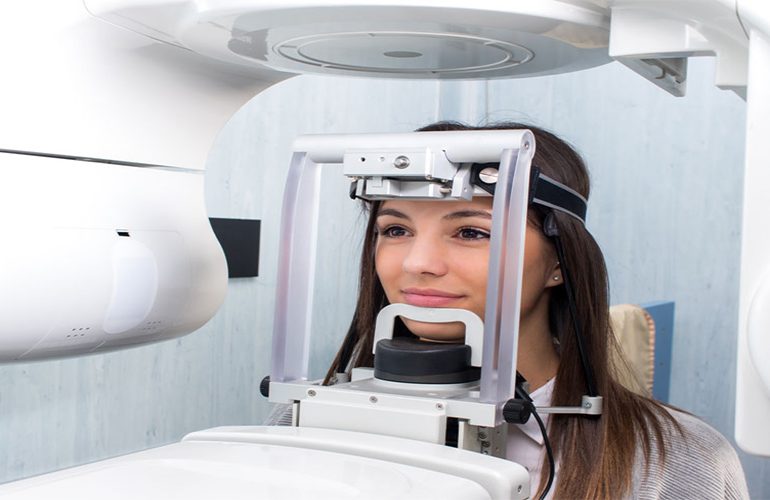
The integration of the implant with the jawbone forms the basis of treatment success. How long this integration takes and how strong it will be depends largely on the quality of the bone. Bone density in implant planning is not just a technical detail; it is the main factor determining the size of the implant, the surgical technique and the waiting period. As DijiDent Oral and Dental Health Polyclinic, in Türkiye we do not consider implant planning complete without making this measurement.
Why Does Bone Quality Vary from Region to Region?
The jawbone does not have the same structure everywhere. The ratio of the hard cortical layer on the outside to the spongy layer inside varies by region. In general, the front region of the lower jaw is harder, while the posterior region of the upper jaw is softer. In addition, the time elapsed since tooth loss, the type of prosthesis used and individual differences also affect density.
The practical meaning of this difference is this: the same implant behaves differently in two different regions. In hard bone, primary stability is easily achieved, but a more careful surgical technique is required due to the risk of overheating. In soft bone, stability is harder to achieve and the waiting period may be longer.
How Is the Measurement Made?
In three-dimensional imaging, density values in different regions of the bone can be evaluated numerically. Your dentist interprets these values together with the visible structure of the bone. In addition, the resistance the bone offers during surgery also carries direct information for an experienced dentist; the most accurate decision is made when the measurement and clinical impression are evaluated together.
How Does Density Change the Plan?
- Implant selection: In soft bone, wider-diameter implants or implants with different surface properties can be considered.
- Surgical technique: Approaches in which the bone is prepared by compaction may be preferred in some cases.
- Waiting period: The time required for integration to be completed may be longer depending on bone quality.
- Loading decision: Whether a temporary tooth can be placed in the same session depends largely on primary stability.
- Need for additional procedures: If there is insufficient volume, grafting or a sinus lift becomes part of the plan.
For this reason, we clearly state that “same-day teeth” is not applicable to every patient. Suitability is determined by measuring bone quality; it is not right to present it as a general promise.
Bone Volume and Bone Quality Are Not the Same Thing
These are two concepts our patients frequently confuse. Volume refers to how high and wide the bone is; quality refers to how dense and resistant that bone is. A region with plenty of bone may have a soft structure, just as a region with limited height may be quite hard. For this reason, both criteria are evaluated together during planning. The statement “I have bone” or “I have no bone” alone does not explain the whole decision.
Factors Other Than Bone
Implant success cannot be explained by bone alone. Smoking is one of the most important modifiable factors that negatively affect healing. Uncontrolled diabetes, untreated gum disease, teeth clenching and irregular oral care also affect the long-term outcome. If you use medications that affect bone metabolism, you must report this; this information determines the plan and, if necessary, collaboration with the relevant specialist physician.
Oral Care Is the Determinant of Long-Term Success
The process does not end after the implant is placed; the real protection period begins at that point. The tissues around an implant are not as resistant as the tissues around a natural tooth. For this reason, daily brushing, interdental cleaning and professional check-ups at regular intervals should not be neglected. Inflammatory conditions developing around an implant can be managed in most cases when noticed early; when delayed, they can lead to bone loss.
Frequently Asked Questions
Soft bone alone is not an obstacle; it changes the planning and the duration. Suitability is determined after evaluation.
Osteoporosis is not considered an absolute obstacle; however, the medications you use may affect the plan. Be sure to share this information and let the decision be made together with your dentist, if necessary after obtaining the opinion of the relevant specialist.
Bone quality, the technique applied, whether additional procedures are needed and your personal healing rate are decisive.
Volume deficiency can be remedied with grafting methods. Bone quality, on the other hand, is managed through the choice of surgical technique.
It is possible in many cases. First the cause of the failure is investigated; a new measurement-based plan is especially important in these cases.
The implant decision is made with measured data.
Contact us to book an appointment to evaluate the suitability of your bone structure for an implant and to create a realistic treatment timeline. Let us carry out your digitally planned evaluation at DijiDent Oral and Dental Health Polyclinic.
This content is for general information purposes. Implant suitability, duration and results vary from person to person; the decision is made after an examination by a dentist.