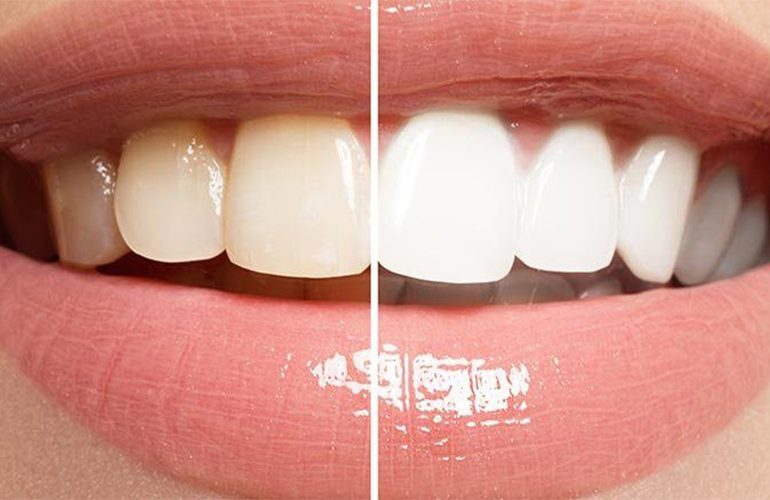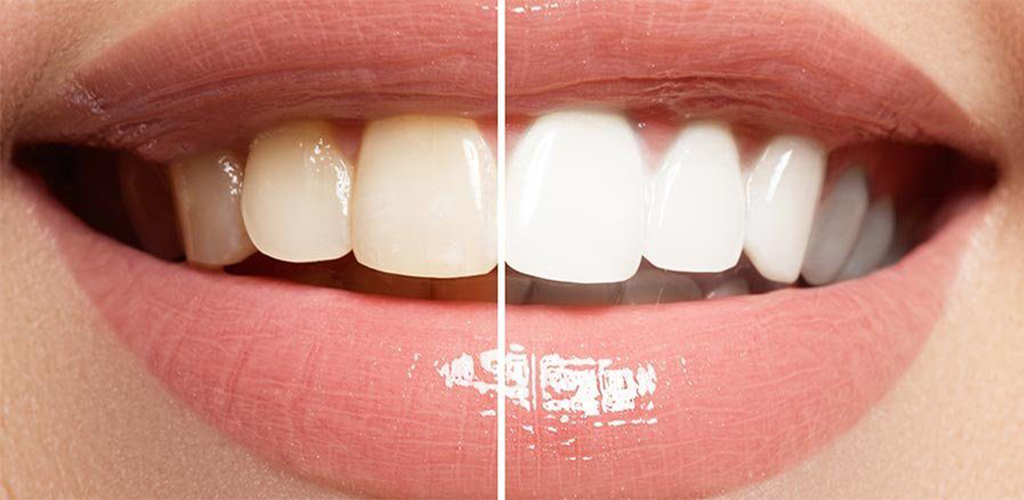
When many people who have fillings, crowns or veneers in their mouths consider teeth whitening, they wonder how these restorations will match the new color. An important fact is that whitening gel is only effective on natural tooth tissue and does not change the color of restorations. This requires careful planning, especially in patients with restorations on their front teeth. Knowing the answer to the question of whether crowns and fillings whiten and the correct treatment order allows you to achieve an aesthetically harmonious result. As DijiDent Oral and Dental Health Polyclinic, we plan the whitening and aesthetic restoration processes of our patients in Türkiye together.
Why Do Restorations Not Whiten?
The active substances in the whitening gel work by breaking down the color molecules inside natural tooth tissue. Composite fillings, porcelain and zirconia crowns, veneers and removable denture teeth, however, are made of materials with a different structure and do not change color in this way. Whitening can reduce some stains on the surface of these restorations; however, it does not lighten their own color.
A Possible Problem: Color Mismatch
After whitening, while the natural teeth lighten, the restorations remain the same color. Fillings or crowns on the front teeth in particular may look darker than the surrounding whitened teeth. Restorations on the back teeth, on the other hand, generally cause fewer aesthetic problems because they are not prominent when smiling.
The Correct Treatment Order
Examination and Planning
First, the condition, location and visibility of existing restorations are evaluated. Old or leaking restorations that need to be replaced are identified. Which restorations may need to be renewed after whitening is discussed in advance.
Whitening
Whitening is applied to the natural teeth. In-office, at-home or the combined method is chosen according to the patient’s situation.
Waiting for Color Stabilization
Immediately after whitening, the color of the teeth may look whiter than it actually is due to moisture loss. In addition, in the short period after whitening, the bond strength of bonded restorations placed on the teeth may be affected. For this reason, waiting a few weeks is generally recommended before new restorations are made. During this time, the color becomes stable.
Renewing the Restorations to Match the New Color
After the color stabilizes, the fillings or crowns on the front teeth are renewed, if necessary, to match the new tooth color. In this way, an aesthetically cohesive smile is achieved.
If Veneers or Crowns Are Planned
If new veneers or crowns are to be made and the color of the other teeth is also not liked, whitening before the restorations is generally recommended. In this way, the new restorations can be prepared according to the color of the natural teeth, which have become lighter. Otherwise, the restorations are made to match the current darker tooth color, and whitening done later may create a new color mismatch.
My Existing Crowns Have Yellowed; What Can I Do?
Porcelain and zirconia crowns are generally materials with high color stability. Darkening seen around crowns can often stem from the tooth tissue at the crown margin, gum recession or surface stains. Surface stains can be reduced with professional cleaning and polishing. If you are not satisfied with the color of the crown itself, the only solution is generally to have a new crown made. Composite fillings, on the other hand, can discolor over time; surface polishing or renewal options can be considered for these fillings.
If a dark line due to gum recession is visible at the crown margins, this is also evaluated separately; in some situations, gum treatments or renewal of the crown may be among the options.
Color Matching with Composite Bonding
After whitening, small color mismatches on the front teeth can generally be easily resolved by renewing composite fillings. Composite materials have a wide range of shades and can be chosen to match the new tooth color. This procedure can often be done without removing tooth tissue or with very little intervention.
Care of Crowns and Fillings After Whitening
For restorations to look aesthetic for a long time, regular brushing, interdental cleaning and professional polishing are important. Since composite fillings can be affected more easily by coloring drinks, reducing how often you consume these drinks is also beneficial.
Removable Denture Wearers
The artificial teeth in removable dentures are also not affected by whitening gel. In patients who use a partial denture and want to whiten their remaining natural teeth, a color mismatch with the denture teeth may occur after whitening. In this case, the color of the denture is evaluated before whitening and, if necessary, making a denture to match the new color is planned.
Holistic Aesthetic Planning
At DijiDent, for our patients who are considering whitening and have restorations in their mouths, we treat whitening not on its own, but as part of an aesthetic plan that takes the whole smile into account. By evaluating the expected result together in advance with digital smile design tools, we clarify the treatment order and possible restoration renewals from the start.
Frequently Asked Questions
No. The color of fillings, crowns and veneers does not change; only surface stains may decrease.
After the color stabilizes, the filling can be renewed to match the new color.
If the color of the other teeth is also to be lightened, doing whitening first is generally recommended.
No. To change the color of the crown, it generally needs to be renewed.
Waiting a few weeks for color stabilization is generally recommended.
Holistic planning for a harmonious smile.
Contact us to book an appointment for a whitening and aesthetic plan that also takes your restorations into account. Let us design your smile digitally together at DijiDent Oral and Dental Health Polyclinic.
This content is for general information purposes and does not replace an examination by a dentist. The treatment order and restoration requirements are determined after clinical evaluation.