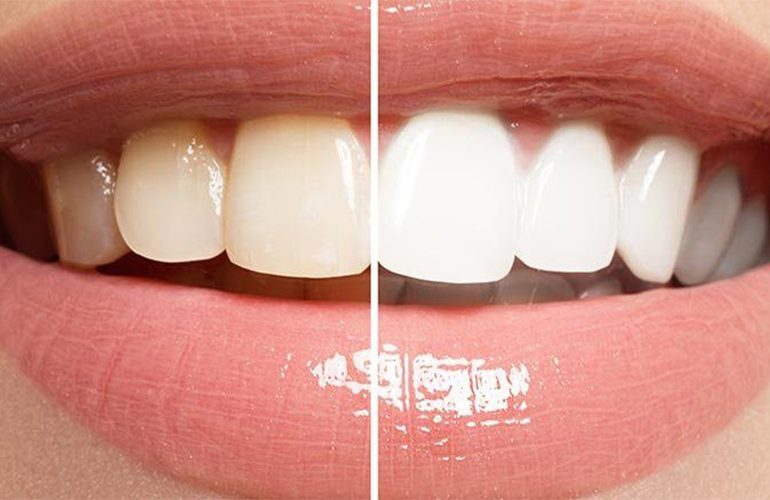
The color of the teeth differs from person to person, and completely white teeth are rarely seen in nature. Nevertheless, yellowing, darkening or stains can form on the teeth over time. Whitening applications done without correctly identifying the cause of these color changes may not give the expected result. While some discolorations can be removed with a simple professional cleaning, some require whitening and others require different aesthetic treatments. Knowing the causes of tooth discoloration is the first step toward the right treatment. As DijiDent Oral and Dental Health Polyclinic, we offer our patients in Türkiye suitable solutions by identifying the source of color changes.
The Natural Color of the Tooth
The visible color of the tooth is formed by the combination of the translucent enamel layer and the more yellowish dentin layer beneath it. The thicker and denser the enamel, the lighter the tooth appears. In situations where the enamel thins, the color of the dentin becomes more visible. For this reason, everyone’s natural tooth color is different, and slightly yellowish tones are considered normal.
Extrinsic (Surface) Discolorations
These are caused by coloring substances accumulating on the enamel surface. They can generally be largely removed with professional cleaning and polishing.
- Drinks: Tea, coffee, red wine, cola and dark-colored fruit juices.
- Foods: Tomato paste, soy sauce, curry and dark-colored fruits.
- Tobacco products: Cigarettes, cigars and hookah lead to yellow-brown stains.
- Tartar and plaque: Plaque and tartar that accumulate with insufficient oral care retain coloring substances.
- Some mouthwashes: Long-term use of mouthwashes containing chlorhexidine can cause brown stains.
Intrinsic (Structural) Discolorations
These are caused by changes in the internal structure of the tooth. They cannot be removed with cleaning; they may require whitening or aesthetic restorations.
Aging
Over the years, the enamel thins and the dentin thickens and darkens. This causes the teeth to look generally more yellow. Age-related yellowing generally responds well to whitening.
Trauma and Pulp Changes
Bleeding inside the pulp or loss of pulp vitality in a tooth that has received a blow can cause a single tooth to turn gray, brown or pink. Color change may also be seen over time in root-canal-treated teeth. In this case, the health of the tooth should be evaluated and, if necessary, special methods such as internal whitening should be considered.
Tetracycline Discoloration
The use of tetracycline-group antibiotics during tooth development, that is, in the womb or in childhood, can lead to gray, brown or band-shaped discolorations on the teeth. Such discolorations may respond to whitening to a limited extent and may require longer applications or options such as veneers.
Fluorosis
Excessive fluoride intake during the period of tooth development can cause white spots or lines on the enamel surface or, in severe cases, brown stains. In mild cases, methods such as whitening or microabrasion, and in more pronounced cases, restorative treatments can be considered.
Enamel Developmental Disorders
The enamel structure forming defectively for genetic or developmental reasons can lead to differences in color and structure in the teeth.
Caries and Old Fillings
Caries can cause chalky white or brown-black stains on the teeth. Old amalgam fillings can also darken the surrounding tooth tissue. Composite fillings with leaking margins can also become discolored. In these situations, treatment, not whitening, is needed.
Why Do White Spots Occur?
White spots on the teeth can stem from early caries, mineral loss seen around brackets especially after braces treatment, fluorosis or developmental enamel disorders. Whitening can sometimes make these spots look more pronounced. For this reason, the treatment plan for teeth with white spots is made specifically; resin infiltration, microabrasion or remineralization treatments can be among the options.
Treatment According to the Type of Discoloration
- Surface stains: Professional cleaning and polishing.
- Yellowing related to age and diet: In-office or at-home whitening.
- Darkening of a single tooth: Health evaluation and, if necessary, root canal treatment and internal whitening.
- Tetracycline and severe fluorosis: Long-term whitening, bonding or veneers.
- White spots: Resin infiltration, microabrasion or restorative methods.
- Caries and old fillings: Treatment and renewal of restorations.
Can a Color Change Be a Warning?
Some color changes are not only an aesthetic problem, but may be a sign of an underlying health problem. A single tooth that darkens in a short time may indicate that the pulp has lost its vitality. Chalky white or brown-black spots may be a sign of caries. For this reason, it is recommended that color changes, especially newly appearing ones or those limited to a single tooth, be evaluated through examination before whitening is considered.
Correct Diagnosis, Correct Treatment
Not every color change can be solved with whitening. Applications done without determining the source of the discoloration can lead to a loss of time and effort. At DijiDent, we determine the cause of the color change with an examination, color measurement and, if necessary, radiographic evaluation, and we plan together the treatment option most suitable for you.
Frequently Asked Questions
Aging, eating habits, smoking, insufficient oral care and enamel thinning are the main causes.
Surface stains can often be largely removed with professional cleaning.
It is usually related to trauma or pulp changes; the health of the tooth should be evaluated.
Generally not; sometimes they can become more pronounced. Different treatment methods are evaluated.
They may respond to a limited extent; options such as bonding or veneers can also be considered.
Let us find the source of the color change together.
Contact us to book an appointment to learn the cause of the yellowing or stains on your teeth and to determine the treatment that suits you. Let us carry out your color analysis at DijiDent Oral and Dental Health Polyclinic.
This content is for general information purposes and does not replace an examination by a dentist. The choice of treatment is determined by the dentist according to the cause of the discoloration.