He wants to understand the difference between them and why surgery is necessary.
- Mrs. Nazan (58), who has a broken root left behind: She wonders how the root fragment remaining in the gum will be removed.
- Seda (27), who is afraid of the word surgery: She is worried about how extensive the procedure will be.
- Mr. Cemil (66), who will have more than one extraction: He asks which teeth require simple extraction and which require surgical extraction.
- Duygu (44), who is planning an implant: She wants to learn whether the extraction method will affect a future implant.
When tooth extraction is mentioned, most people think of a single procedure; yet extractions are done with different methods depending on the condition of the tooth. While teeth that are fully visible in the mouth and have sound roots can usually be removed with a simple extraction, impacted or broken teeth or those with a complex root structure may require a surgical approach. Knowing the difference between surgical and simple extraction helps you understand the method your dentist recommends and be prepared for the healing process. As DijiDent Oral and Dental Health Polyclinic, we clearly explain the method and its reasons to our patients in Türkiye before the extraction.
Simple (Normal) Tooth Extraction
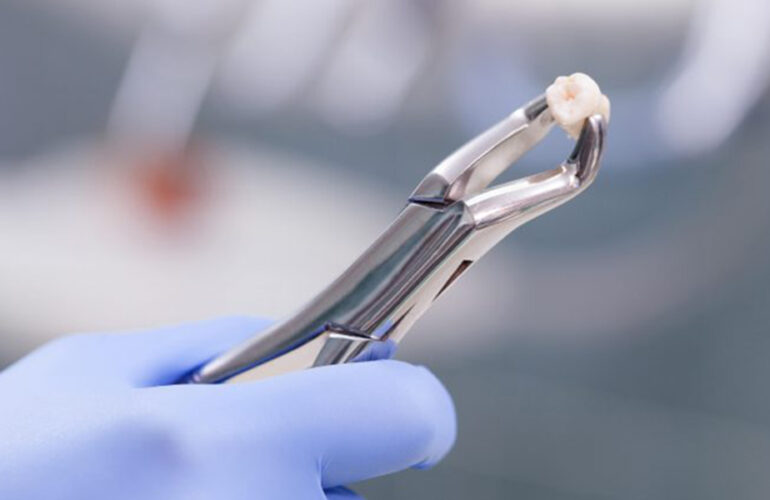
Simple extraction is applied to teeth that are fully visible in the mouth and can be reached directly with special instruments. After local anesthesia, the tooth is gently loosened in its socket with instruments called elevators and then gently removed with extraction forceps. There is no need to make an incision in the gum or remove bone.
Situations in Which Simple Extraction Is Applied
- Fully erupted teeth
- Teeth with straight and sound roots
- Teeth that are loose due to advanced gum disease
- A significant portion of extractions for orthodontic purposes
- Baby teeth that do not fall out on time
Surgical Tooth Extraction
Surgical extraction is applied in situations where the tooth cannot be reached directly or cannot be safely removed in one piece. Under local anesthesia, the gum is opened, the bone around the tooth is removed in a controlled manner if necessary, and the tooth is removed, divided into pieces when necessary. At the end of the procedure, the area is closed with stitches.
Situations Requiring Surgical Extraction
- Impacted or partially erupted teeth: Especially wisdom teeth and impacted canines.
- Broken teeth and root fragments: Teeth broken below the gum level or roots remaining in the bone.
- Curved or divergent roots: Roots that carry a risk of breaking during removal with the simple method.
- Roots fused with bone: A condition that can be seen especially in root-canal-treated teeth.
- Thick and dense bone: A structure that makes it difficult to loosen the tooth in its socket.
- Proximity to anatomical structures: Roots very close to the nerve canal or the sinus.
Comparison
Procedure Duration
Simple extractions usually take a short time. The duration of surgical extractions varies according to the position and difficulty of the tooth and is generally longer.
Anesthesia and Comfort
Both methods are usually done under local anesthesia and pain is not expected to be felt during the procedure. The feeling of pressure and vibration may be more pronounced in surgical extractions. Sedation options can be considered for anxious patients or extensive surgeries.
The Healing Process
After simple extractions, healing is generally faster and more comfortable. After surgical extractions, swelling, pain and limited mouth opening may be more pronounced and may last a few days. Stitches are usually removed after about a week or dissolve on their own.
How Is the Method to Be Applied Determined?
Clinical examination and radiographic imaging provide information about the position of the tooth, the number and shape of the roots, bone density and the relationship with neighboring structures. In complex cases, three-dimensional dental tomography helps surgical planning and the evaluation of risks. In some situations, during a procedure planned as a simple extraction, it may be necessary to switch to a surgical approach for reasons such as the root breaking; this possibility is shared with the patient before the procedure.
This is not a complication but a planned change of method to remove the tooth safely.
Tissue-Preserving Extraction
In areas where an implant is planned in the future, it is important that the extraction is done while preserving the surrounding bone and gum as much as possible. With techniques such as special instruments and removing the tooth by dividing it into pieces, the aim is to preserve the bone walls. In suitable cases, socket preservation can be done by placing bone graft in the extraction socket, or an implant can be placed in the same session.
Post-Extraction Recommendations
- Gauze pack: Bite gently on the gauze given to you for the period your dentist specifies.
- Cold application: Apply a cold compress to the cheek intermittently on the first day.
- Nutrition: Prefer lukewarm and soft foods after the anesthesia wears off.
- Rinsing and spitting: Avoid vigorous rinsing and spitting on the first day.
- Smoking: Stay away from smoking, as it increases the risk of dry socket.
- Medications: Use the medications your dentist recommends as indicated.
Special Situations
In patients who use blood-thinning medications or who have heart disease, diabetes or conditions affecting the immune system, additional evaluation may be required before extraction. Some osteoporosis and cancer treatment medications that affect bone metabolism are taken into account especially in extraction planning, as they can increase the risk of healing problems in the jawbone. If you use these medications, be sure to inform your dentist; medication adjustment should only be made by your relevant physician.
Warning Signs
In the event of bleeding that does not stop, severe pain that increases after a few days, high fever, increasing swelling or prolonged numbness, it is recommended that you contact your clinic.
Frequently Asked Questions
It is an extraction method in which the tooth is removed by opening the gum and, if necessary, removing bone.
Pain is not felt during the procedure due to local anesthesia; afterwards, swelling and pain may be more pronounced than with simple extraction.
Roots remaining below the gum level are generally removed with the surgical method.
Some stitches dissolve on their own; others are generally removed after about a week.
Tissue-preserving extraction techniques can help preserve the bone for a future implant.
The right method is the beginning of comfortable healing.
Contact us to book an appointment to learn the extraction method and process suitable for your tooth. Let us plan your treatment together with imaging at DijiDent Oral and Dental Health Polyclinic.
This content is for general information purposes and does not replace an examination by a dentist. The extraction method is determined by the dentist after clinical and radiographic evaluation.