When done under suitable conditions, root canal treatment can allow the tooth to remain in the mouth for many years. However, in some cases, problems may arise again in a treated tooth months or years later. In this situation, one of the first options evaluated to preserve the tooth is root canal retreatment. As DijiDent Oral and Dental Health Polyclinic, we clearly explain to our patients in Türkiye the causes of problems that arise in treated teeth and the options available.
Why Do Problems Arise in a Root-Canal-Treated Tooth?
The root canal system is a complex structure that can contain thin lateral canals and irregular areas in addition to the visible main canals. Bacteria reaching this system again after treatment, or remaining in areas that could not be reached initially, can cause inflammation at the root tip to continue or start again.
The Main Reasons Requiring Retreatment
- Missed canals: If additional canals, which can be found especially in molars, could not be detected in the first treatment, bacteria remaining in these areas can cause infection.
- Inadequate cleaning or filling: The canals not being cleaned along their entire length and filled tightly can affect success.
- Delay of the upper restoration: Not having the permanent filling or crown done for a long time after root canal treatment can cause saliva and bacteria to leak into the canals.
- New caries: Caries developing in a root-canal-treated tooth can reach the filling material and the canals.
- Leaking filling or crown: Restorations whose margin fit has deteriorated allow bacteria to enter.
- Cracks and fractures: Cracks forming in the tooth or root can create a pathway for bacteria.
Which Symptoms Point to the Need for Retreatment?
Pain in the treated tooth that increases with chewing, swelling of the gum, a pimple-like bump that appears and disappears on the gum over the tooth (fistula), a bad taste and tenderness when the tooth is touched are the main symptoms. However, root tip lesions often progress without giving any symptoms and can only be noticed in a routine X-ray or tomography examination.
Why Is Treatment Recommended If There Is No Pain?
Chronic inflammation at the root tip can continue to cause loss in the surrounding bone without causing pain. Over time, this can result in an acute flare-up, an abscess or the loss of the tooth. In addition, if a new restoration such as a crown or bridge abutment is to be made on the tooth, it is usually preferred not to leave a problematic root canal treatment underneath; otherwise, a problem arising after the new restoration has been made can lead to a more burdensome process.
How Is Root Canal Retreatment Done?
Evaluation
First, the cause of the problem is investigated with a clinical examination and imaging. Three-dimensional imaging can help in evaluating missed canals, root cracks and the size of the lesion. Whether the tooth can be preserved is determined by considering the remaining tooth tissue, root structure and gum condition together.
Treatment Stages
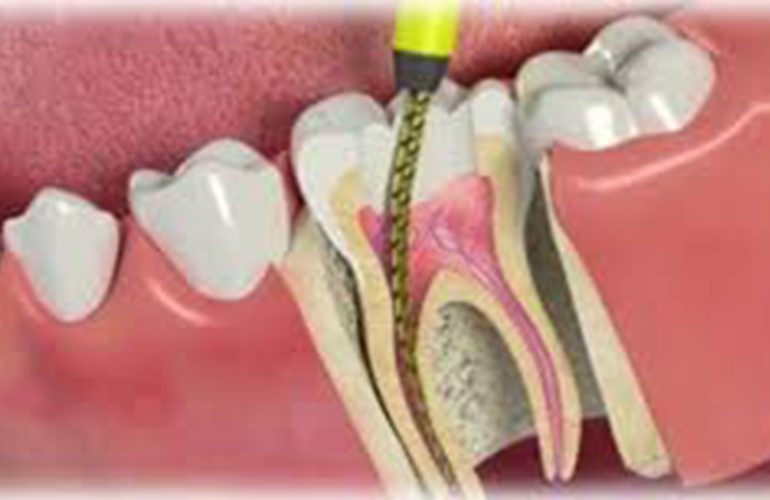
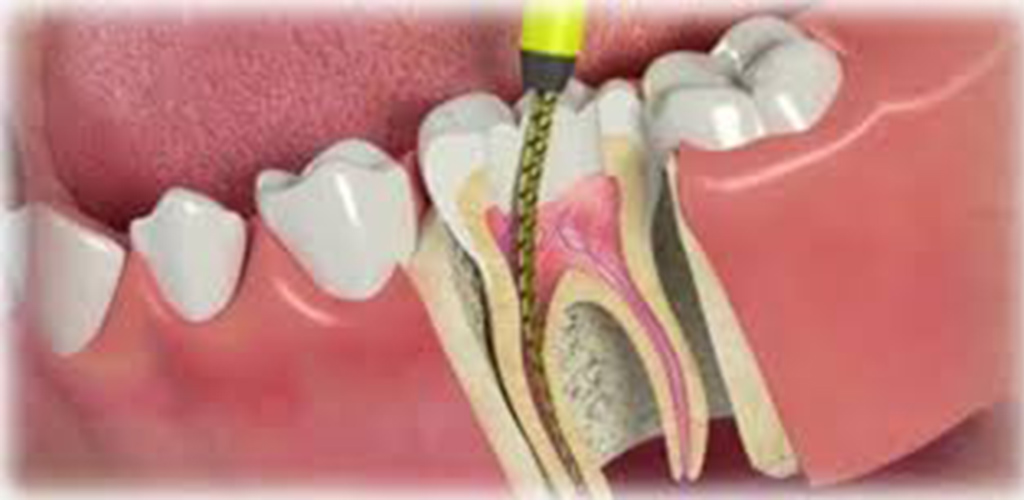
Under local anesthesia, the existing upper restoration of the tooth is removed or access is opened through the restoration. The old filling material in the canals is removed with special instruments and solutions. Any missed canals are searched for, and the entire canal system is cleaned and disinfected again. If necessary, medication is placed in the canal and the tooth is temporarily closed. When the infection is brought under control, the canals are refilled and the tooth is covered with a permanent restoration.
If Retreatment Is Not Sufficient
In some cases, there may be a problem that cannot be reached from inside the canal. In this case, methods such as apical resection, in which the root tip is surgically cleaned, may be considered. In situations where the tooth cannot be preserved, extraction followed by options such as an implant or bridge is discussed.
The Importance of Magnification and Imaging
In retreatments, finding missed canals, safely removing old filling materials and detecting root cracks require a detailed view. For this reason, in suitable cases, working under magnification and making use of three-dimensional imaging findings make an important contribution to the planning and application of the treatment.
Retreatment or Extraction?
The decision is made according to the remaining structure of the tooth, whether there is a crack in the root, the condition of the supporting tissues, the strategic importance of the tooth in the mouth and the patient’s preferences. For a natural tooth that can be preserved, retreatment is usually evaluated as a priority. At DijiDent, we make the decision together by clearly presenting our patients with the options, the expected process and the possible outcomes.
Follow-Up After Retreatment
During follow-up, it is also checked that the upper restoration of the tooth is sound and sealed; because leakage from above is a factor that can affect success after retreatment as well.
Healing of the lesion at the root tip takes time. For this reason, check-up X-rays are taken at certain intervals after treatment and the healing of the bone tissue is monitored. The disappearance of symptoms is a positive sign; however, follow-up is important for the healing to be confirmed radiographically.
Frequently Asked Questions
Inflammation may develop at the root tip due to missed canals, leaking restorations, new caries or root cracks. The cause is determined by examination and imaging.
Since the old filling material needs to be removed, it usually takes more time and often requires more than one session.
Root tip lesions can progress painlessly. The decision to postpone should be made after discussing the risks with your dentist.
Depending on the situation, the crown may be removed or access may be made through the crown. The decision is made according to the condition of the restoration.
Symptoms usually decrease in a short time; monitoring of bone healing is carried out with check-up X-rays over months.
Is there a problem with your treated tooth? Let us find the cause together.
Contact us to book an appointment to have your root-canal-treated tooth evaluated and learn the options for preserving it. Let us carry out a detailed endodontic evaluation at DijiDent Oral and Dental Health Polyclinic.
This content is for general information purposes and does not replace an examination by a dentist. Treatment options and results vary from person to person; the decision is made after the clinical evaluation.