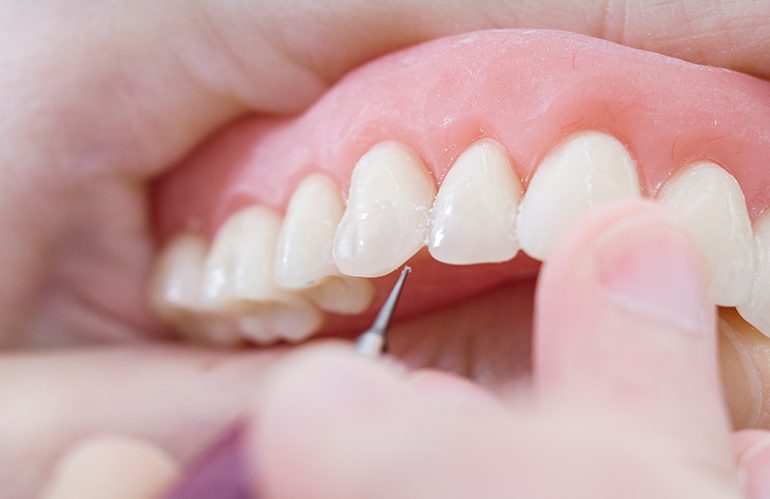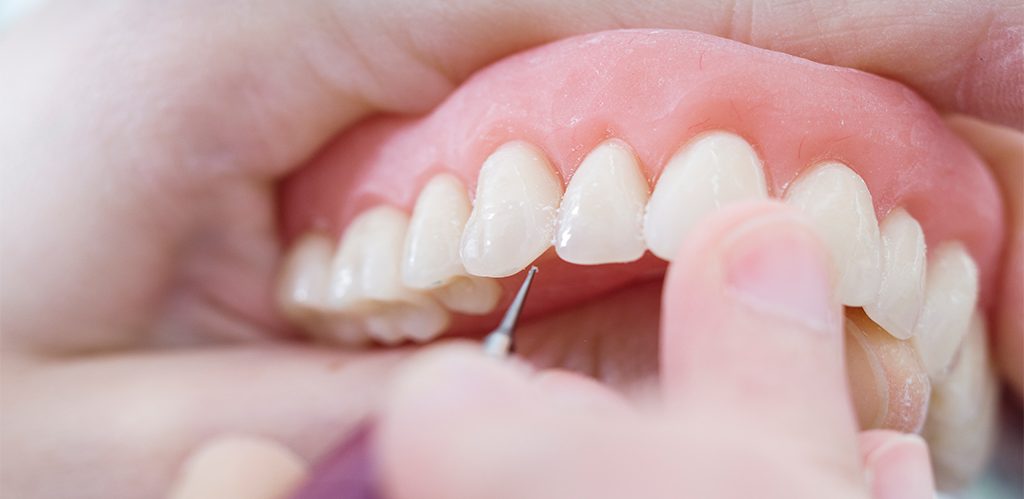
In comprehensive dental treatments, reaching the permanent result takes time. Periods of waiting for healing, laboratory production times and staged plans extend this time. During this period, what patients worry about most is the possibility of being left without teeth. A temporary prosthesis, in addition to filling this gap, also takes on clinically important functions. As DijiDent Oral and Dental Health Polyclinic, in Türkiye we consider temporary solutions an indispensable part of the plan.
Not Just an Aesthetic Interim Solution
The most visible function of temporary prostheses is aesthetics; they allow you to continue the process without taking a break from your social life. However, their real value lies in other tasks that most patients do not know about:
- It shapes the gums: Especially in the front region, the gum contour is formed with the temporary restoration. The natural appearance of the permanent restoration depends on this shape.
- It reduces sensitivity: The prepared tooth surface is not left exposed.
- It prevents teeth from shifting: If the gap remains empty for a long time, the neighboring teeth may tilt.
- It maintains chewing function: It prevents the diet from becoming restricted.
- It preserves speech: Pronunciation is affected, especially with gaps in the front region.
- It provides an opportunity to try: The planned form and length are evaluated in the mouth before permanent production.
In Which Situations Is It Used?
After Tooth Extraction
In some cases, a prosthesis prepared before the extraction is fitted immediately after it. In this way, the patient is never left without teeth. Since the tissues change during the healing process with such prostheses, frequent check-ups and relining may be needed; this does not mean that the prosthesis has been made poorly, it is a natural part of the process.
During the Implant Healing Period
A temporary solution is used while waiting for the implants to integrate with the bone. This can be designed as fixed or removable. The important point is that the temporary prosthesis does not put pressure on the healing implant area; for this reason, its design requires care and it is important that you follow your dentist’s instructions for use.
During Crown and Bridge Preparation
After the tooth is prepared, a temporary crown is used until the permanent restoration arrives. During this period, a good fit of the temporary directly affects the margin fit of the permanent restoration.
In Staged Treatment Plans
In long-term plans, treatment continues with temporary solutions between stages.
What Should Be Considered During the Temporary Period?
Temporary restorations are not as durable as permanent ones; this is a deliberate choice because they need to be easy to remove. For this reason, we ask you to follow these recommendations: avoid hard and sticky foods, do not bite with your front teeth, and remove the floss from the side around the temporary restoration instead of pulling it upwards. If a temporary restoration falls out, keep it without forcing anything and go to the clinic; the exposed prepared surface may become sensitive and the shape of the gums may deteriorate in a short time.
Types of Temporary Prostheses
Temporary solutions are not all the same. Acrylic temporary crowns can be prepared in the same session with the clinic’s own facilities. Temporaries produced from a digital design may be better fitting and more durable; they are preferred in long-term plans. Removable temporary prostheses are used when many teeth are missing and usually have a simpler structure. Which one is applied is determined by the waiting period and the scope of the case.
How Long Is It Used?
The duration varies according to the scope of the plan. While a few weeks is sufficient for simple crown preparation, this period is longer in implant healing or staged treatments. Temporary prostheses are not designed for long-term use; for this reason, it is recommended that you do not postpone the completion of the plan. In temporary restorations used for a long time, the margin fit may deteriorate and gum problems may develop.
In Terms of Cost
Some of our patients may see the temporary prosthesis as an unnecessary expense. Yet the consequences of skipping it are more costly: the shape of the gums deteriorates, the teeth shift and the fit of the permanent restoration becomes more difficult. The temporary solution is the plan’s safeguard.
Frequently Asked Questions
No. It is not designed for long-term use; the margin fit may deteriorate and gum problems may develop.
In many cases, no. A temporary solution can be prepared according to the plan.
They provide aesthetics suitable for social life; however, they are not as detailed as the permanent restoration.
Yes. You can continue your daily life; care is needed with eating.
Do not use household adhesive. Keep it and go to the clinic.
If there is a pressure point, there may be discomfort; it is eliminated with a check-up.
You do not need to take a break from your social life during treatment.
Let us determine together the temporary solution suited to your plan. Contact us to book an appointment; let us carry out the process comfortably at DijiDent Oral and Dental Health Polyclinic.
This content is for general information purposes. The type and duration of the temporary solution are determined by your dentist after the clinical examination.