A significant proportion of the information obtained about prostheses comes from those around us, from experiences of years ago or from incomplete sources on the internet. This information sometimes delays decisions and sometimes creates wrong expectations. Misconceptions about prostheses are one of the areas where patients are harmed the most. As DijiDent Oral and Dental Health Polyclinic, we have compiled the misconceptions we encounter most often for our patients in Türkiye.
“Once you have a prosthesis, there is no need to go to the dentist”
This is the most common and most risky misconception. Even if a person who uses a prosthesis has no tooth decay, the gum, palate, tongue and cheek tissues should be evaluated. In addition, as the bone structure changes, the fit of the prosthesis deteriorates, and this progresses without pain. Regular check-ups are even more important for prosthesis wearers.
“A prosthesis is used for a lifetime”
No. The bone underneath changes, the material wears and the fit deteriorates. Although it is not right to give a specific number of years, prostheses need to be evaluated regularly and relined or renewed when necessary.
“Nobody can get used to a prosthesis”
The adaptation process varies from person to person and the first weeks may be challenging. However, with regular use, proper fit check-ups and simple exercises, most patients adapt. When difficulty is experienced, the solution is not to give up the prosthesis but to come for a check-up.
“If a prosthesis hurts, you have to get used to it”
A slight feeling of fullness is part of the adaptation process; however, pain and sores are not things to get used to. Pressure points are eliminated with a short adjustment. Putting up with pain causes a small problem to turn into a deep sore.
“I can file my denture myself”
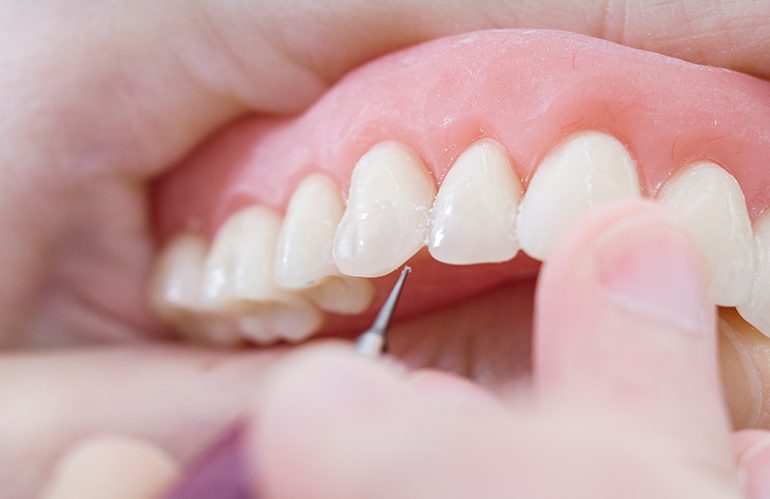
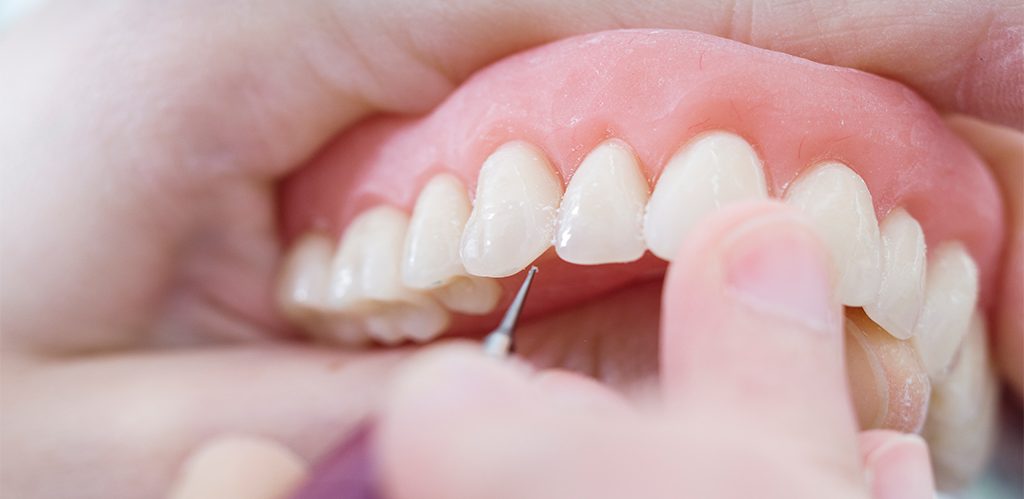
This is the harmful practice we encounter most often at our clinic. Removed material does not come back and the fit of the denture may be permanently ruined. Moreover, the place where the pain is felt and the actual pressure point are often different.
“A broken denture can be glued at home”
Household adhesives are not produced for intraoral use; they can be harmful to tissues and can make professional repair impossible. Keeping the pieces and going to the clinic is the right approach.
“Adhesive cream solves every problem”
Cream can provide additional security in a well-fitting denture. However, an increasing need for cream is a sign that the denture needs to be evaluated. Continuing with an ill-fitting denture can accelerate bone loss.
“Leaving the denture in at night is harmless”
In dentures that are left in constantly, inflammation that progresses painlessly may develop in the palatal area. It is generally recommended that it be removed at night so the tissues can rest; if your dentist has given a different instruction, that is followed.
“A removable denture prevents bone loss”
No. Since it transmits force through the gums, it does not fully provide the functional stimulation the bone needs. Bone loss continues even if a denture is used; implant support offers a different contribution in this respect.
“I am too old, I cannot have an implant”
What is decisive is not age but bone condition and general health. Systemic diseases under control do not constitute an absolute obstacle in most cases. Deciding without an evaluation would be premature.
“The cheapest option is the most economical”
A prosthesis that becomes ill-fitting in a short time or requires frequent repairs incurs a higher cost in the long term. In addition, an ill-fitting prosthesis can make subsequent treatments more difficult by damaging the tissues and bone.
“There is no need for oral care when you have a prosthesis”
On the contrary, care is even more important. Plaque accumulates on the prosthesis surface, and the palate and tongue must be cleaned. In partial denture wearers, when the care of the remaining natural teeth is neglected, problems developing in the abutment teeth may require the entire denture to be renewed.
Questions You Can Ask the Clinic
- Which options are possible for my case, and why is this one recommended?
- How many sessions and how much time are planned?
- Can I ask for changes at the try-in stage?
- What will my check-up program be?
- How should I carry out care, and which products should I use?
- Will it be possible to switch to implant support in the future?
Frequently Asked Questions
Experiences are valuable; however, every mouth is different. Your own situation should be evaluated with an examination.
Yes, it is your right. You can request your records and ask for a different evaluation.
Guarantees of definite results, expressions such as “you won’t feel a thing” and unusually short durations are not realistic.
It is possible in many cases; bone condition is decisive.
A detailed initial evaluation and maintaining regular check-ups.
Accurate information is the first step to the right decision.
Let us discuss the options that suit you together with their rationale and create a realistic plan. Contact us to book an appointment; make your decision with information at DijiDent Oral and Dental Health Polyclinic.
This content is for general information purposes; results vary from person to person. No guarantee of results can be given in healthcare services.