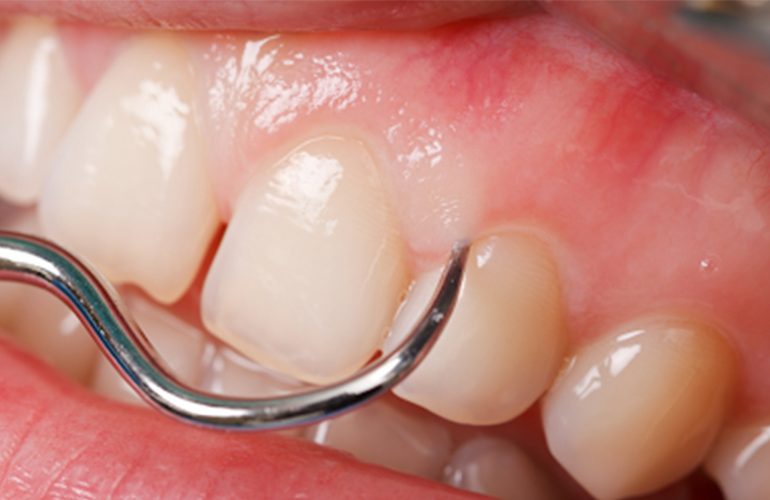
Bleeding during brushing is explained by most people as “I brushed too hard” and ignored. Some stop brushing that area so as not to bleed; this is a reaction that makes the problem bigger rather than solving it. Bleeding gums are a sign not of healthy tissue but of inflamed tissue. As DijiDent Oral and Dental Health Polyclinic, in Türkiye we regard this complaint as an opportunity for early intervention.
Why Do They Bleed?
Healthy gums have a firm structure and do not bleed with a normal stimulus such as brushing. Bacterial plaque accumulating at the gum line starts an inflammatory response in the tissue. In this response, the blood vessels dilate, the tissue loosens and bleeding occurs at the slightest contact.
In other words, bleeding is not damage but an indicator of an ongoing underlying inflammation. For this reason, reducing brushing increases plaque accumulation and deepens the inflammation.
The Main Causes
- Plaque and tartar build-up: This is the most common cause.
- Incorrect brushing technique: Inadequate cleaning or overly hard brushing.
- Starting to use floss: There may be temporary bleeding in the first days.
- Ill-fitting restorations: Overhanging filling or crown margins accumulate plaque.
- Crowded teeth: They create areas that are difficult to clean.
- Hormonal periods: Pregnancy, puberty and menopause can make the tissue more sensitive.
- Some medications: Blood thinners can increase bleeding; some medications can cause gum overgrowth.
- Systemic conditions: Diabetes and some blood diseases can affect the tissue response.
- Vitamin deficiencies: Especially vitamin C deficiency may play a role, though rarely.
Bleeding During Pregnancy
During pregnancy, due to hormonal changes, the gums may react more noticeably to plaque accumulation. This is called pregnancy gingivitis and is common. What matters is not to accept it as natural and neglect it; regular care and professional cleaning become even more important in this period. A dental check-up should not be postponed during pregnancy; the appropriate period and approach are planned with your dentist.
A Misleading Situation in Smokers
This is an important detail. Smoking can suppress bleeding by reducing blood flow in the gums. As a result, bleeding may not be seen despite the presence of advanced periodontal disease. The interpretation “my gums never bleed, so they must be healthy” is misleading in smokers. In these patients, the evaluation should be based not on bleeding but on pocket measurements and radiological findings.
What Should You Do?
What needs to be done when you notice bleeding:
- Do not stop brushing: Continue with a soft brush and the correct technique.
- Add interdental cleaning: The most common source of bleeding is between the teeth.
- Not hardness but duration: Instead of increasing pressure, correct the duration and technique.
- Monitor for a week: With regular care, bleeding should decrease.
- If it does not decrease, seek care: If there is tartar, home care alone is not enough.
When Should It Be Evaluated Immediately?
You need to seek care without waiting in the following situations: bleeding that starts spontaneously, bleeding that persists in a single area, pus coming from the gums, pronounced swelling, loose teeth or a sore that does not heal. Bleeding that persists in a single area may point to a local cause such as a broken tooth, an ill-fitting restoration or a trapped foreign object and should be examined.
The Role of Interdental Cleaning
A brush only cleans the surfaces of the teeth it can reach; it cannot get into the areas between the teeth. This is exactly where bleeding gums most often start. For this reason, care done without using floss or an interdental brush is incomplete. Which product is suitable for you is determined according to the width of the space between the teeth; your dentist can show you the right size.
Are Mouthwashes the Solution?
Antiseptic mouthwashes can be supportive in certain periods; however, they do not replace mechanical cleaning and do not dissolve tartar. In addition, long-term use of some mouthwashes can cause surface staining. The duration of use and type should be determined on a dentist’s recommendation.
Frequently Asked Questions
On the contrary, brushing should continue with the right technique; stopping increases inflammation.
There may be temporary bleeding in the first days; it is expected to decrease with regular use.
No. A soft brush and the right technique are recommended.
Inform your dentist. Do not stop your medication on your own decision.
In simple inflammation, it decreases in a short time with regular care; if there is tartar, cleaning is needed.
Bleeding is a warning your body gives you.
If your complaint persists, let us determine the cause together. Contact us to book an appointment; let us evaluate your gum health at DijiDent Oral and Dental Health Polyclinic.
This content is for general information purposes. Inform your dentist about the medications you use and your systemic conditions.