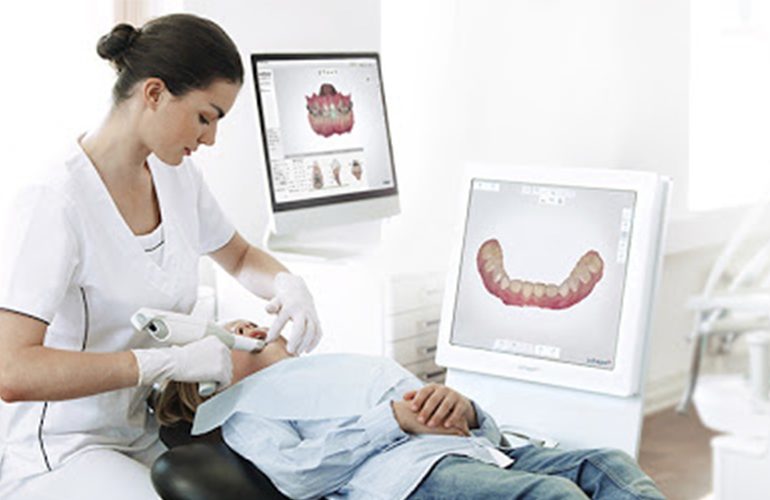
Tooth wear does not announce itself with sudden pain like caries. It is a silent, irreversible loss spread over years. Most patients only notice the condition when their teeth have become noticeably shorter, sensitivity has started or their restorations have begun to break frequently. Thanks to digital scanning, tooth wear monitoring no longer has to rely on guesswork. As DijiDent Oral and Dental Health Polyclinic, in Türkiye we track this loss numerically and build a plan targeting its cause.
The Main Causes of Wear
- Teeth clenching and grinding (bruxism): Excessive force, especially during sleep, flattens the chewing surfaces.
- Acid effect (erosion): Acidic drinks, citrus consumption, reflux or frequent vomiting can dissolve the enamel surface.
- Incorrect brushing (abrasion): A hard brush and excessive pressure can cause notches at the gum line.
- Bite discrepancies: Early contact of certain teeth increases the load in that area.
- Occupational and habit-related factors: Behaviors such as nail biting, pen chewing and ice chewing.
Usually, not a single cause but several factors play a role together. For this reason, the treatment plan begins by first determining the cause.
How Does Digital Scanning Change Monitoring?
In the conventional method, the dentist evaluates the wear on the teeth by eye and documents it with photographs. This approach shows its presence but cannot show its rate. Digital scanning, on the other hand, makes it possible to superimpose two models taken at different times. The software visualizes the difference between the two surfaces with a color scale and expresses the loss numerically.
The clinical significance of this is great. If there is a noticeable loss between two scans taken a year apart, the process is active and protective measures should be taken without delay. If the loss has stopped, it is understood that the measures applied have worked. In addition, this visual comparison makes it easier for the patient to grasp the situation; seeing the change in their own teeth instead of an abstract warning supports behavior change.
Is Wear Reversible?
No. Lost enamel tissue does not regenerate. For this reason, the real goal is not to regain the loss but to stop its progression. In advanced wear, the lost structure can be rebuilt with restorative methods; however, early intervention always means less extensive treatment.
Distinguishing the Type of Wear
The treatment plan differs according to the type of wear. Loss due to teeth clenching is usually seen as flattening on the chewing surfaces and the tips of the front teeth. In acid-related erosion, the enamel surface takes on a matte, rounded appearance, and fillings standing higher than the tooth level is typical. Loss due to brushing creates sharp-edged notches at the gum line. Making this distinction is a prerequisite for choosing the right measure.
The Path Followed in Protection
The approach is shaped according to the cause. If signs of teeth clenching are evident, a custom night guard is considered. If acid effect is involved, eating habits are reviewed and, if reflux is suspected, referral to the relevant specialist is made. Brushing technique is corrected, a soft brush is recommended, and not brushing immediately after acidic food is explained. If there are bite discrepancies, correcting them becomes part of the plan.
The Difference Early Intervention Makes
When wear is caught at an early stage, it can be managed with protective measures and limited restorations. In advanced stages, however, it may be necessary to restore the lost vertical dimension; this means a long-term treatment covering many teeth. The value of monitoring lies exactly here: noticing a small loss can prevent a major treatment.
Frequently Asked Questions
Flattening of the tips of the front teeth, the wearing away of cusps on the chewing surfaces and the teeth looking yellowish can be signs. A definitive evaluation is made with an examination.
They are usually planned at certain intervals. The frequency is determined by your dentist according to the rate and cause of wear.
No. Since it is an optical method, it can be repeated as often as needed for monitoring purposes.
It helps protect the teeth and reduce the load; however, it does not eliminate the habit itself. Stress management and other factors are also evaluated.
Wear may be one of the causes. An examination is required for a differential evaluation.
Lost enamel does not come back; however, its progression can be stopped.
If you suspect shortening of your teeth, sensitivity or teeth clenching, do not postpone the evaluation. Contact us to book an appointment; let us determine the cause of the wear and create a protective plan at DijiDent Oral and Dental Health Polyclinic.
This content is for general information purposes. The cause of wear and the treatment plan are determined by your dentist after the clinical examination.