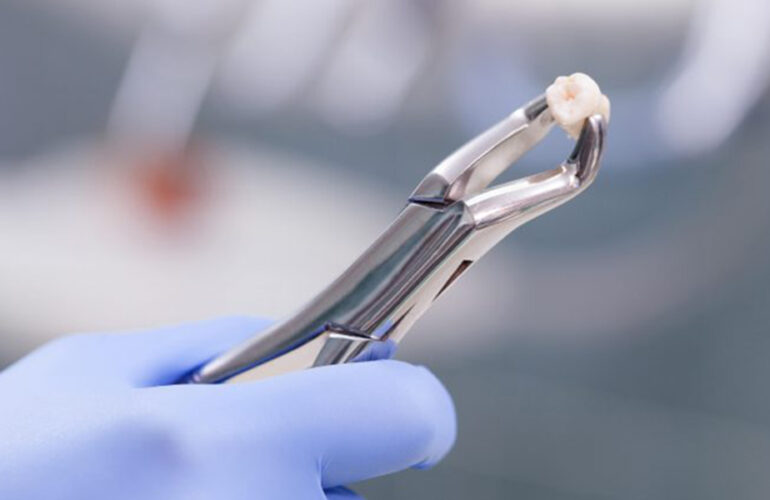
Teeth can break for reasons such as caries, trauma, large fillings or weakening after root canal treatment. The location of the fracture relative to the gum level is one of the most important factors determining whether the tooth can be saved. In some situations, broken teeth can be restored successfully, while in others, extracting the remaining root may be the more correct option. Knowing the options for broken root treatment helps you make the right decision together with your dentist. As DijiDent Oral and Dental Health Polyclinic, we first evaluate the preservation options for broken teeth for our patients in Türkiye.
Why Is the Location of the Fracture Important?
For a restoration, that is, a filling, onlay or crown, to remain healthy for a long time, it needs to sit on sound tooth tissue. It is also important that a certain healthy distance is maintained between the area where the gum attaches to the tooth and the bone level. When the fracture extends below these levels, the edge of the restoration remains under the gum; this makes cleaning difficult and can lead to gum inflammation and failure of the restoration.
Fractures Above the Gum
If the fracture line is above the gum level and sufficient sound tooth tissue remains, the tooth can usually be restored.
- Small fractures: They can be repaired with a composite filling or by re-bonding the broken fragment.
- Large losses of tooth structure: The tooth can be strengthened with an onlay or crown.
- Fractures reaching the pulp: Root canal treatment or, in suitable cases, treatments that preserve the pulp, followed by a restoration.
- If very little crown tissue remains: After root canal treatment, a crown can be made with a post and core structure.
Fractures Below the Gum
When the fracture extends below the gum level, treatment becomes more complex. Whether the tooth can be preserved depends on how deep the fracture extends, the length of the root and the position of the tooth.
Crown Lengthening
By reshaping the gum and, if necessary, a very small amount of bone, the fracture line is brought above the gum level. In this way, sufficient sound tissue is obtained for the restoration. It requires careful aesthetic planning in the front region, because the tooth may look longer than its neighbors.
Orthodontic Extrusion of the Tooth
The root is moved upward in a controlled manner with orthodontic forces, bringing the fracture line into the mouth. It is a valuable option especially for preserving the aesthetic result in the front region; however, the treatment time is longer.
In Which Situations Is Extraction Necessary?
- Vertical root fractures: With fractures that affect the root along its length, the tooth generally cannot be preserved.
- Fractures extending far below the bone level: If not enough sound root remains for a restoration.
- Short root: If the root remaining after crown lengthening or extrusion is too short to support the tooth.
- Infection and loss of support: If there is advanced bone loss or an infection that does not respond to treatment.
Root Fragments Remaining in the Mouth
Sometimes the crown of the tooth is completely lost and only the root remains in the mouth. Even if these roots cause no pain, they can be a source of infection, a cyst can develop at the root tip, they can disrupt the fit of a denture and they can affect the gum health of neighboring teeth. For this reason, evaluation of roots remaining in the mouth is recommended. In some situations, especially if the root is completely within the bone and appears healthy, a decision to monitor may be made, taking into account the surgical risks of extraction as well.
Roots That Break During Extraction
A root can break during extraction; this is a situation that can be encountered especially with weakened or curved roots. The broken root fragment is usually removed in the same session with a surgical approach. Very small fragments that remain deep in the bone and contain no infection may, in some situations, be monitored because of the risk of damaging structures such as the nerve; this decision is shared with the patient.
How Is a Root Extracted?
Root extractions are usually done with the surgical method. Under local anesthesia, the gum is opened if necessary and the root is removed while preserving the surrounding bone as much as possible. In areas where an implant is planned in the future, tissue-preserving techniques are used, and in suitable cases an implant can be placed in the same session or a socket preservation procedure can be done.
First Aid for a Broken Tooth
When your tooth breaks, if you can find the broken fragment, keep it moist in milk or water and contact the clinic as soon as possible. If sharp edges are irritating your tongue or cheek, you can temporarily cover them with dental wax available in pharmacies. Avoid chewing hard foods with the broken tooth.
Making the Right Decision
For broken teeth, the decision is made by evaluating together the location and direction of the fracture, the length of the remaining root, the condition of the gum and bone, the aesthetic and functional importance of the tooth and the patient’s expectations. At DijiDent, by examining the fracture in detail with clinical examination and three-dimensional imaging, we present the options for preserving and extracting the tooth together with their pros and cons.
Frequently Asked Questions
It depends on the depth of the fracture and the length of the remaining root; it can be preserved with methods such as crown lengthening or extrusion.
The condition of the root is evaluated; since it can be a source of infection, extraction is recommended in most cases.
If the fracture is above the gum, it can usually be restored; with fractures affecting the root along its length, extraction may be necessary.
It is usually removed surgically in the same session; some small fragments may be monitored.
It is possible in suitable cases; infection and bone condition are evaluated.
Let us first evaluate preserving your broken tooth.
Contact us to book an appointment to learn your options for your broken tooth or roots remaining in your mouth. Let us carry out your three-dimensional evaluation at DijiDent Oral and Dental Health Polyclinic.
This content is for general information purposes and does not replace an examination by a dentist. The treatment choice is determined after clinical and radiographic evaluation.